I am an interdisciplinary practitioner, a printmaker and painter whose work also extends into ceramics and sculpture. I experiment with different techniques and express myself using a wide range of materials. I am challenging myself by exploring the materiality in printmaking and painting, the core of my practice.
Through the intuitive nature of my work the element of discover is of most significance, allowing accident and mistake occur, sometimes I deliberately provoke them, my interest is to develop flexible thinking and to improve my visual language.
Sometimes my interest is simplifying abstract forms that arise from the interpretation of the figurative image, which allows the viewer to make their own reading of the piece of art. I hope to create a space where the public can interact with their imagination and to realise the fiction of the perception created by our unconscious.
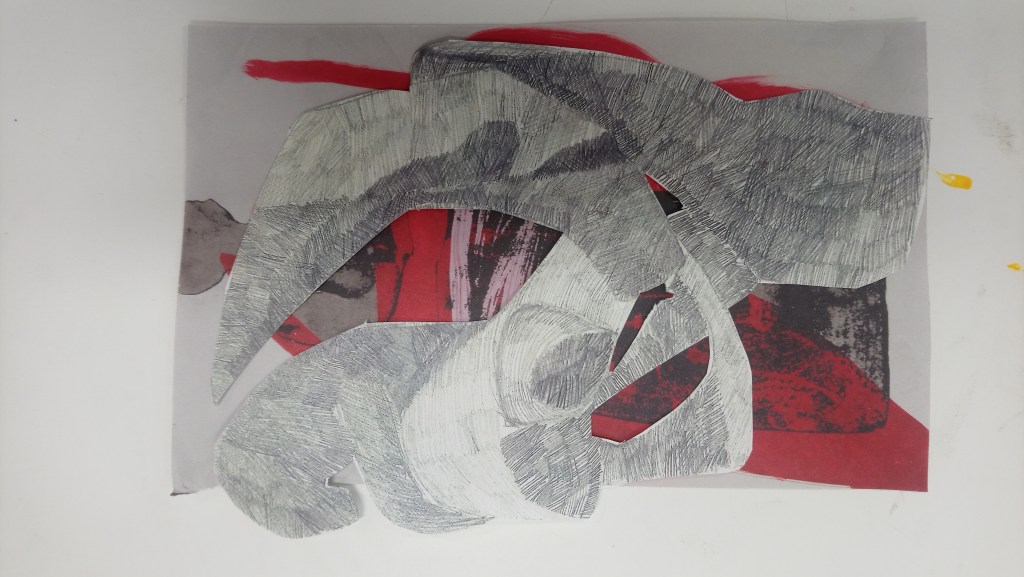
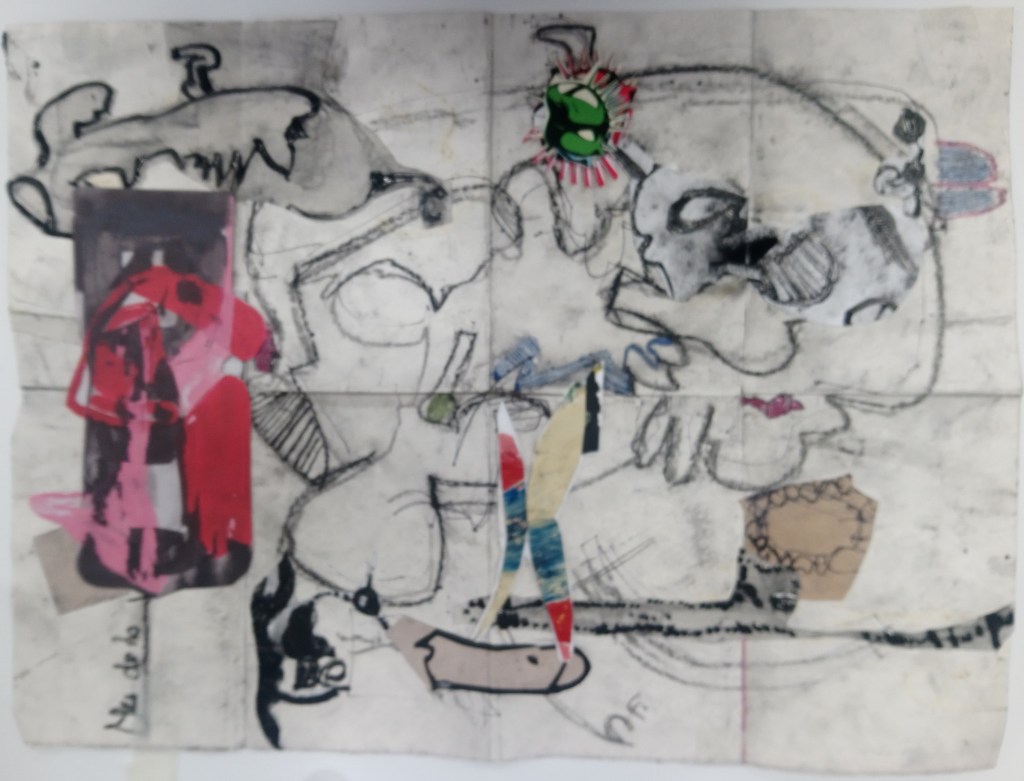
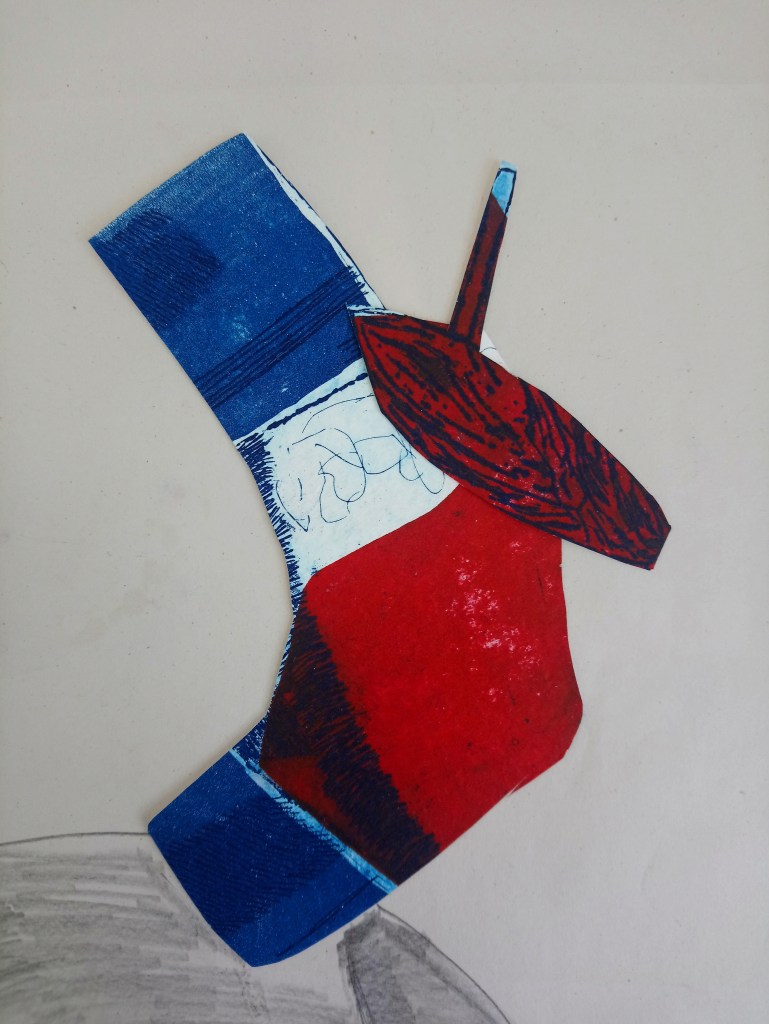
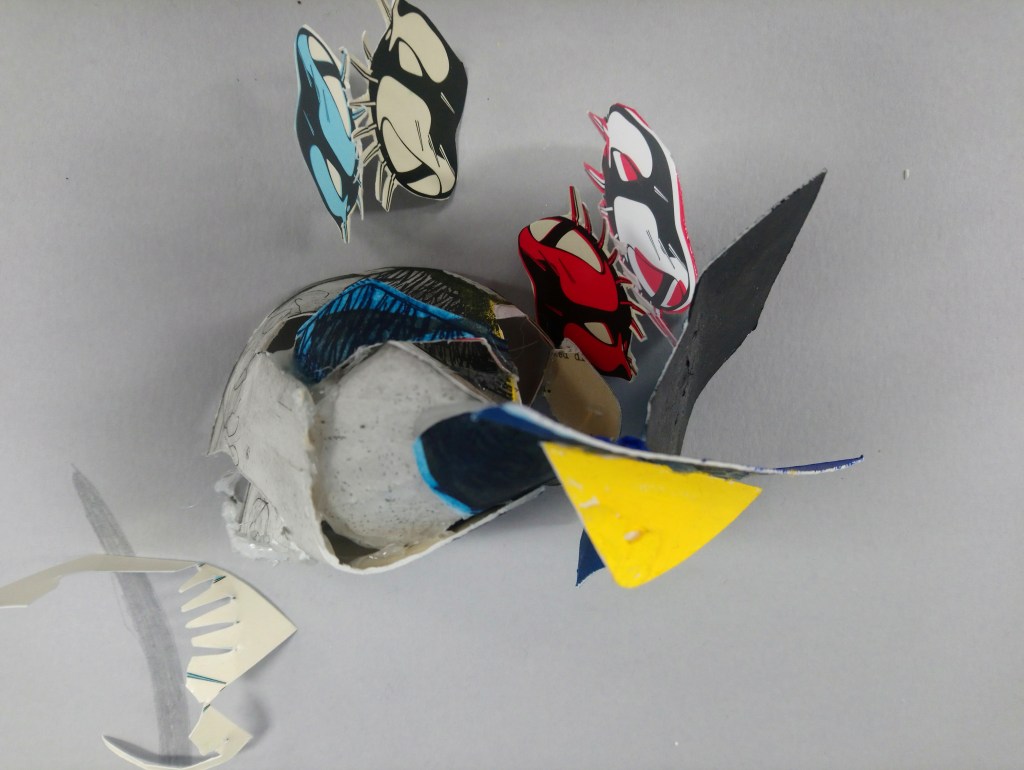
My work emerges as a developing process, it can start with collage made up of discarded defective prints, or it could emerge from Exhibition ephemera. I manipulate them by adding more cut out etchings. I choose one print and work in various ways, I destroy, push, pull, deconstruct, construct and collapse the image resolving in a process of constant abstraction and figuration, this is the thing which appears, not the thing in itself. I don’t have a preconceived idea it’s a call and response.
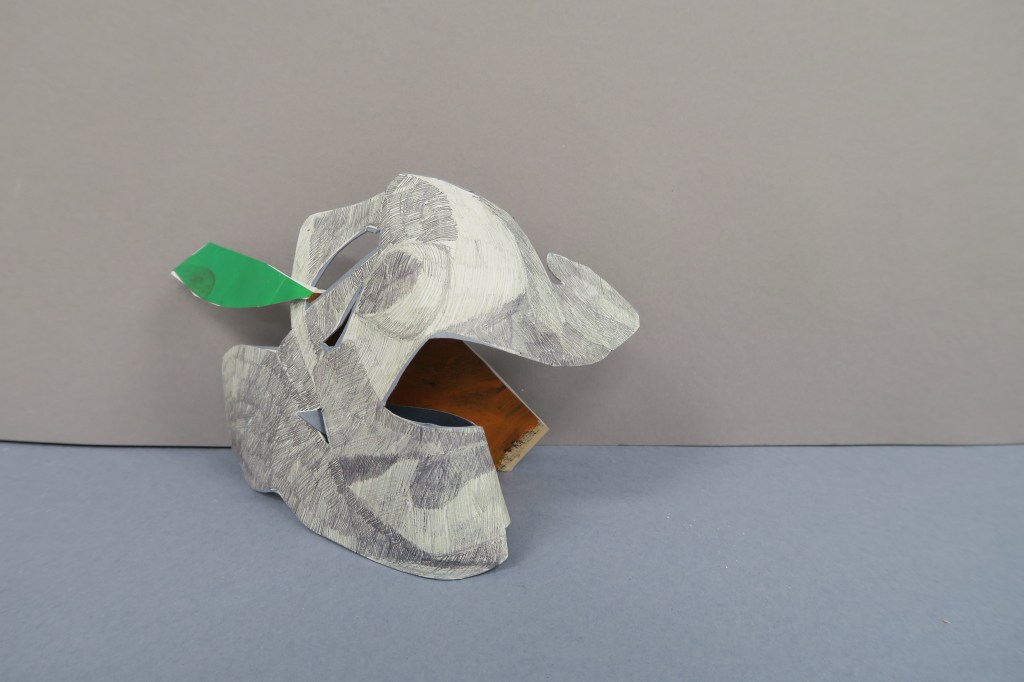
The 2D collages reach out in relief, they feel sculptural in themselves, I take the opportunity from this 2D collages to go into 3D sculpture and them back to the 2D painting, is a back and forward process mirroring the work of Michael Lady With his 3D collages .
My practice drawn from a range of sometimes contradictory sources, on one hand, I am attracted to the simple and minimalistic of the pieces Miles Davis music "Siesta" and "Human nature" the empty spaces in between the solos attracts me. The same occurs with the painters Agnes Martin and Elsworth Kelly, parts of the painting are resting from shapes and colours, it is an empty breathing space next to the simplicity of the form.
On the other hand I am drawn to the materiality of Amy Sillmans and Gillian Ayres. Their work infuses the complexity of the layers of paint and paper showing the history of the process and the interaction between the shapes, colours and mark making.
I perceive that my work is spontaneous and playful, intuitively mixing elements from observation and imagination. I am planning in the future to start to work with the prints on a much larger scale. I would like to incorporate stronger paper and wood as a support, to extend and make combinations of the etchings into 3D installations with them adding sound.
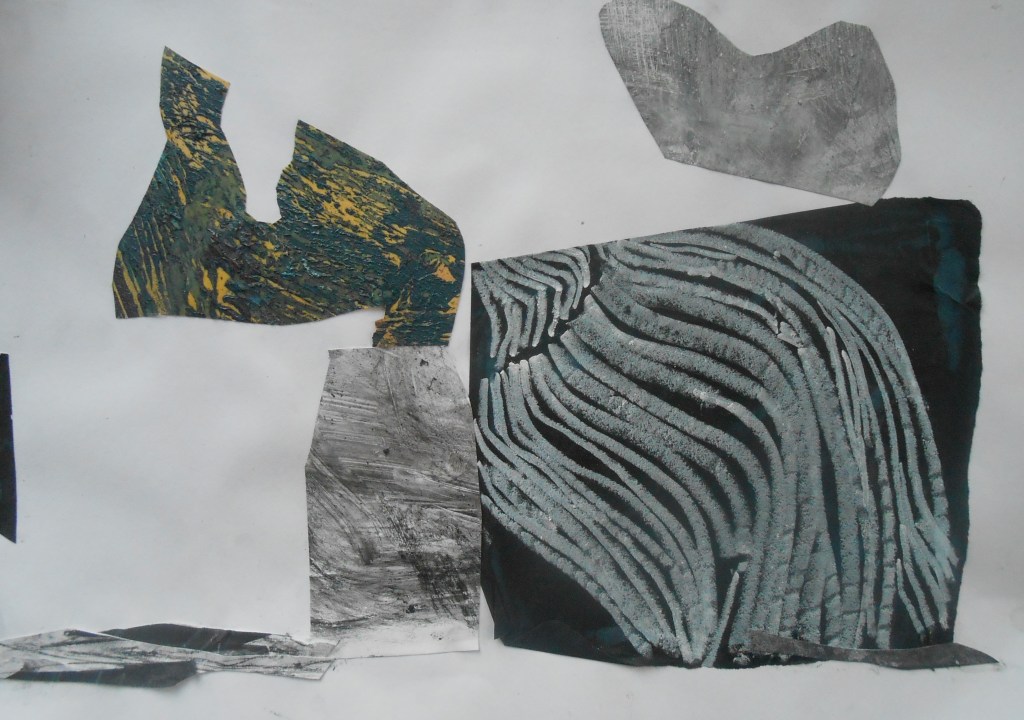
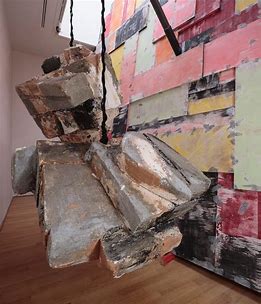
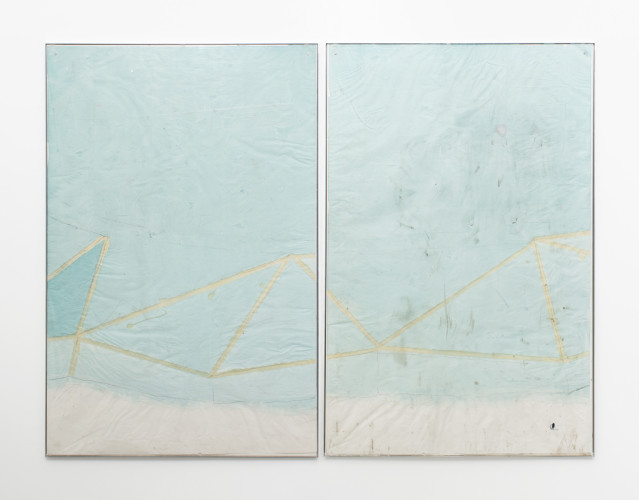
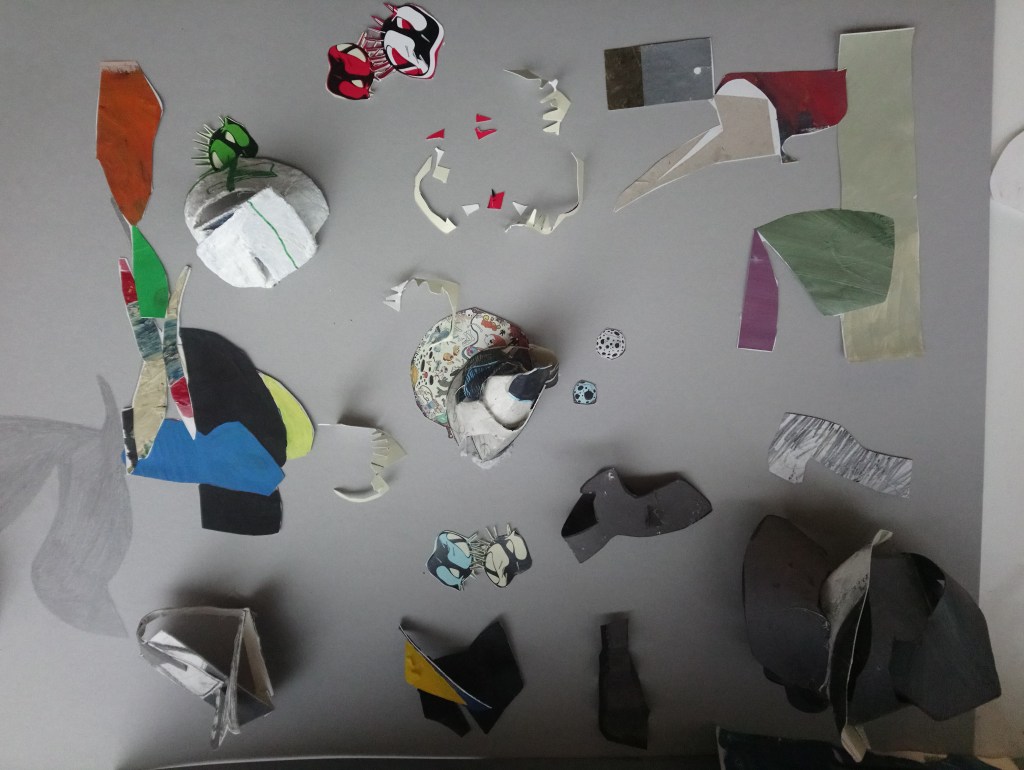
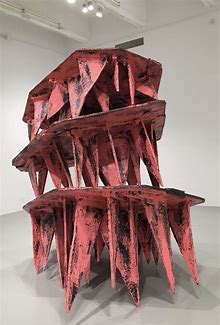
I had some papers at the studio from the navigator Project, this papers are full of rubbing and texture made with White charcoal. I cut some shapes influenced by the installation of Phyllida Barlow, I was looking the shapes in between the objects.
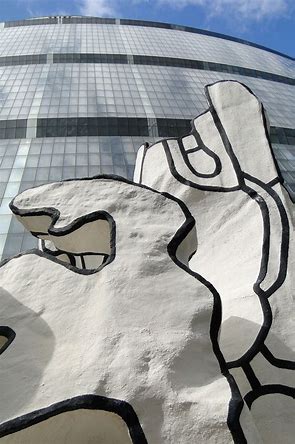
DUBUFFET ARTIST.
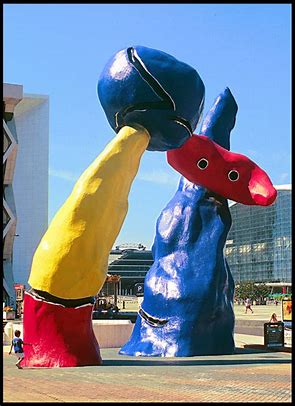
jOAN MIRO.
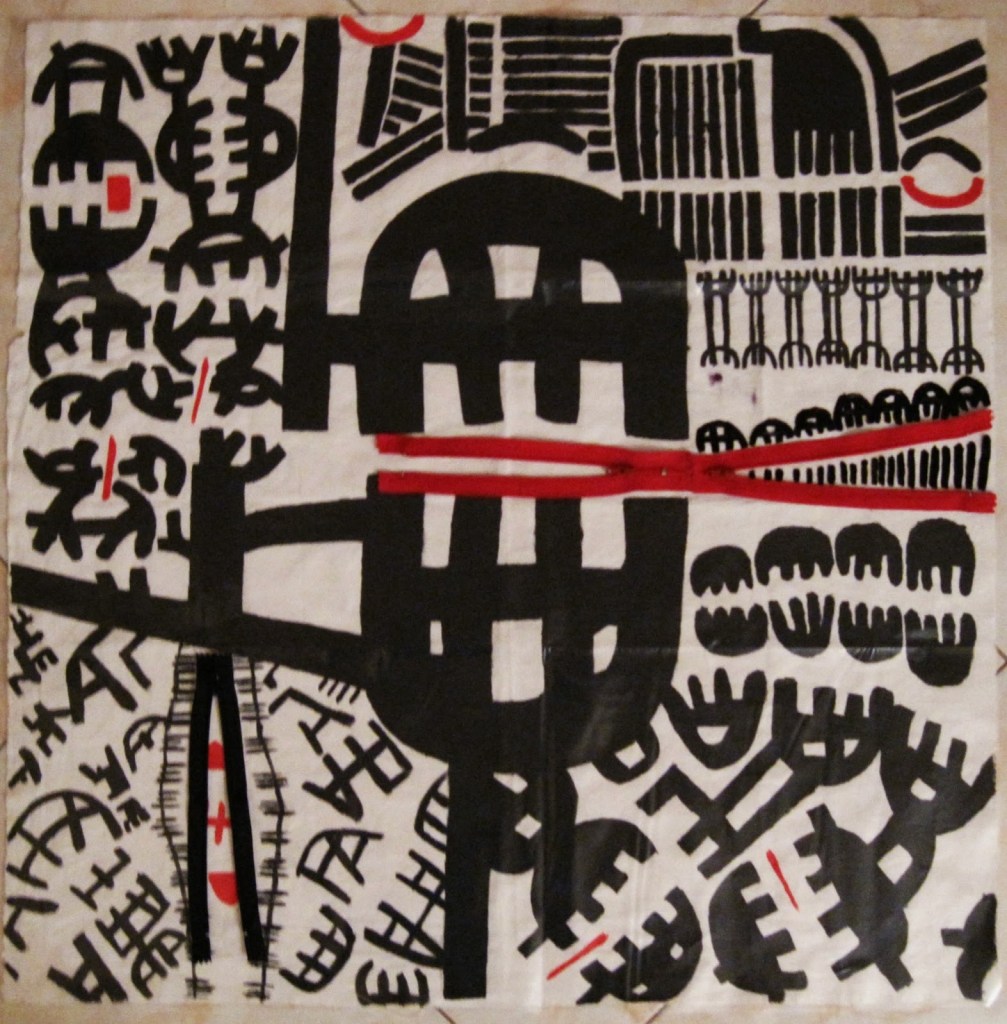
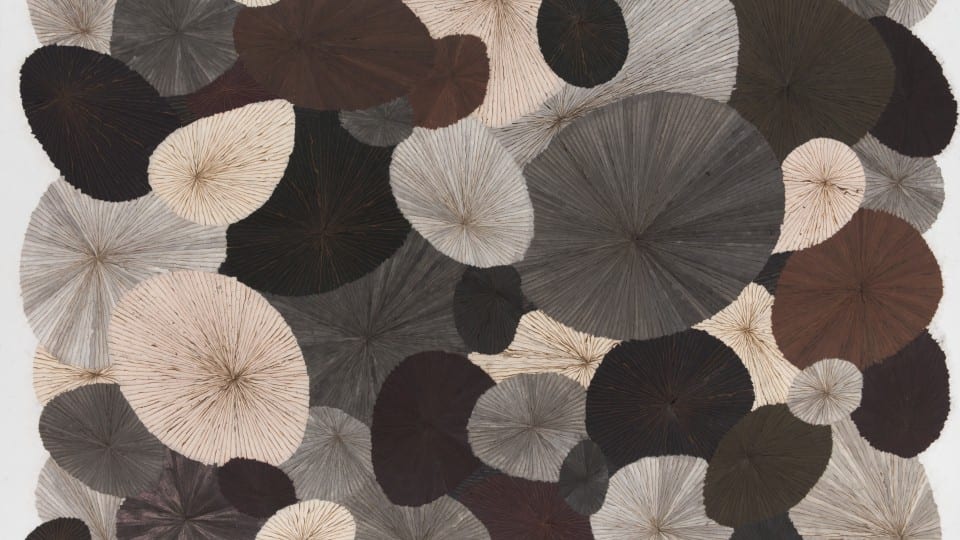
I AM INTERESTED WITH THE MATERIALS OF THIS TWO ARTIST FOR THE DRAWING ABOVE.Giussepe Capogrossi, repetition of the same shape.
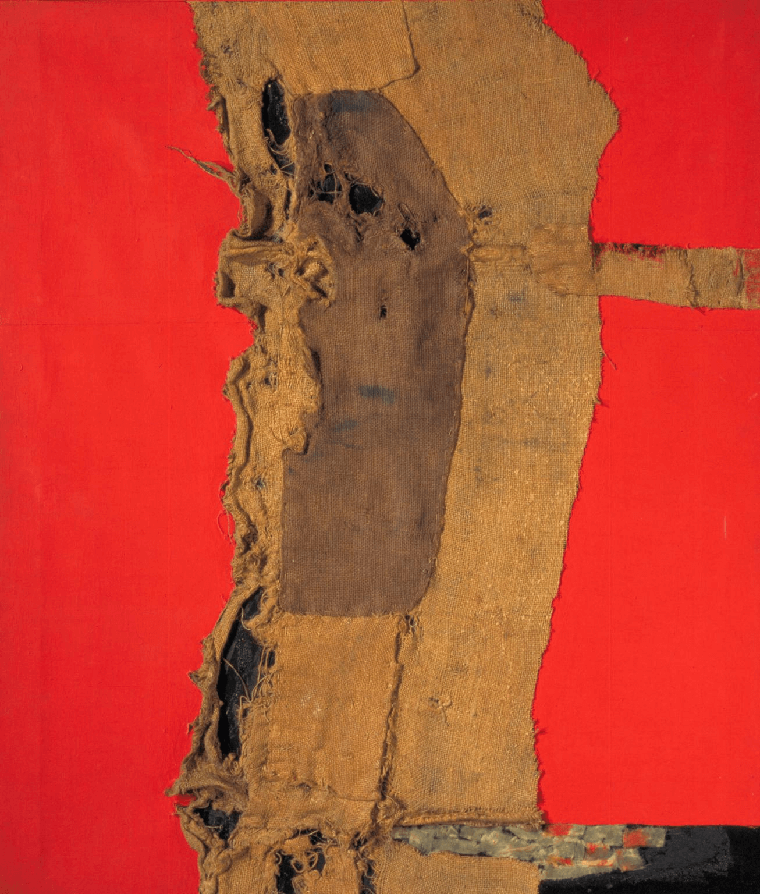
Capogrossi subsequently became one of the main exponents of Italian informal art, together with Lucio Fontana and Alberto Burri.
Francis Davison.
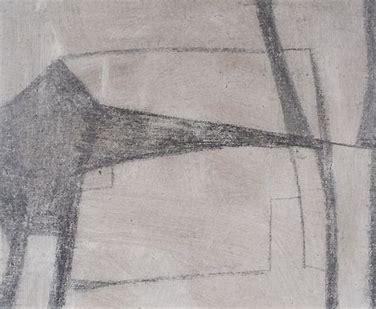
the shapes in between is what I see in this drawing of Francis Davison.
Francis Davison (1919–1984) was a British visual artist and painter.His work is characterised by the use of collage: coloured printed paper layered and mounted on board.
Phyllida Barlow art work have a lot influences of the informalism, some of the principals of informalis as well of Phyllida are non geometric abstraction, but keeping the materiallity of painting away from the non figurative and figurative form, emphasizing the color as its subject and subject in the works, Phyllida subject are materials and color.abstract materials is its fundamental principle. Informalism in art is regarded as complex becouse that integrates other trends such as the gestural material, thus the infromalism differs from other pictorial streams by the strong presence of the personality of the artist through the techniques an materials used, highlighting the chance and improvisation, without a deliberate construction, the process of the artist i have chosen has the same process of working thats why there is a lot of similituds .atraction to different types of material, is also reflected as it can be seen in the works of Dubuffet. what most determines this art, so it is the sign, the matter, being an art that emerges from the darkness of the post-war period. so the expression which is evident in the paintings is at the basis of dripped oil, large fillings and breaks as well as the use of other materials like wire ,burlap and sand. I could speak a bit about arte povera and how phyllida use materials which could be related with arte povera.RESEARCH OF ARTE POVERA.
On the other hand, in Spain, this art of informalism takes much boom in the 1950s with a generation of artists that in their forms of expression are discussed between European informalism and American abstract expressionism. Among them are painters such as: Tàpies, Guinovart, Puig, Saura, thousands and Canogar, among others. In this sense, the informalism in Spain, has two aspects of Barcelona and Madrid, with the raised bottom of the existential crisis of the post-war period. In Barcelona, is the Group of Dau al Set in 1948, very strongly rooted to surrealism, which then influence in the 1950s to the informalist, such is the case of Lourdes Cirlot, establishing four trends of the catalan informalism, applied to the mater, painting signo-gesto, the tachista and the specialist. We must remember that after the war the cities and population was devastated and aimlessly, this is strongly reflected in the art especially in painting, and it is a kind of healing for the mind and soul of the artists , by what are summarized a number of features as they were:THE work spontaneous and random, not premeditated, making the paintings without a pre-established composition.They give great importance to forms, textures, stains, trying this way to express inner world.Are not guided by traditional means of art, therefore, the oil painting is little expressive for needs and make a combination with accumulation of materials, including waste materials, running spills, drips, cuts or damage on the canvas.They disclaim conventional artistic patterns, both in regards to the plastic treatment and in the composition of the work.
Informalism is based on the Existentialism of postwar Europe, artists on multiple occasions not even use the brush but what they do is to scratch the thick surface, material, previously created with the new materials. Also, use the spatula to make spontaneous and disorderly lines denoting chaos, also making scratches, burns and grattage on canvases. Therefore, what most characterizes this art is the large number of different materials and techniques that might be that they were taken on an occasion of Surrealism (operator), in others of Dadaism (detrital materials, collage), but which in others could be product of the investigation (dripping, grattage). Thus, also within the informalism was used the tachisme, gestural painting, informalism materialistic, in short, a positioning so heterogeneous that it has come to qualify, just as other art. Is therefore required before moving forward with approaches clarify some concepts such as:The striking Art: named to the technique of the studs that account for amorphous surfaces without structure. Scratch that also come to form part and which are given as response to a spontaneous, intuitive action, informal product of vital or creative impulse of the artist, such is the case of the works of Hartung which has a lyrical approach, achieved with the application on the grattage, but always in an intuitive manner, so that, with these tools the artist achieves a very dynamic pace in the compositions.
Taking own matter, manipulated, transformed, are added to the pigments as an expressive medium, emphasizing how alien to these pigments materials. Thus, it is in the works of Alberto Burri where this technique is evident because it performs compositions by way of collage, where combines painting with metal sheets, Burlap, fabrics burned, plywood, plastic, some of them with a dramatic value going to extremes. it is in the works of Alberto Burri where this technique is evident because it performs compositions by way of collage, where combines painting with metal sheets, Burlap, burned fabrics, plywood, plastic, some of them with a dramatic value going to extremes.Phyllida Barlow is using a lot of this materials………………………. research of the materials and maybe here write also THE ARTE POVERA. IT WAS subjective, irrational, and immediate position in a truth that is not negotiable and as a form of relationship with himself and with the environment of postwar, in which are interested in everything from the most humble and so far negligible, making is to emerge from the depths. Therefore, if there is a legacy that can highlight informalism apart from the diversity of techniques and materials used in eclectic way are the currents that are subsequently consolidated from the way how it was built. They are: the gestural informalism, which derives more than everything in the way of painting. Informalism material, due to the textures, holes and other details. However all these currents are unified in common characteristics, they are: the removal of abstraction in painting, as is rather an amorphous abstraction, since it uses less geometric shapes such as squares triangles in these informal works, nor shown a willingness to structure elements. So, while a few small sketches were made, thought not previously which would make to balance the composition, while everything was improvised, randomly.
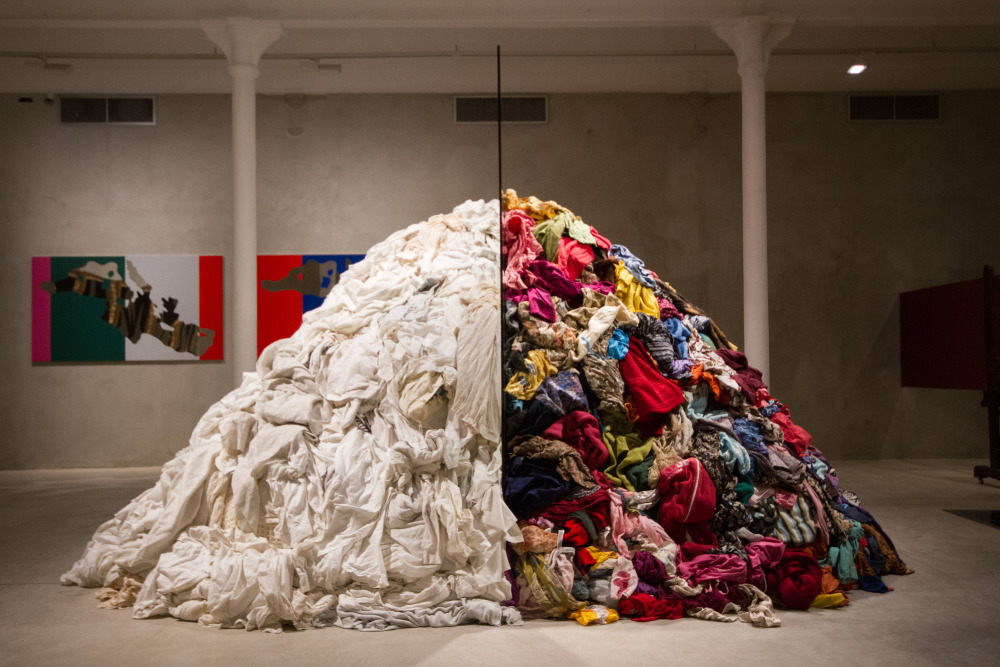
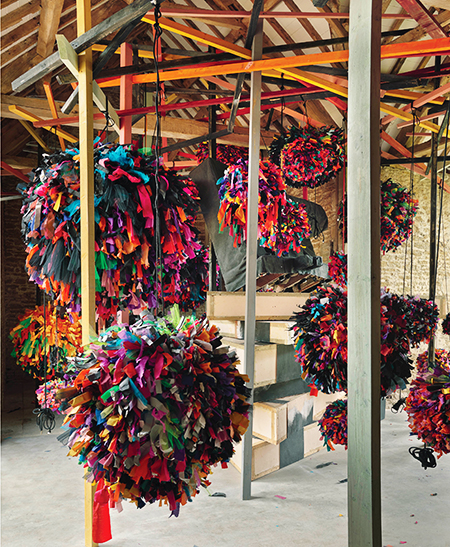
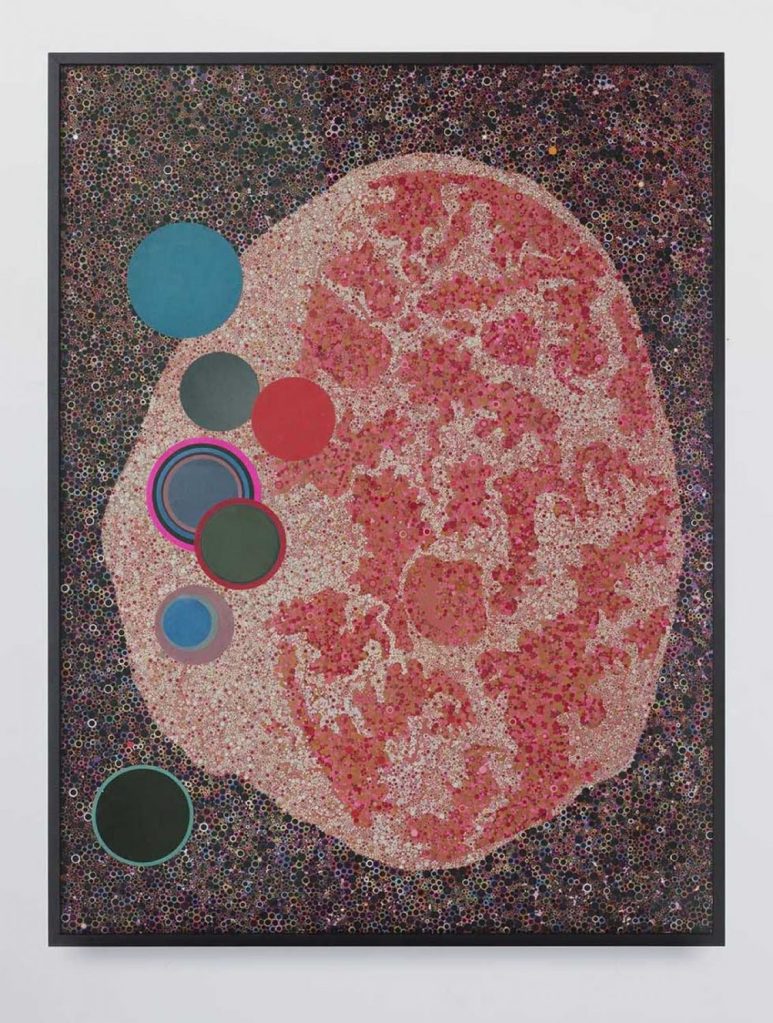
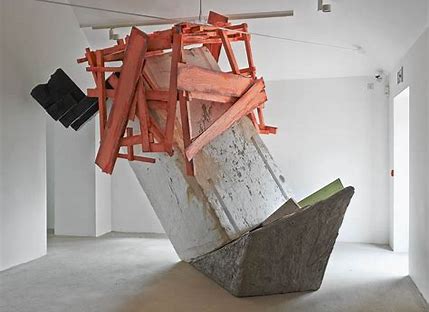
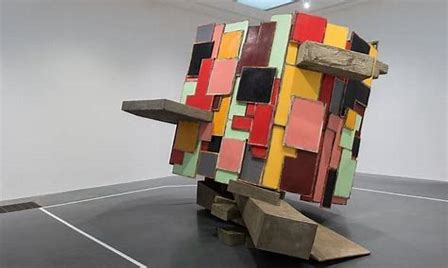
This two images is telling everything about the influence with Phyllida and Arte Povera, I will explain the key ideas of Arte Povera, and Phyllida Barlow.
One of the ideas of Arte Povera and it seems also in Phyllida Barlow was to bring everything back to the essential, to everyday materials, taking out any idea that was superficial.
The Arte Povera movement was born in Italyin 1967. Why do we have such a precise date? Because one of the most important art critics of the time, Germano Celant,invented the term in a critique he wrote. Of course some important works were created before this date, and everyone of them falls under the umbrella-term of Arte Povera.
In Italy at the time the Minimal Art and the American Abstract Expressionism were very popular, but some artits were tired of those trends. As a reaction, they created something totally different, with the approval of the critique, since Germano Celant was holding their hands.
The name of the movement is Arte Povera, they didn’t use “poor” materials, not only at least. They wanted to make a statement against the high-qualified art that uses only marble, oil paint and canvases, choosing to recycle materials, or using natural items to build their “assemblages”. This doesn’t mean that they avoided precious materials! They just included other ones in the process.
Mario Merz, Tavola a spirale (Spiral table), 1982The artists belonging to this movement wanted also to act against the art market (although everyone of them sold pieces to the art market eventually…). They thought that by using natural, and therefore perishable objects, their work could not be bought and sold. Obviously that was not true, otherwise we would not speak about them now! The idea is to be appreciated though. The idea of challenging the art market was already present in the Conceptual Art, the Performance Art, the Minimal Art and many others (but at the end they always found way of selling something).
Ian Kaier’s installations conject illusionary atmospheres with spartan theatricality. Often researching specific subjects relating to art, architecture, philosophy, and social theory as departure points, Kaier’s work transcends literal reading to create suggestions of invented narratives. In Russian Project, Kaier’s arrangement of paintings and objects is both traditional gallery exhibition and plausible stage set. The portable cupboard and colourful canvases trigger images of domestic space, and act as individual formal elements referencing Supremacist compositions. Though his work, Kaier explores social interaction with the constructed environment, alluding to both utopian ideals and their failure.Suprematism is fundamentally opposed to the postrevolutionary positions of Constructivism and materialism. Constructivism, with its cult of the object, is concerned with utilitarian strategies of adapting art to the principles of functional organization. Under Constructivism, the traditional easel painter is transformed into the artist-as-engineer in charge of organizing life in all of its aspects.
Malevich´s suprematism, in sharp contrast to Constructivism, embodies a profoundly anti-materialist, anti-utilitarian philosophy. In “Suprematism” (Part II of The Non-Objective World), Malevich writes:
Art no longer cares to serve the state and religion, it no longer wishes to illustrate the history of manners, it wants to have nothing further to do with the object, as such, and believes that it can exist, in and for itself, without “things” (that is, the “time-tested well-spring of life”).
Erika Winstone an Artist and my ex tutor of Kensington and Chelsea College of Art. Today I have just seen the exhibition . the Duration.
I am very interested in her material process . How she manipulate the materials , the layers of colours and the relationship binding her personal life with art practice and other cultural references.
The Beaconsfield installation exhibits the methodology that winstone engages in her exploration of the relationships binding her personal life with art practice and other cultural references. Winstone’s unique approaxh starts with a studio-based painting and drawing practice where different grounds( Wood,canvas,glass or paper) are vuilt up and then pared away, often with a metal instrument to expose layers of color and texture beneath.
Winstone regards the text in her paintings as signage, pointing to her original drawing sources in moving image. Film titles souble as signifiers of deeper content: letters on Wood have been drilled and scored in a manner that refers both to an uncanny phenomenon the artista witnessed as a teenager and also to previous Wall drawings in plaster.
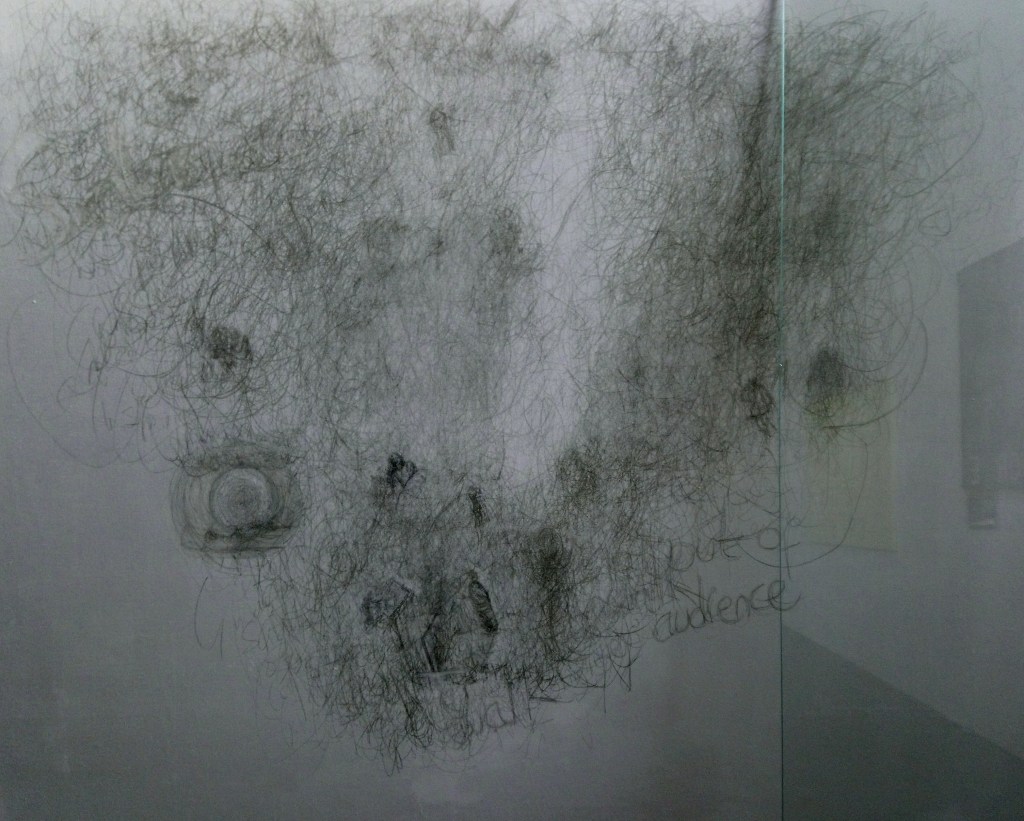
The cental video work of the installation. La Duree, twins two mother/daughter relationships separeted by three decades. Winstone and her daughter re-enact from memory, on original location, scenes from the French new wave film Le Pont du Nord (1981) by Jacques Rivette, starring mother and daughter actresses, Bulle and Pascale Ogier. The video explores intergenerational and intercontinental relationships: who we are and who we would like to be. These themes are extended through interrelated drawings on glass and canvas. The intertwened life of Winstone´s paintings, drawings and videoworks becomes the self-reflexive subject of subsequent moving image sequences, which are then staged in the gallery in relation to static Works.
Sometimes is not about the subject matter is about the approach, you can repeat the same subject matter unlimited times but if the aproche is different the result is not repetitive. Capogrossi is a perfect exempla of repetition.
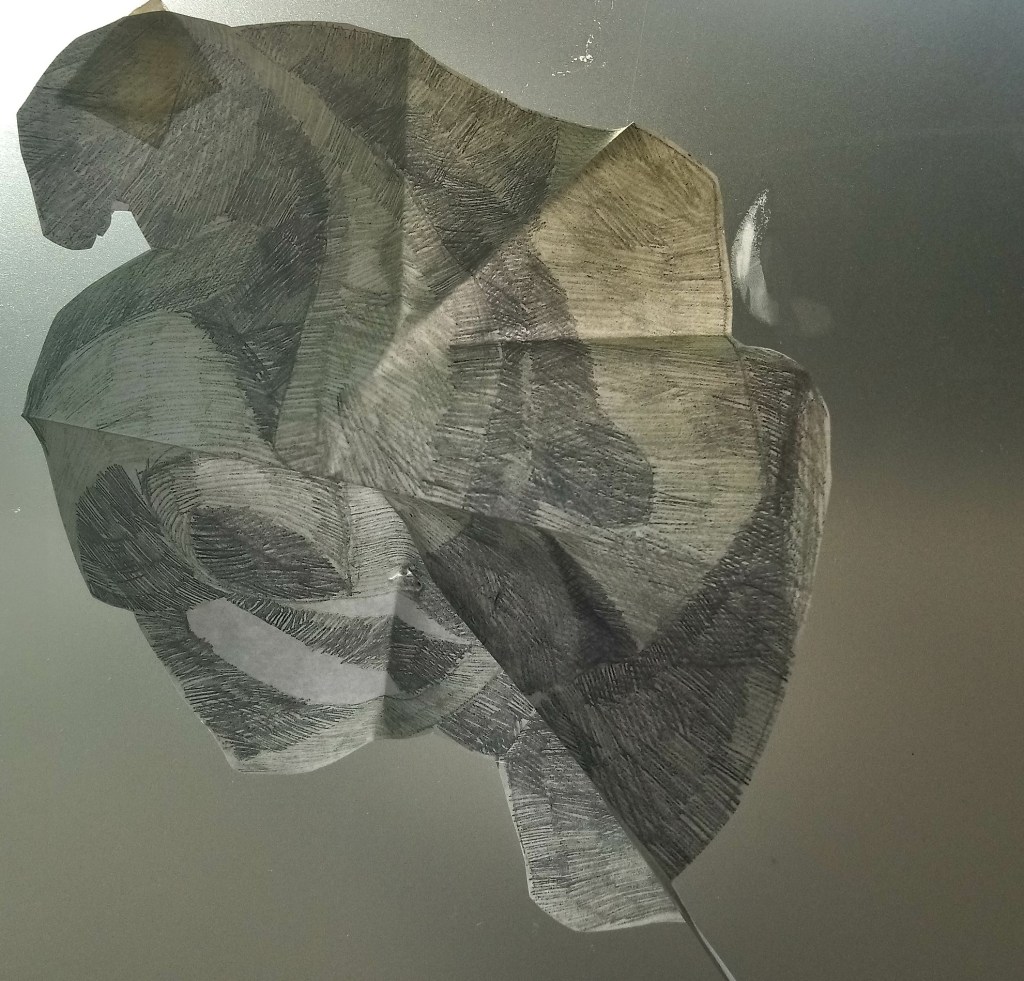
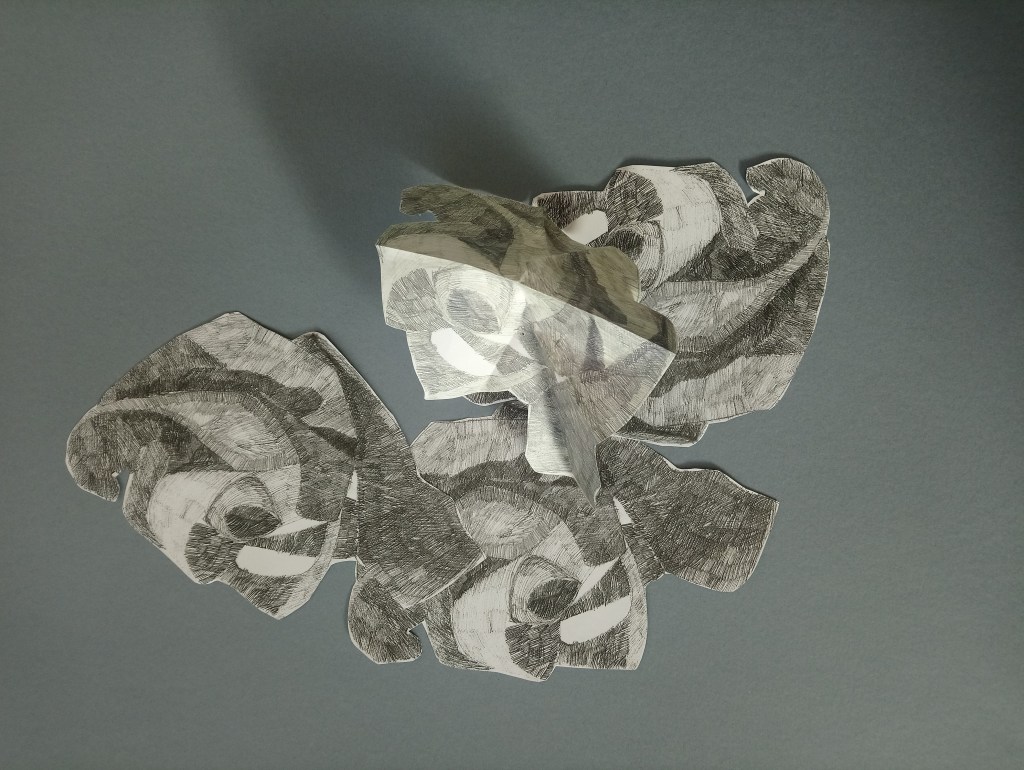
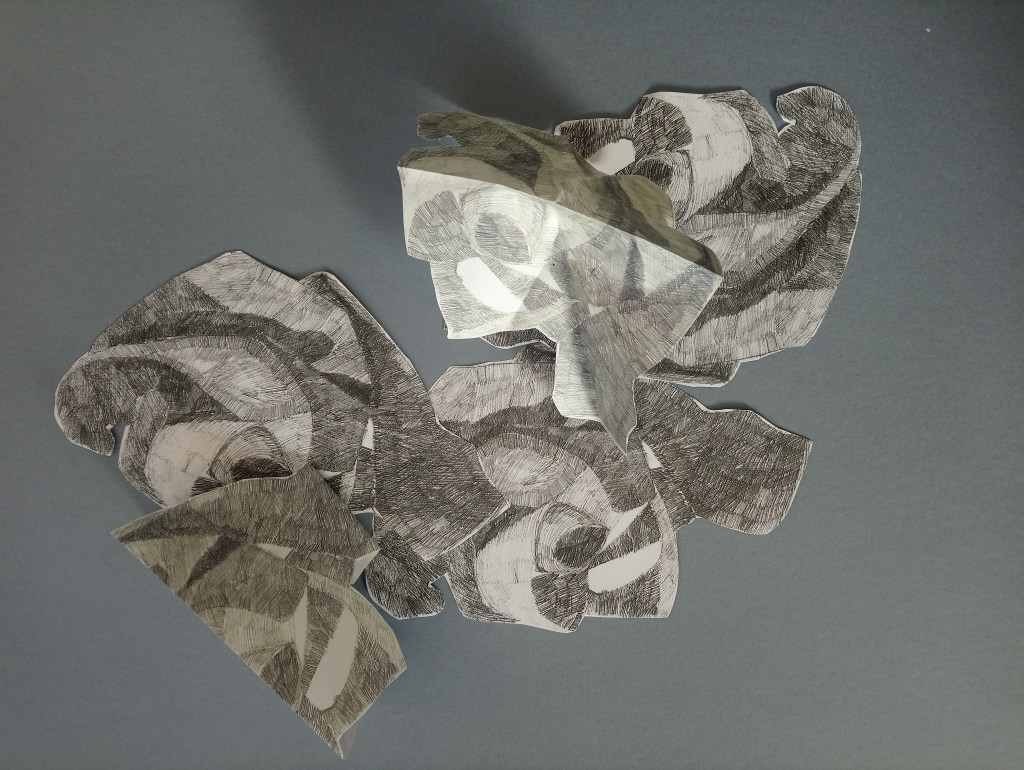
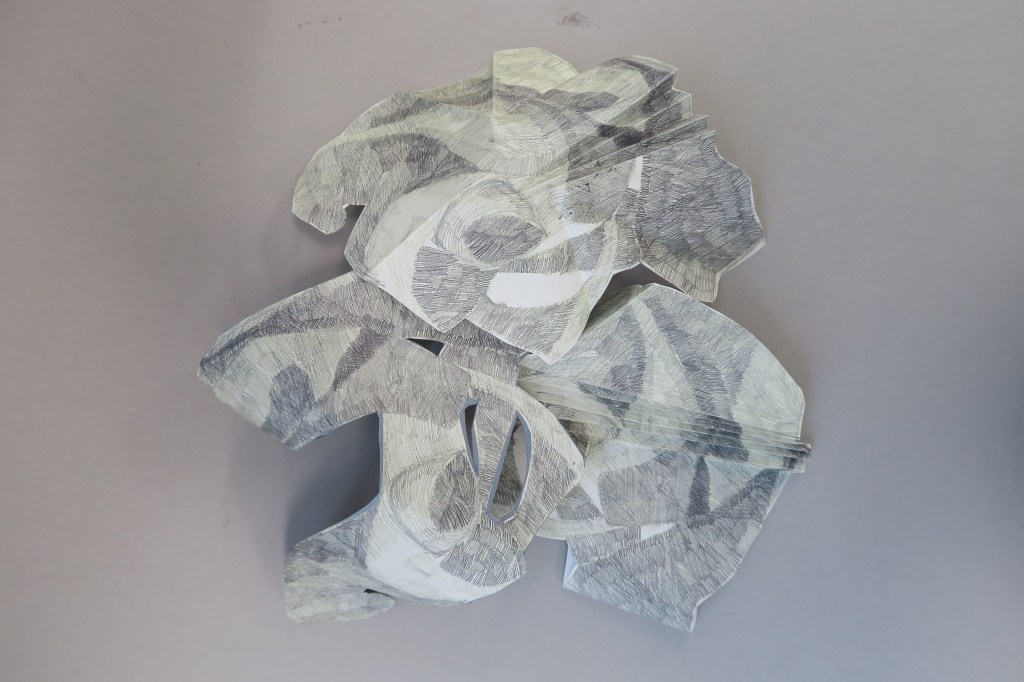
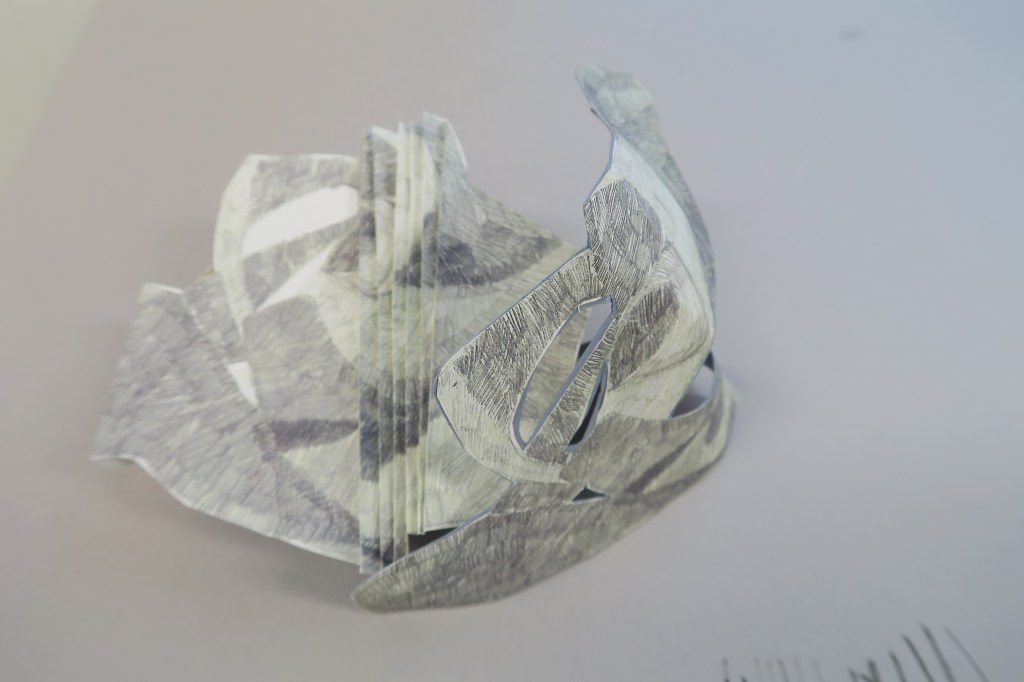
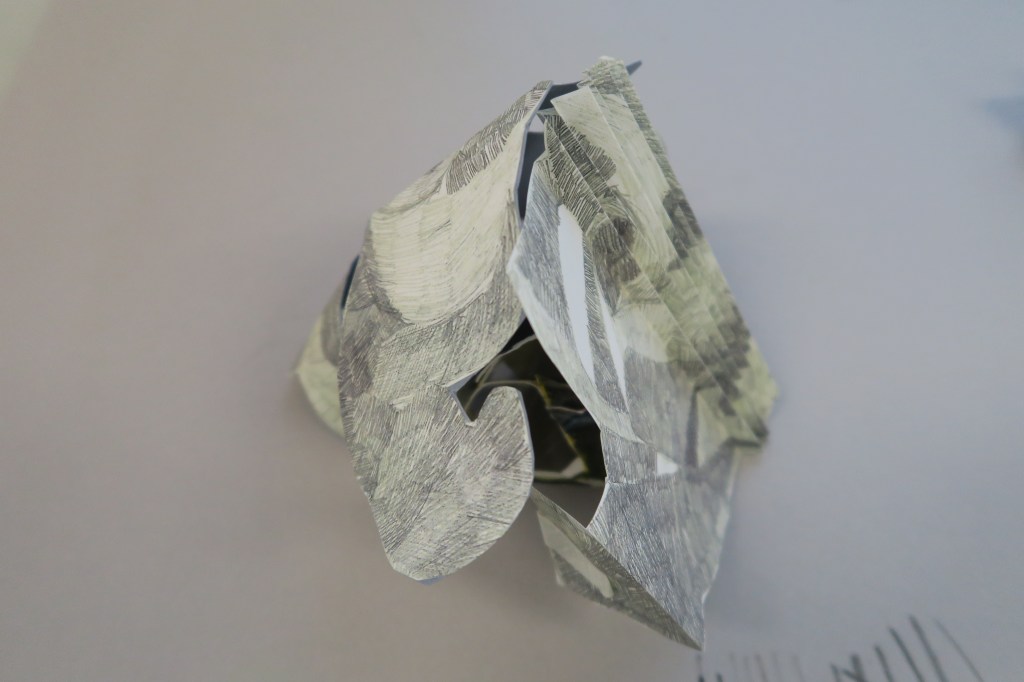
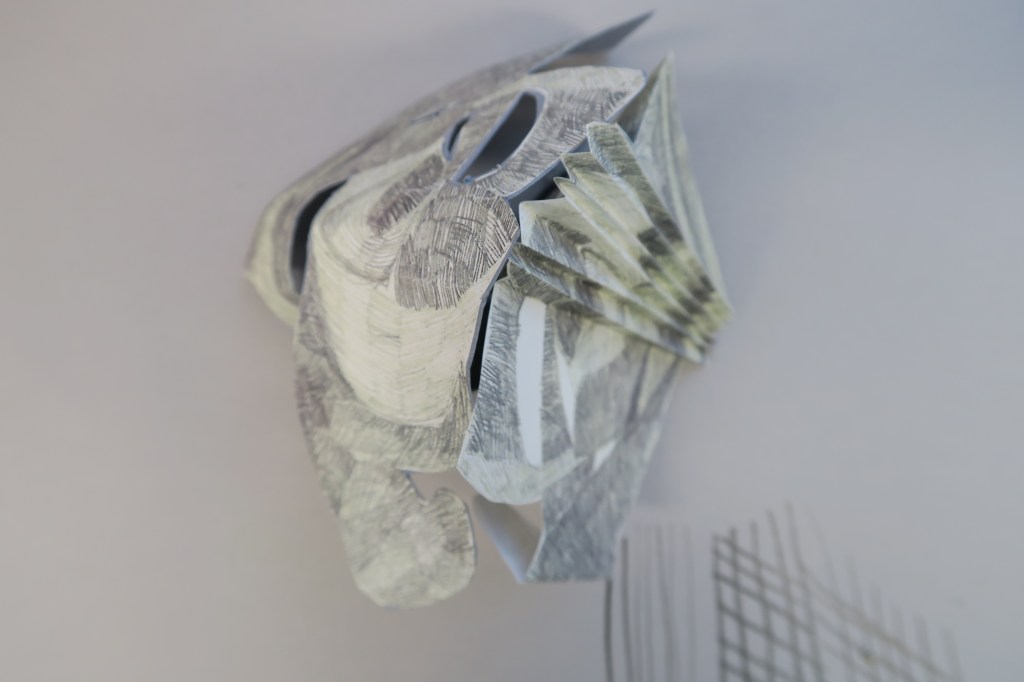
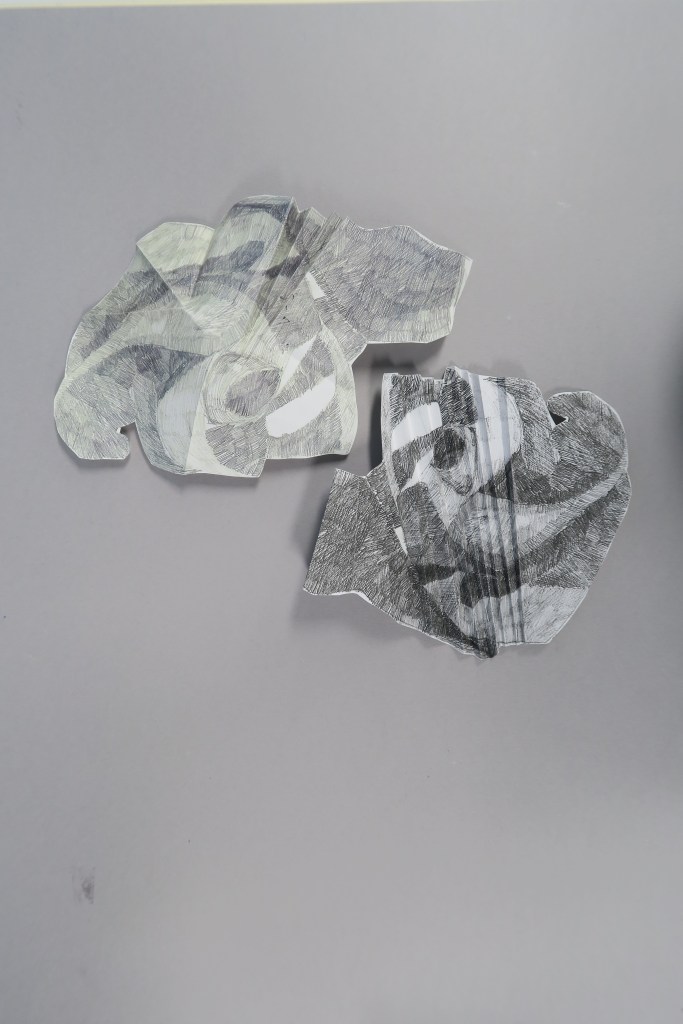
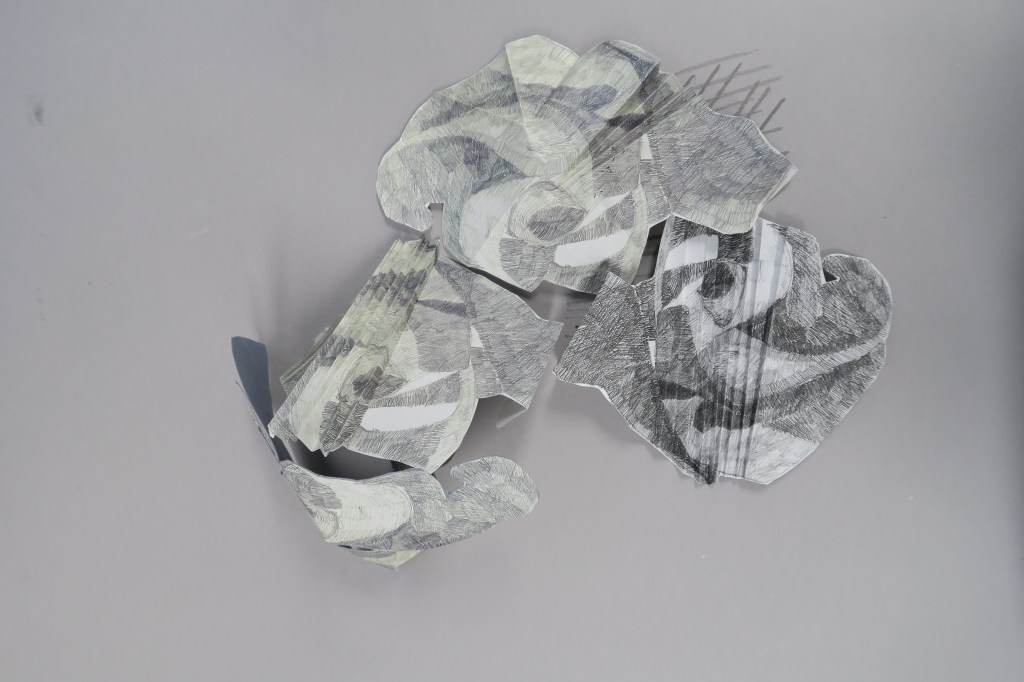
this is paper, I photocopy a drawing varios times and cut them. I am exploring the various possibilities of the same shape but with a different result.
Thomas Demand.
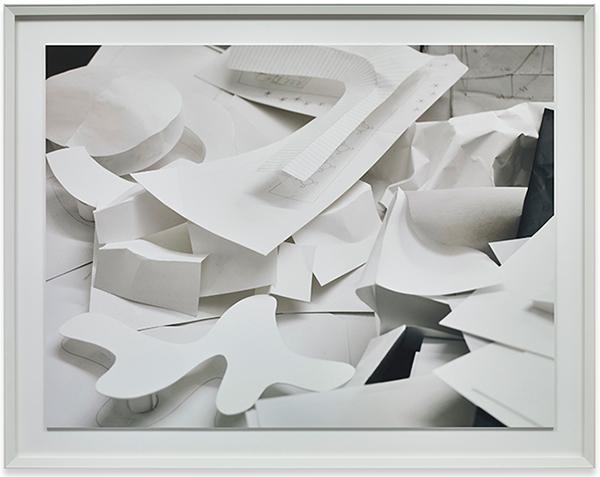
Thomas Demand, the final art work are his photos of his maquets.
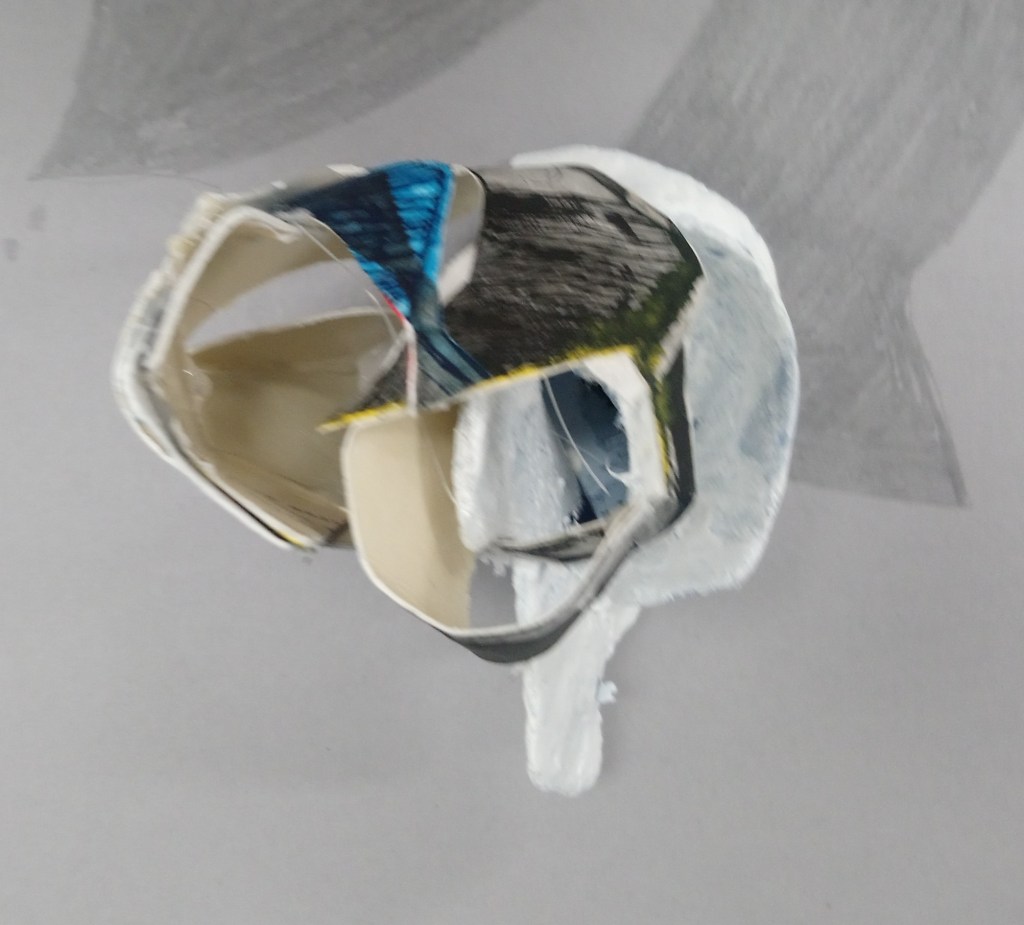
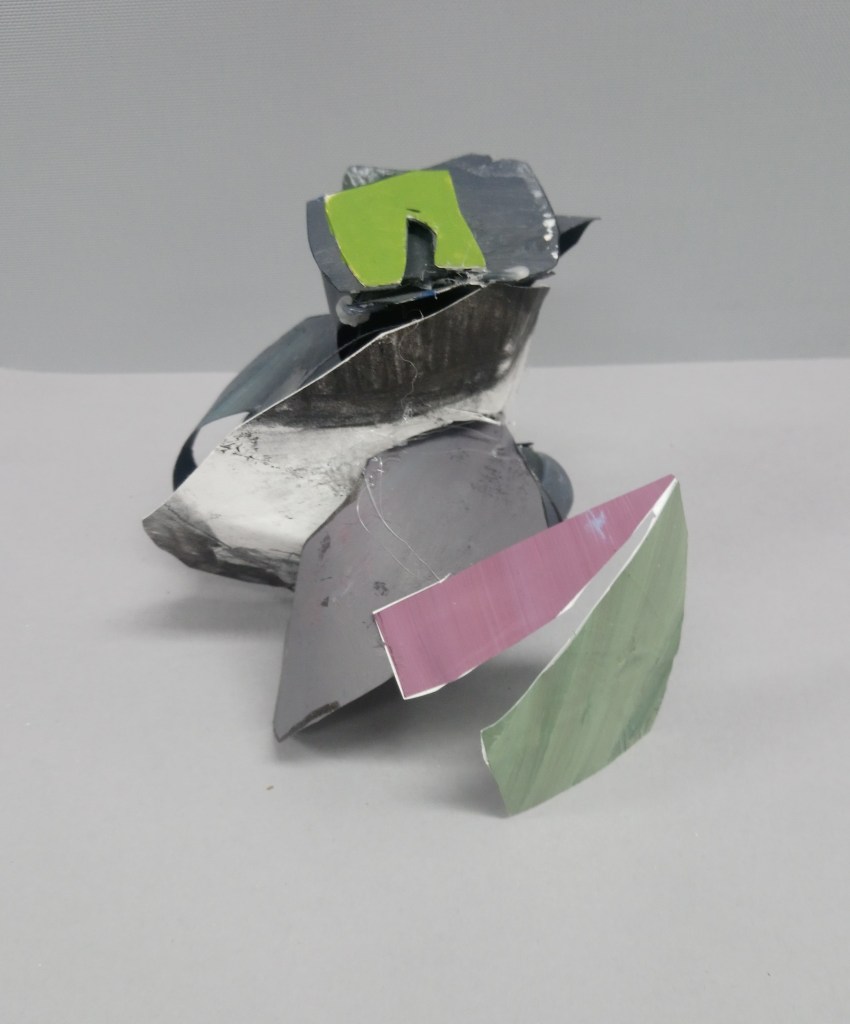
I am looking for various ways of doing compositions, using cheap materials like paper, plaster and plastic. In the research of Phyllida Barlow I read about the informalism, some of the principals of informalism as well of Phyllida are non geometric abstraction, keeping the materiality of painting away from the non figurative and figurative form, emphasizing the color and material as its subject .
prototypes.
Going back and foward with some drawings.
prototype for investigator Project.
SHAPES AND SHADOWS.
prototype for equilibrio and tensión.
This is Amy sillmans writing.
I’VE HARDLY FOUND ANY BOOKS TO READ ABOUT SHAPE. There are centuries of ideas about color, but really barely any literature on shape. My actual starting point for this show was research I did on a painter who works a lot with shape, named Prunella Clough, an English postwar abstract painter. Her work and her context were really interesting, but she was part of a whole group of artists who were swept aside with the ascendency of Pop, and artists who worked more with language and media, work that is conventionally taken to be more “radical.” Prunella was a fierce, freethinking, uncooperatively personal sort of poet-inventor, and she worked intimately with composition and shape, but those things just got labeled as really OUT, fusty stuff, so after she died, she seemed to just disappear. That made me mad. So I started looking at shape as I looked at Clough, as a structural problem. And realized there was nothing much good to read about it.
I needed the shapes to propose something: I needed tension, and skin, and subjectivity, anxiety, discomfort, crisis.
In the painting of Aberto Burry he leaves all freedom to the unexpected of the materials and to the randomness of the gesture thus refuting the matery, the drawing as well as the traditional conception of painting and its path that transform the idea into a finished work, going through the sketches. With informalism art, it is a work oen to interpretation that the viewer can read and interpret freely. breaking with the usual artistic cliches, the pictorial adventure takes a new turn, instead of starting from a sense to construct signs, the informalism artista begins by making signs and then giving them meaning. the movement focuses on the pictorial process that allows the spiritual to express itself freely an immediately.
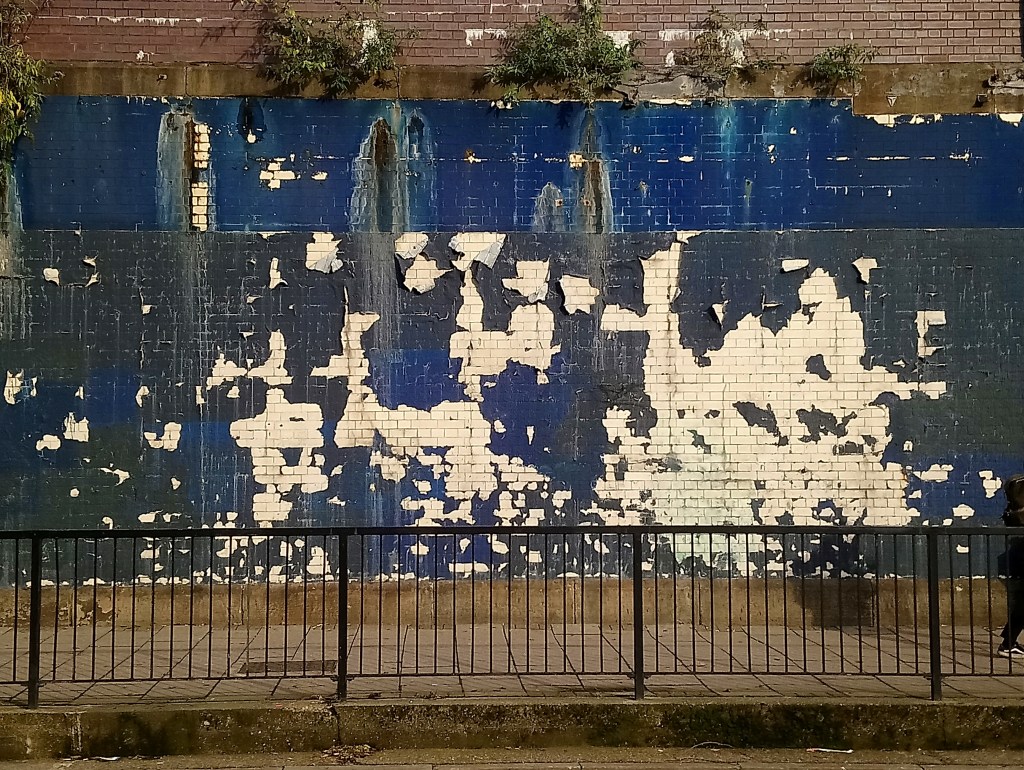
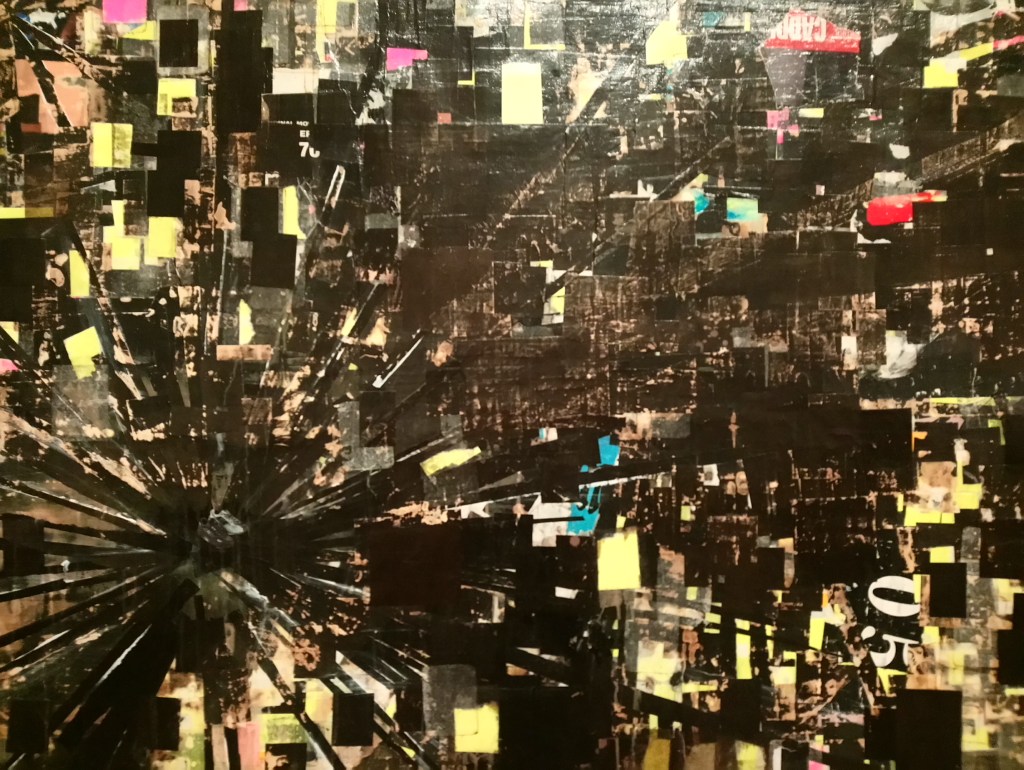
in the Street I could see some marks on a Wall similar of Mark Bradford artist.
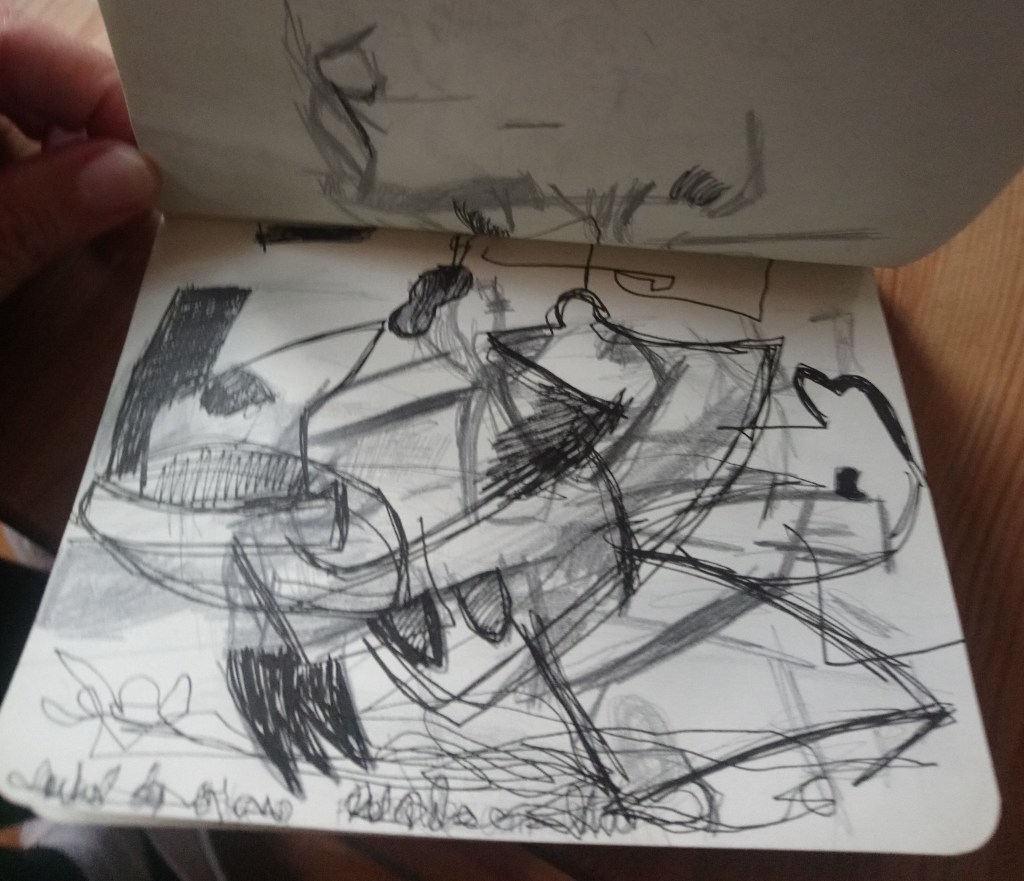
sketch. Luisa Mascaro
sketch
Mark Bradford.
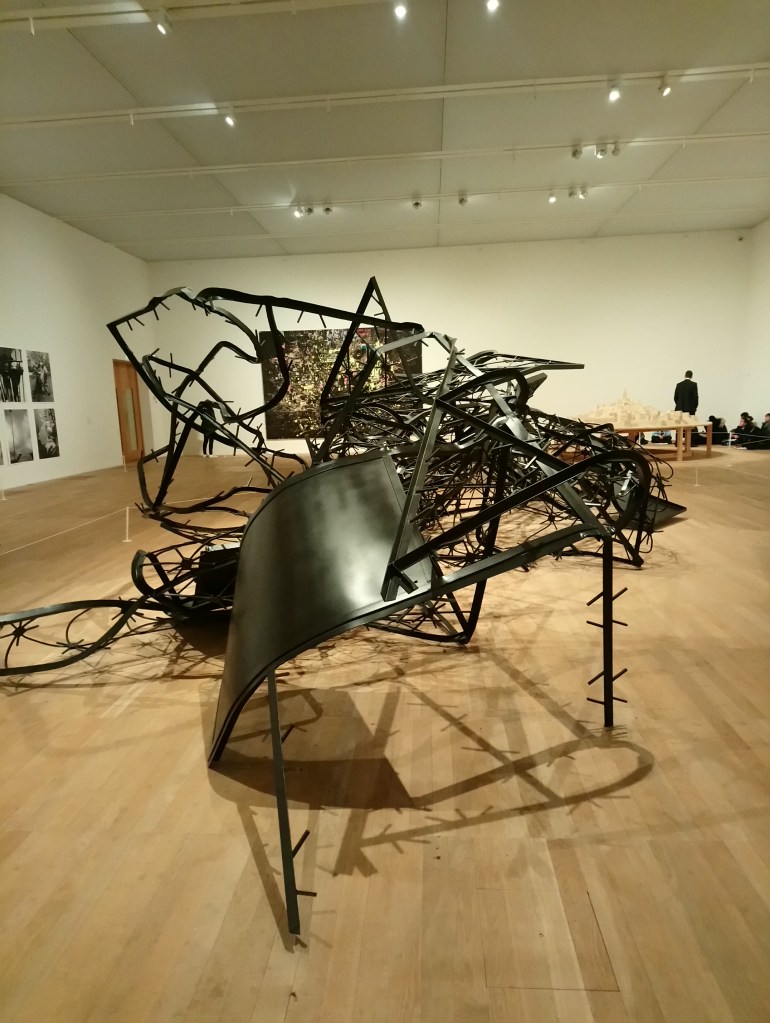
Monika Sosnowska.
The first day of the `Investigator´ project.
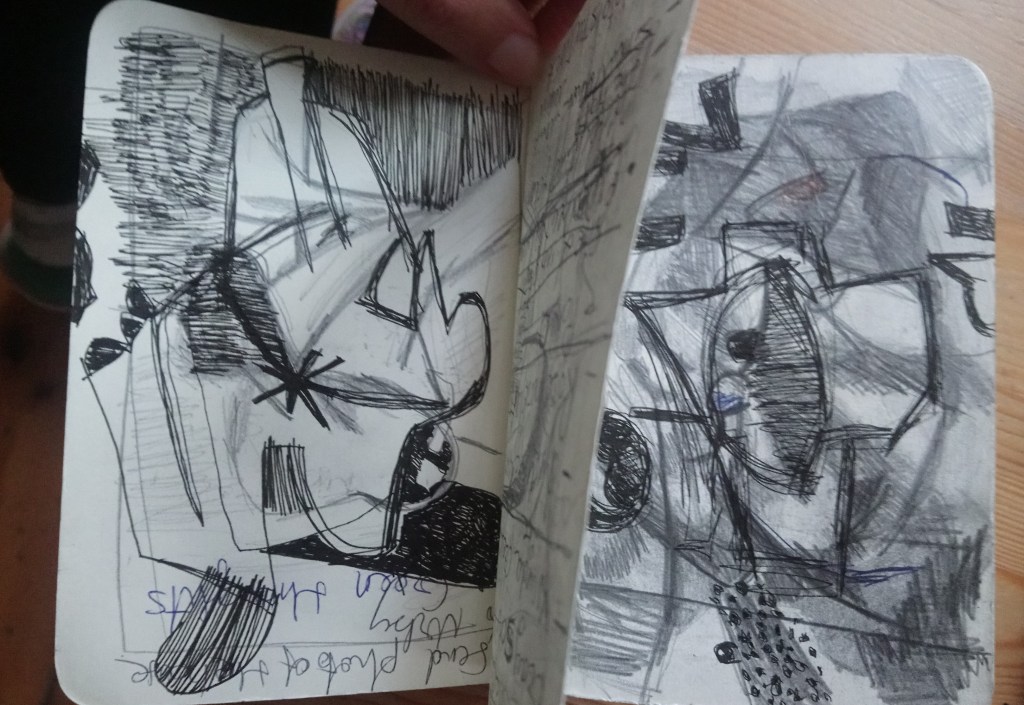
We went to Tate Modern and I began my journey by looking at a Mark Bradford painting, even though there is no actual painting in a Mark Bradford painting. I decided to catalogue my journey by drawing in a notebook, already full of sketches that I did 3 years ago at Tate Britain. I saw all the painters that I admire including Frank Auerbach, Ben Nicholson, Lucian Freud and Francis Bacon. I am sitting in front of a great painter at Tate Modern after a 3 year gap, using the same notebook, but this time I am creating my own interpretation of these great works as opposed to copying them as I did before. I am interested in layering different medias over different periods, and at the same time wish to stretch the boundaries of the médium. (I think taking risks allows space for new ideas to flourish, but is not essential for a ¨successful” piece of art. An example of this is Pollocks ´the dripping´, that was created by accident.)
I began to draw different shapes of Mark Bradford´s painting using a soft pencil and a pen, this was different to 3 years ago when I used a harder pencil. I drew each time period using a different pencil to give the drawing more depth, and used a different technique for each layer to créate a rich and vibrant feel. In addition to this, I added composition that was inspired by the interlocking shapes taken from works by Mark Bradford and Frank Auerbach.
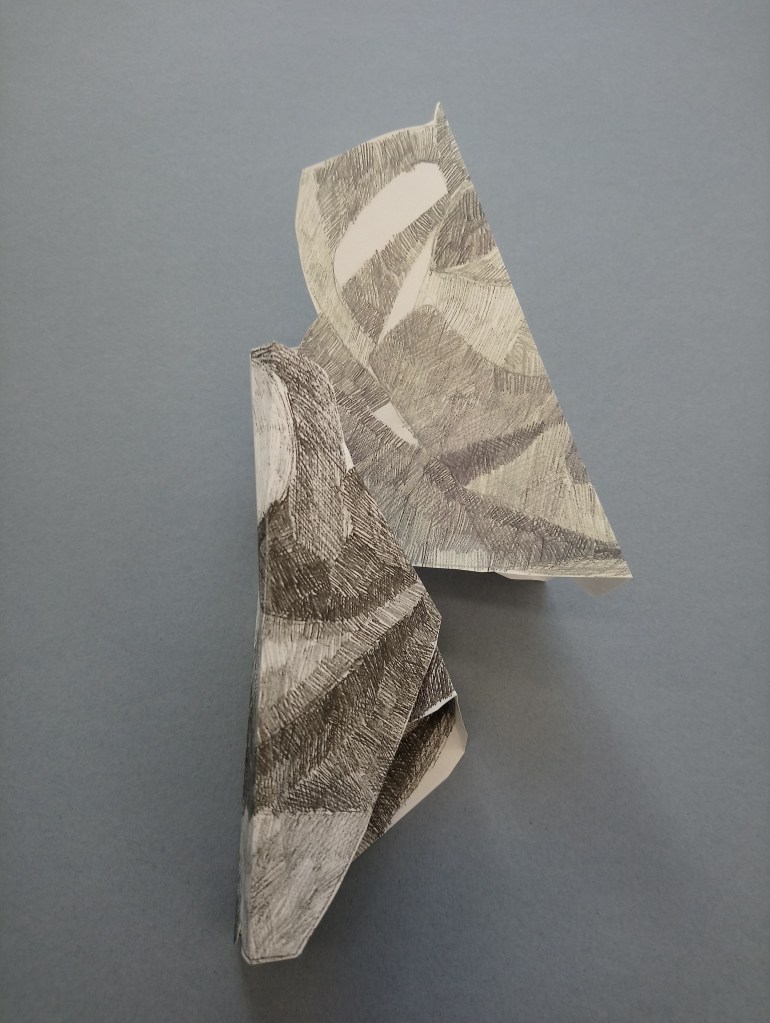
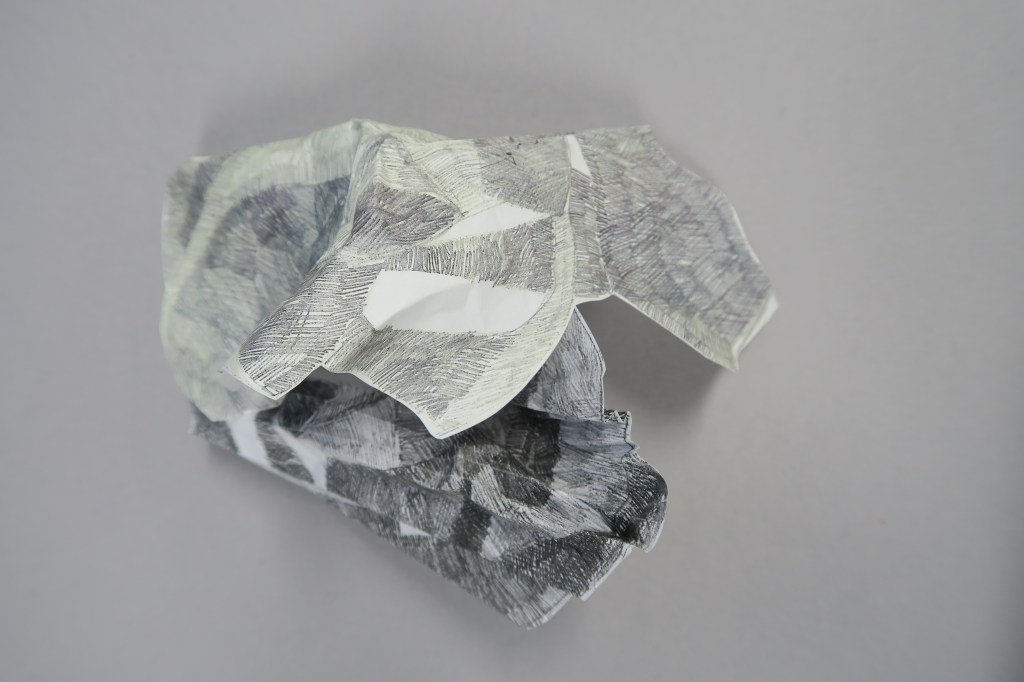
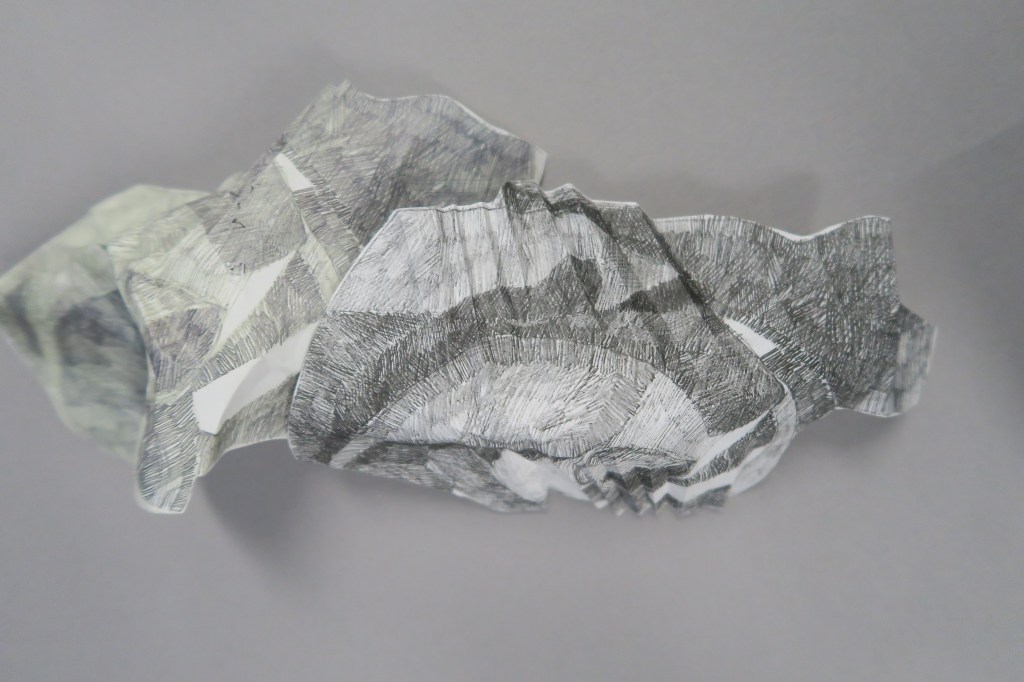
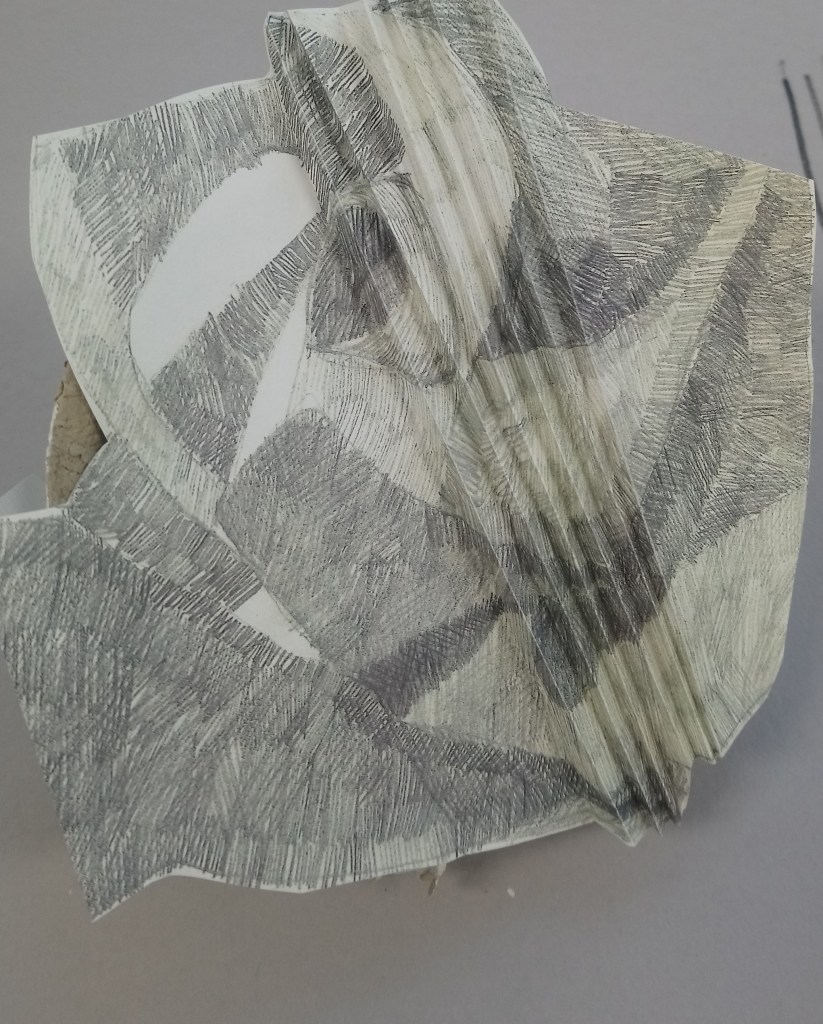
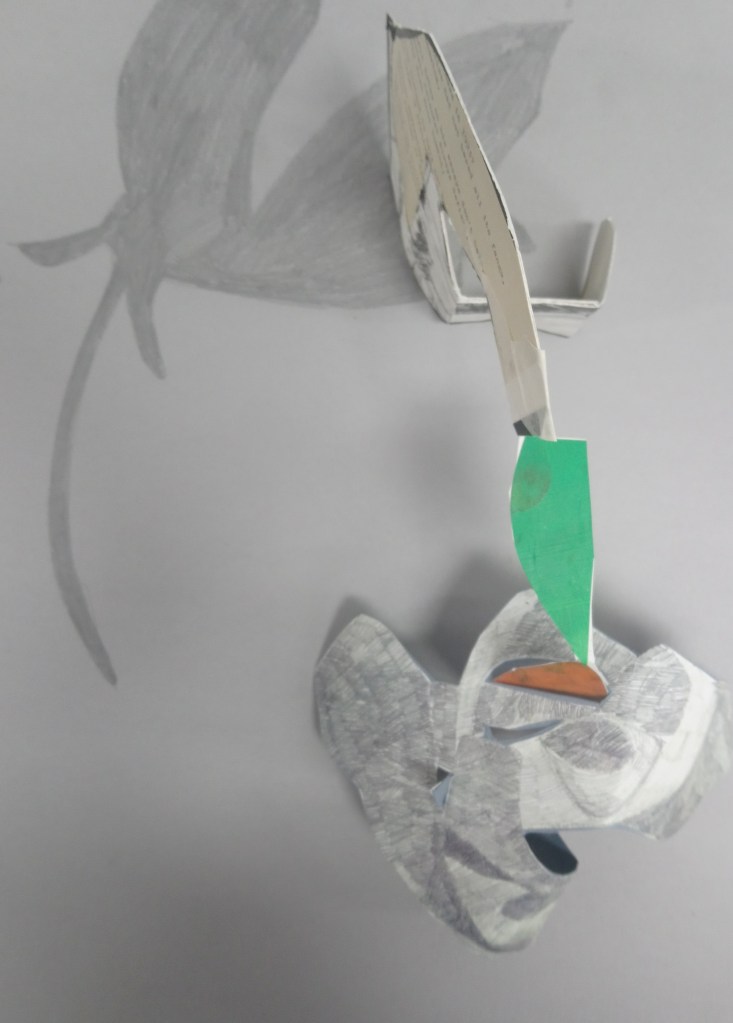
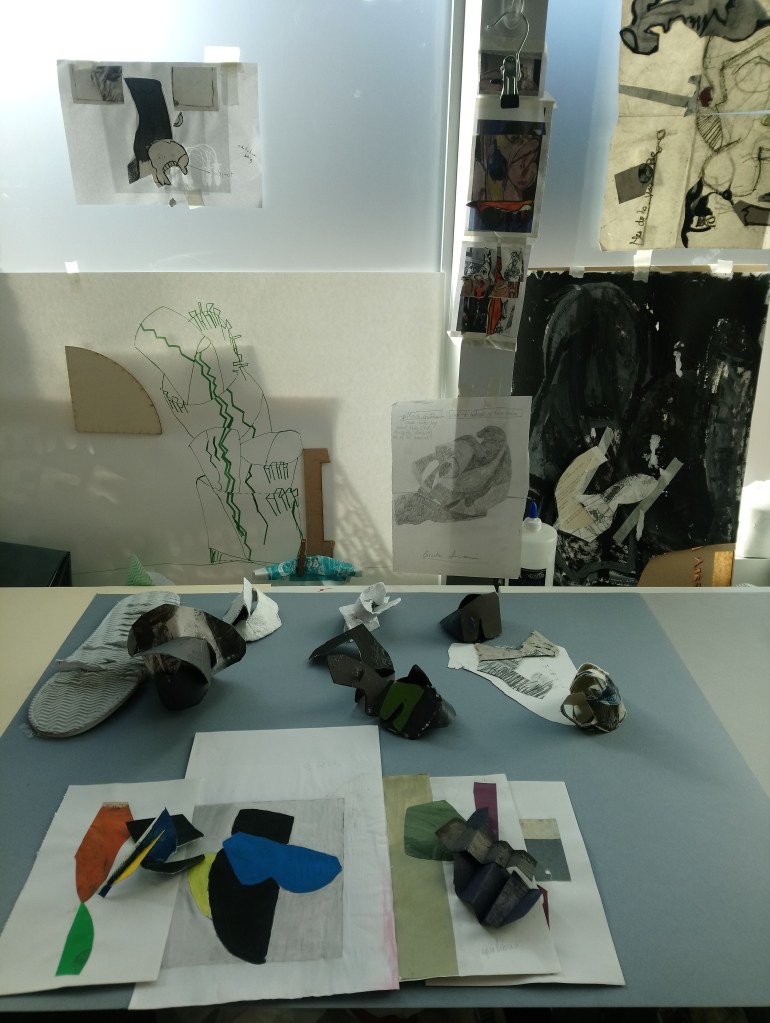
These drawings can be made into 3D objects which could then be exhibited as part of an art instalation, or equally remain as a simple sketch. To make a 3D object, I will cut the paper accordingly and fold into each shape. I see this piece as an ongoing project which I can continue to make 3D objects from as I wish. This allows the piece to continually change and evolve over time, as it emerges from the page. As I sculpt each area of the page, I am guided by how I see the shapes form.
I think its important not to place too much pressure on yourself to finish a piece, if you feel the time is not right in that given moment. Sometimes it is better to leave work to one side so you can see the piece from a different perspective, and in some cases this will mean moving on to other projects. The inspiration you feel to return the piece, can drive you to create your best work.
An interesting example of this comes from the painter Miquel Barcelo, who left his painting in a studio in Africa. After some years he returned to find insects had landed on the artwork and eaten through the canvas. He decided that the marks and holes left in the canvas had finished the piece. In my new pieces for the Investigator Project, the idea of external forces playing their role in the final presentation is also apparent. In a piece I created last month, I used papers which had been weathered by the atmosphere over time, and depending on how humid the room at different times and where they had been left in the room gave each paper a special quality. This also happened to Leonardo Da Vinci who, drawing on mouldy walls, used the mould to guide and inspire how the picture would be drawn.
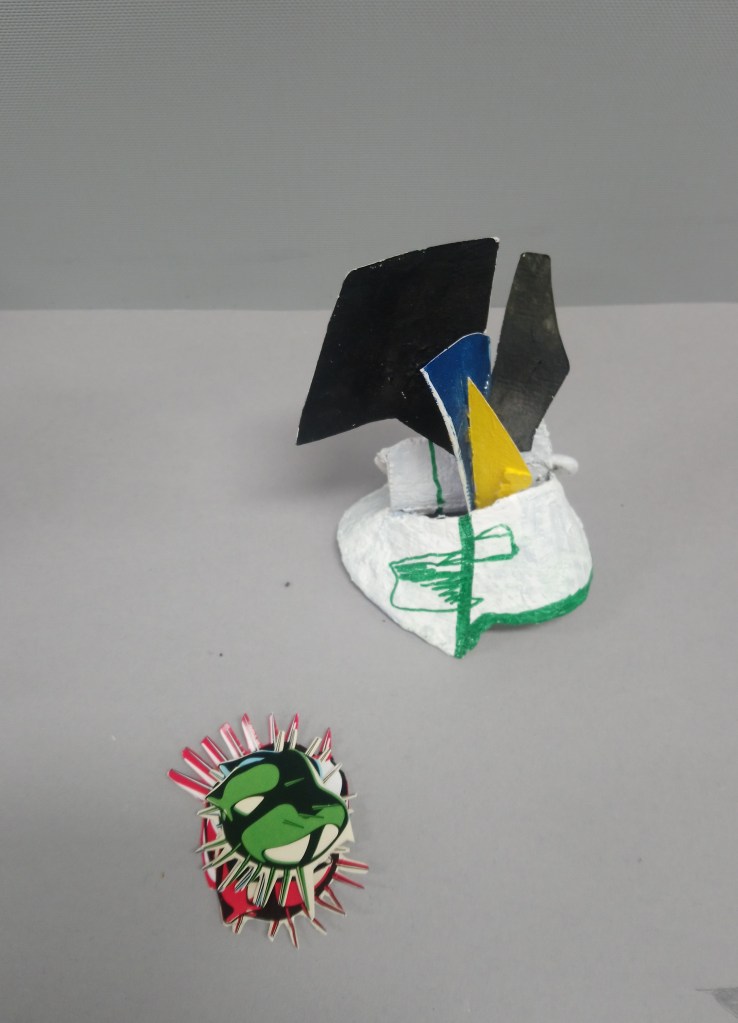
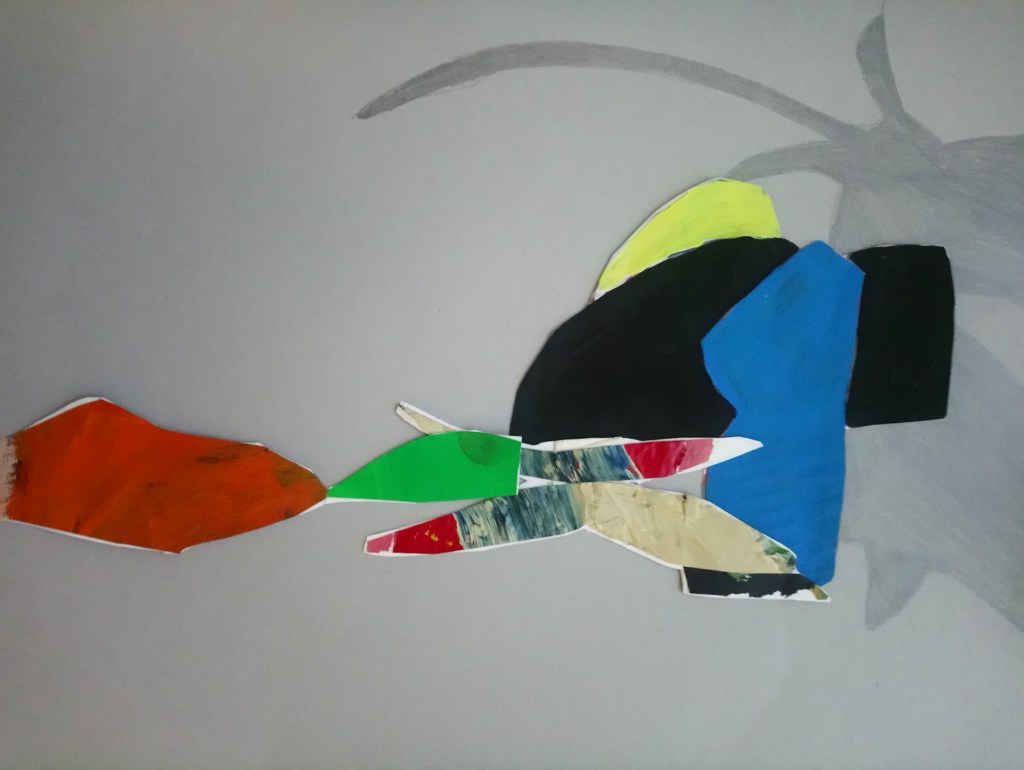
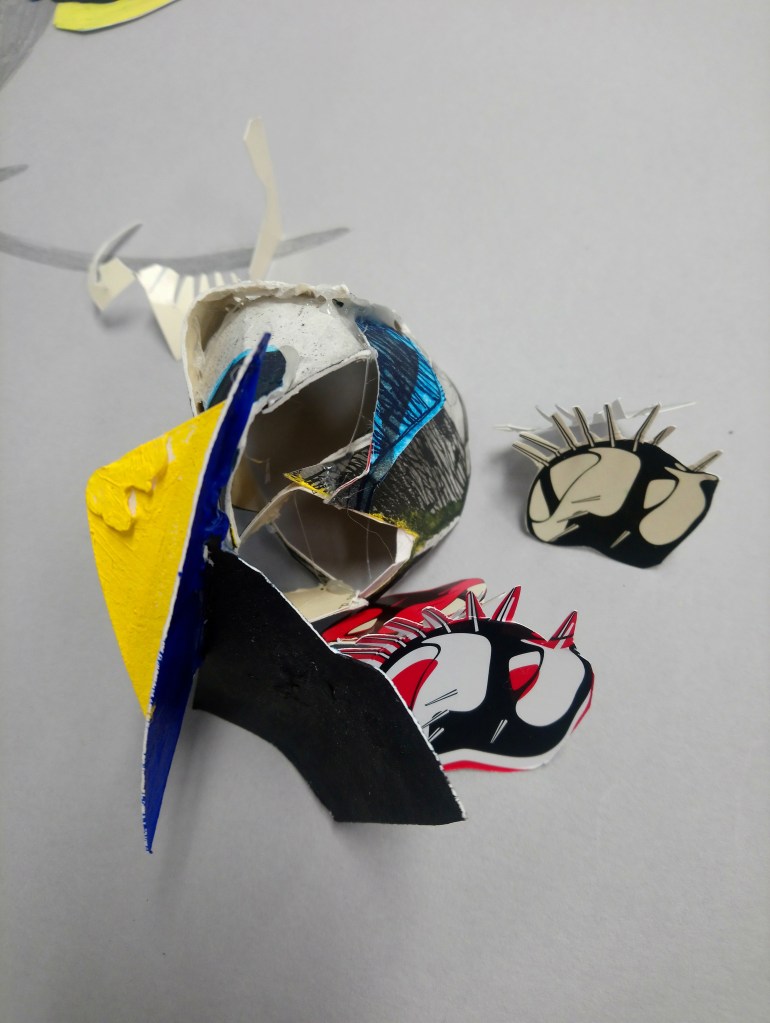
FLAT FORMS WITH
SATURATED AND UNSATURATED COLOUR WITH 3D OBJECTS.
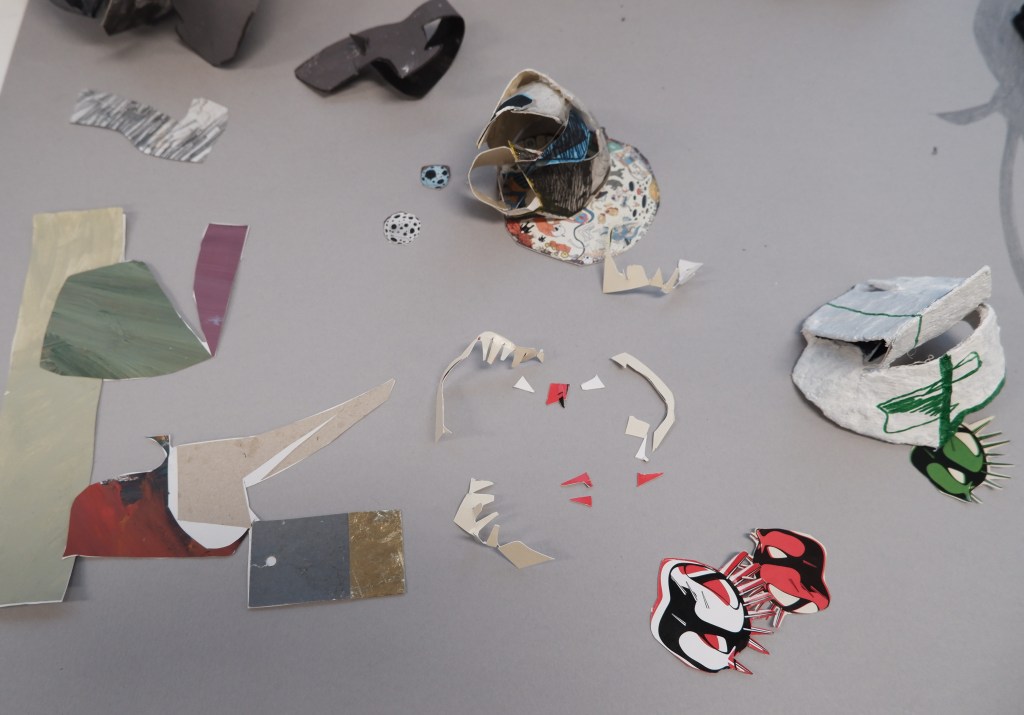
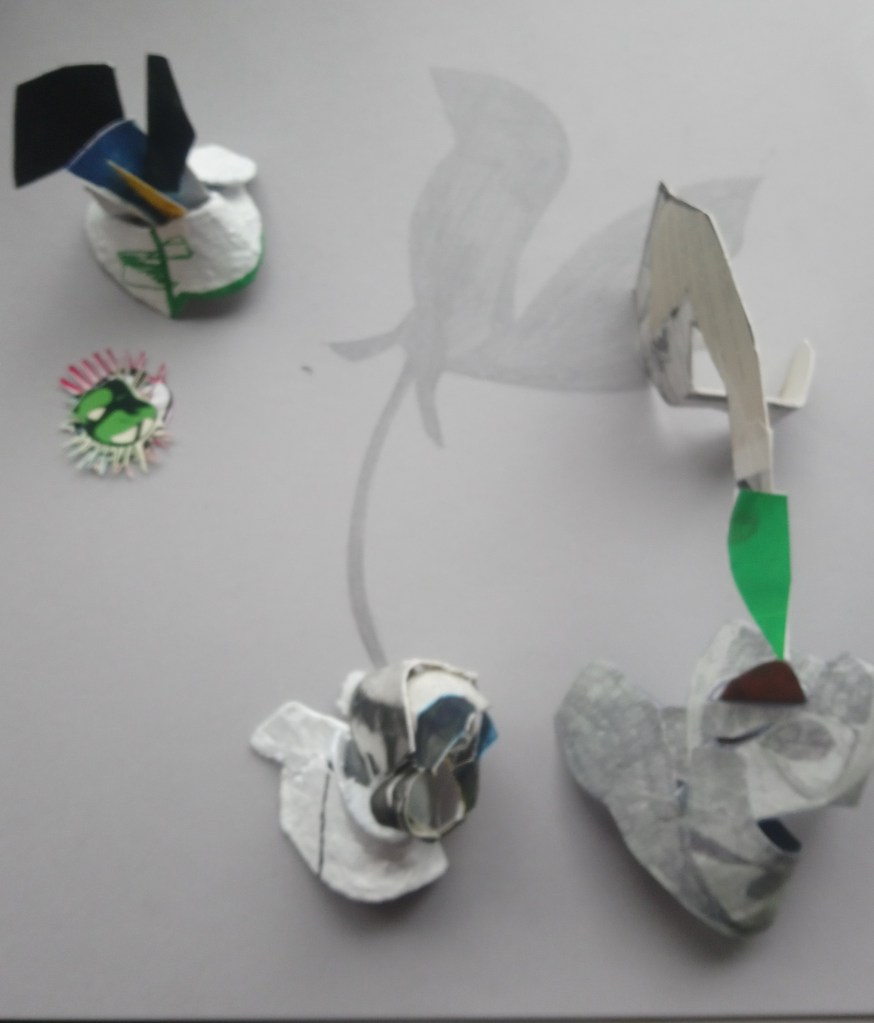
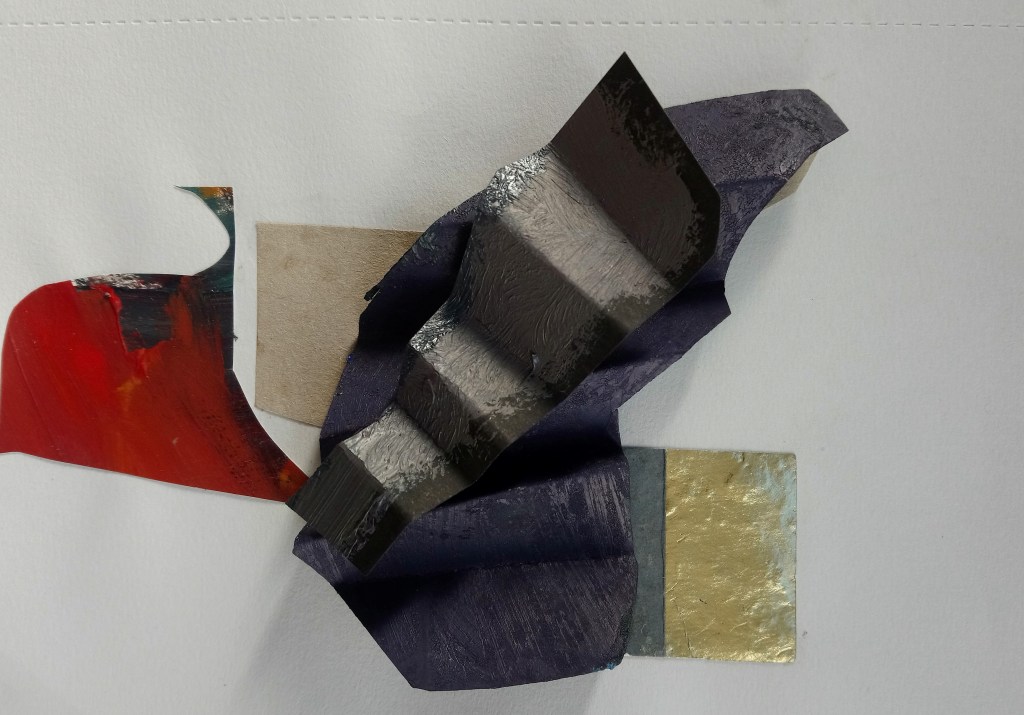
I am doing compositions with some shapes
that are painted with saturated and unsaturated colours, Mixing with 3D objects made with ´damage´
etchings, material and shapes guide me what to add next to it, I am using intuition
but the intuition is defenetly sitting on
the shoulder of the knowledge even if sometimes It can be an obtical, if I
wouldn’t want any obtical I will do like Phyllida Barlow did with is objects
working on a dark room and just was making them with the feeling of the taugh.
Two saturated with same tone colours have a
more powefull interation than a different tone and one saturated and the other
disaturated .
Some of the shapes on paper I found in the
streets( that grabs my attention are
ready made shapes)others I cut them from old papers or from discarded (damage)
etchings. I found one fabulous paper with gold and green on the floor in the
street , and is a bit damage, that makes the paper more alive. Actually Julian
told me today that the 3D objects and the flat shapes looks a bit damage from
the weather, and I thought about the mod and insects of the studio in Africa of
Miquel Barcelo, im interested the weather play his role, also my marks and
smages ,or layers of colours on the paper left behind,bring them to the present
and do a new collage with them.
In the last project of Artefact I didn’t
mixt flat papers with 3d object. After been at tate modern with my mates of RCA
I saw an installation of Irina Nakthona and I decide that the compositions I am doing could go inside a room not as an
sculpture or object ,but as an installation.
Kurt Schwitter and William kentridge also
are some of the artist which influence me in this project.
Kurt Schwitter for the introduction of
having 3D shapes been part of a room not
separate of the room, a respond of the space.
And William kentridge for the animations,
projections.
Interation of colour, form and introducing
music.
Kandisky said each form has a sound as well
each colour. Saturated color are activating each other doesn’t matter the tone
but it matters that has to be the same tone if you want the hight interation.(projections
of colours and colours and shapes with materials, each projection has a note of
music, Rothko with his layers of different tones and colours and with the sound
you see how the colour is changing, each of his painting has a different sound,
sound is a bit influence in our mind, probably it goes direct to the heart
ignoring the mind as well all other senses)we can manipulate feelings how we want.
Thoughts follow the view and the way round. An installation,painting or sculpture can makes you and inversion of thought and the way
round also. Or maybe is an inversion of the
heart?
Olafur shows in some of his art works
different perspectives and perceptions at the
same time. All is about our mind, we can guide it or it can guide as.
I admire Anthony
Caro he was influenced by American Abstract artist of the same generation. His
work enacts the movement from figurative to non figurative abstraction which
characterizes British sculpture of the 1950-60 he abandoned the anthropomorphic
motifs of his early work in favor of dynamic. Expressionistic assemblages of
steel and other materials, he was doing a lot of assemblages with different
materials, One of Caro´s most innovative technical maneuvers was to integrate
the spaces and surfaces around the sculpture into the work itself, removing his
works from the plinth.
Henry Moore
and Barbara Hepworth they move from figurative to non figurative. Modern art at
that time was divided between surrealist and purely abstract artist and a
fusion between this opposites movement.
The idea of
cohexistance in the coherent whole project. Ivestigator.
In the
investigator project the idea is to introduce sound, and invite the people to
interact with the shapes , my idea maybe is to have a panel with different
shapes and colours, each shape Will have a sound if the public touch it, they
can create they own composition with sound. the sound Will be related with
different countries and religions, and the idea is to explore if public can be
in the middle of the sounds exploring feelings and perceptions.
ANOTHER POSSIBILITY FOR AN INSTALATION.
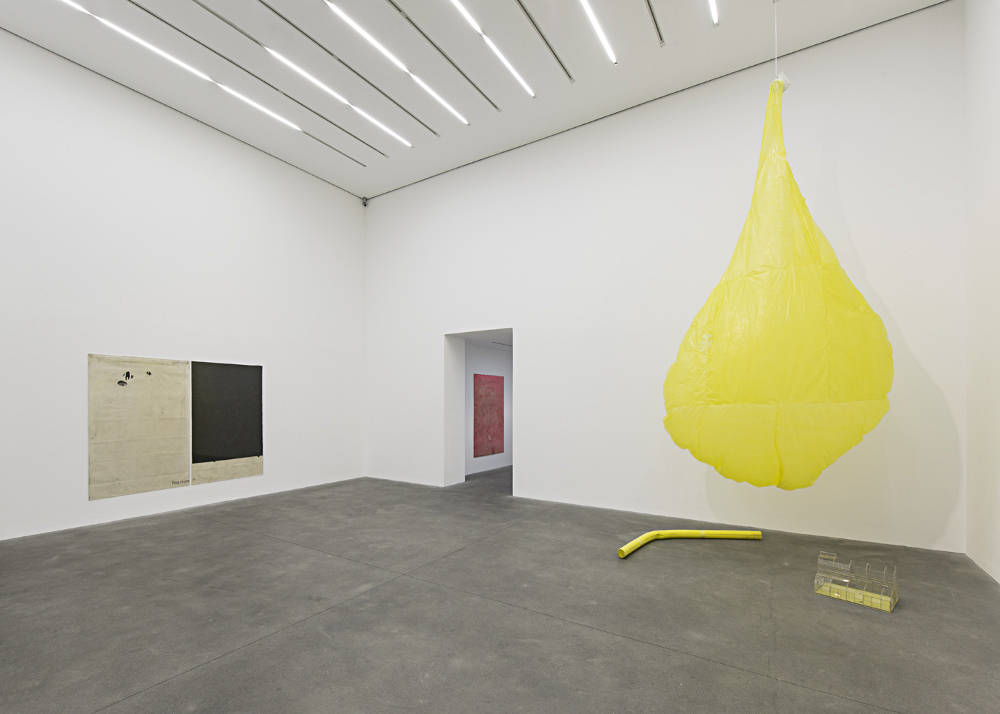
The installation I am creating with 3D object and flat shapes are discarded etchings and old papers, sometimes wastes of the city and already made object all are ensemble them.
Transformation of objects already present in our environment.
Investigate how I could develop wearable objects by decomposing and reassembling materials that are already in circulation. It inspires me to investigate ways to break down gathered waste materials by drilling ,smashing ,sandblasting, cutting, fragmenting, slicing, and piercing and to explore strategies for re-assembling these materials into new forms (using repeated actions such as folding,threading and knotting)





 Luisa
Luisa 