In the early 1980s Wentworth became identified with the New British Sculpture movement. Wentworth’s interest is the juxtaposition of materials and found elements that do not belong together. In the work Shower, Wentworth attached a small propeller to an ordinary table creating the impression that the furniture is about to take flight. For his 1995 solo show at the Lisson Gallery he created False Ceiling a flock of books suspended by wire from the gallery’s ceiling. For Art and Sacred Places in Winchester Cathedral he created Recall which speculated how the structure of the Cathedral might have been supported during its construction. Wentworth is also interested in the bizarre coincidences of urban life.
Henry Moore was a major British sculptor whose organically shaped, semiabstract and often monumental bronze and stone figures made him one of the most important sculptors of the 20the century.
Born in into a Yorkshire coal-mining family on 30 July 1898, Moore started training as a schoolteacher, until he was called to serve in World War I and was injured.
There, he spent time at the British Museum, discovering the power and beauty of Egyptian, Etruscan, pre-Columbian and African sculpture. Reacting against the European sculptural tradition, Moore moved away from the human figure to experiment with abstract shapes that made use of organic and natural forms – he studied bones, pebbles and shells to understand what he called “nature’s principles of form and rhythm.”
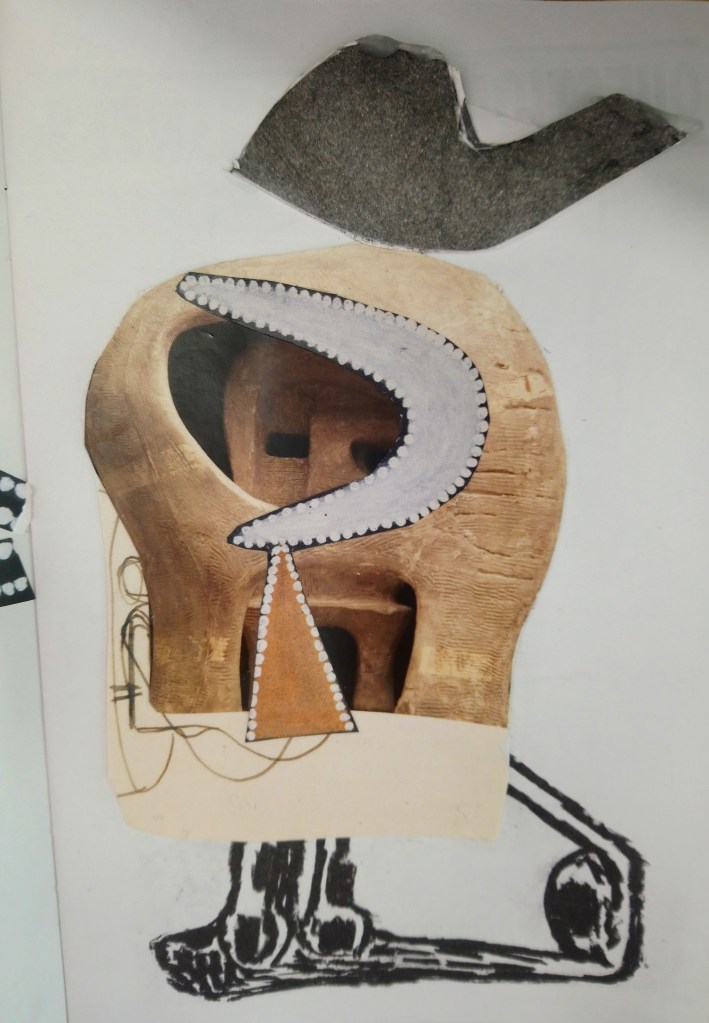
SOME OF THE SHAPES ARE FROM THE BORN OF VENUS PAINTING (THE BLACK YELLOW AND BLUE SHAPES), AND SOME OTHERS FROM AMY SILLMANS ARTIST. OTHERS FROM HENRY MOORE WITH AMY SILLMANS.
LINES AND SHAPES, BRIGHT COLOURS AGAINS BLACK, PUSH AND PULL.
HANS HOFFMAN.PUSH AND PULL.
experiment with abstract shapes that made use of organic and natural forms – “nature’s principles of form and rhythm. Henry Moore.
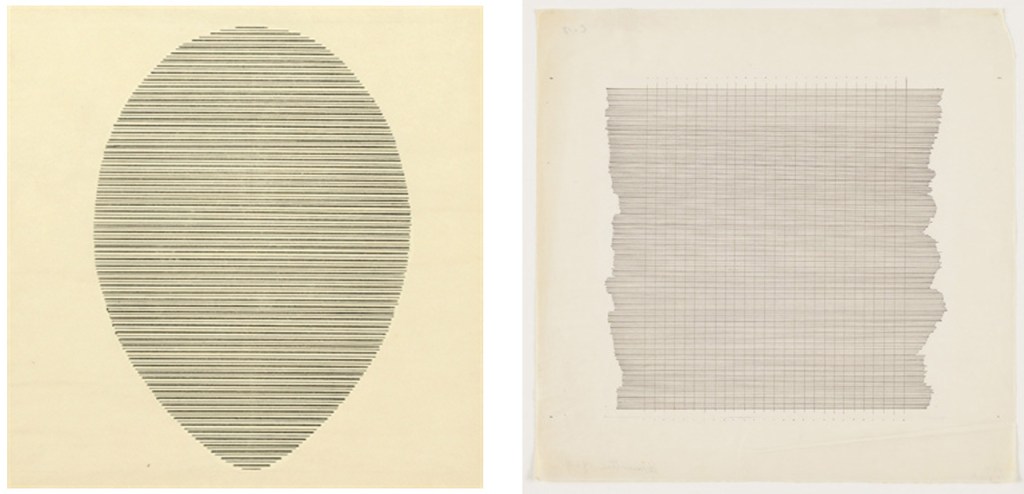
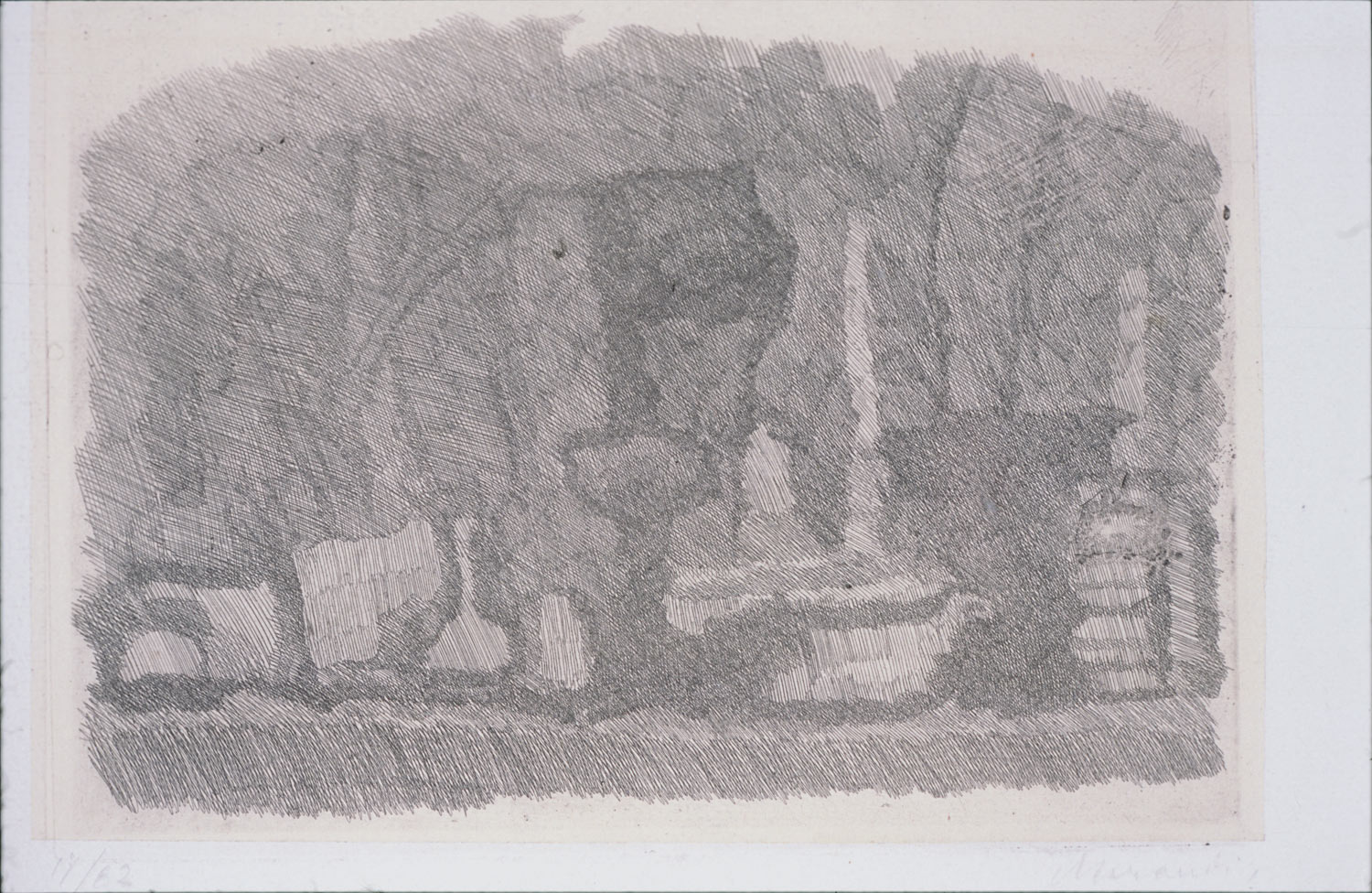
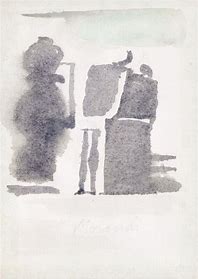
Agnes Martin.Georgio Morandi.
Georgio Morandi and Agnes Martin, these two artists bouth very introverted bouth are using mute-colored, were interested in the shapes in between the shapes. Agnes Martin more into meditative aproache and minimal image. I am interested in the same things in this Project.
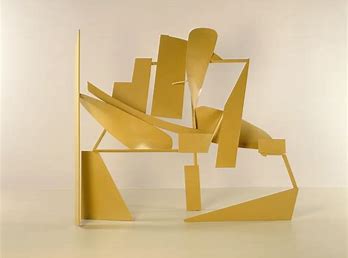
I did this painting last year, but now is back into the RCA studio. I want to make an sculpture from this painting inspired by Anthony Caro.the shapes of this painting are from still life, my intention is to deconstruct this painting and make it into separate planes leaving space in between each plane, for this model/prototype Anthony Caro and Morandi are my influences.
I Will do a model of this painting with cardboard(flat shapes)and some shapes that Will not be flat they Will be with Porexpan. I will focused on subtle gradations of hue, tone, and objects arranged in a unifying atmospheric haze.tMorandi had this way of painting his still life.
Bits of capboard Will be bent, buckled and twisted before being welded together to articulate space and create rhythm and movement.
HOW EMPTY SPACE AND LINEARITY COULD TRANSLATE INTO SCULPTURE.
Research of materials. porexpan, cardboard and plaster. For this piece I would like to use a material that is like silver and easy to bent.
Research of Anthony Caro and Morandi.
Morandi. The shapes in between the object.still life.
GEORGIO MORANDI.
The Metaphysical painting . This was to be his last major stylistic shift; thereafter, he focused increasingly on subtle gradations of hue, tone, and objects arranged in a unifying atmospheric haze, establishing the direction his art was to take for the rest of his life.
Sir Anthony Caro (British, 1924–2013) was a sculptor best known for his abstract constructions made of steel, bronze, lead, and wood. He trained at the Royal Academy Schools in London from 1947 until 1952, while working as an assistant to the sculptor Henry Moore. Caro began welding steel into abstract forms and painting them in one primary color.
In the late 1960s, Caro created a series of Table Pieces, which resist becoming models for larger works by incorporating tool parts that relate to the scale of the human hand. Throughout the 1960s and 1970s, Caro was concerned with how empty space and linearity could translate into sculpture. Emma Dipper (1977)—part of a series made of Emma Lake in Saskatchewan, Canada—resembles a steel line-drawing that seems to float in space, without a base and center. Caro avoided complete abstraction by maintaining a connection with the body; his work curves into organic forms, maintains life-size scale, and invites the viewer to walk around to understand the relationship between sculpture and space.
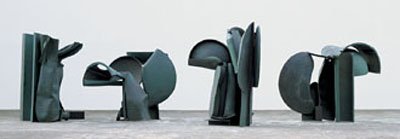
His work in the mid-1980s embraced this literalness more fully in work such as Night Movements—a sculpture broken down into four separate parts that asks the viewer to connect these parts—resembling physical movement, into a whole sculpture.
Anthony Caro,night movement sculpture.
his practice stimulated a significant extension of his sculptural vocabulary. As he explored the formal possibilities of such materials as brass, silver, ceramic and paper a new fluidity began to emerge in his monumental steel works. The large sweeping shapes of Night Movements, which belie the actual intransigence of the steel, demonstrate this new direction in his work.
Night Movements was Caro’s first multi-part sculpture in twenty-six years, the only previous example being The Horse 1961. It comprises four free-standing units, created from boiler cases, bollards, propellers and other pieces of maritime ephemera Caro found in the scrapyards of Chatham and Portsmouth. These bits of metal have been bent, buckled and twisted before being welded together to articulate space and create rhythm and movement. The relative positions of the units are determined by the use of a template supplied by the artist. Although each section of the sculpture has a distinct character, they remain related to one another in terms of colour, technique, scale and formal language. The careful siting of each piece in relation to the others is intended to ensure that the space between the different units becomes part of the sculpture. The spacing invites the viewer to walk among the parts, sensing their relative positions, changing scale and appearance. The viewer’s physical involvement with space is a central concern in Caro’s investigation of the architectonic aspect of sculpture, and is a major theme in the work of such twentieth century sculptors as Henry Moore and Richard Serra.
The work reflects Caro’s interest in existing works of art as sources of inspiration. In this case, the pictorial source of the sculpture’s emphatic vertical orientation, its large cupped planar elements, and its dark green stained surfaces have been ascribed by Paul Moorhouse to the tree motif found in the paintings of the French nineteenth century realist painter Gustave Courbet. There is, however, no literal equivalence between Caro’s work and its model. Instead, Caro has taken the essence of the figurative original and transformed this into an abstract sculpture whose forms are fully resolved in their own right.
Caro’s sculptures tend to be large in dimension, linear in form, and open or sprawling in character. Though some of his work adheres to a rigid, rational geometry (e.g., Sailing Tonight, 1971–74), his characteristic sculptures suggest lyrical movement, apparent weightlessness, improvisation, and chance. His Ledge Piece (1978), for example, commissioned for the East Building of the National Gallery of Art, Washington, D.C., seems to spill over its high perch from the pull of gravity. Caro came to be regarded as the most important sculptor since Smith and exercised great influence over a younger generation of British sculptors. He took the lead among modern sculptors in resting his sculptures directly on the ground rather than on the traditional pedestal. His sculptures of the 1970s were composed of massive, irregular sheets of rough steel, but in the 1980s he returned to a more traditional style, making semi-figurative sculptures in bronze. Caro taught at St. Martin’s School of Art in London from 1952 to 1979. He was knighted in 1987, and in 1992 he received the Japan Art Association’s Praemium Imperiale prize for sculpture
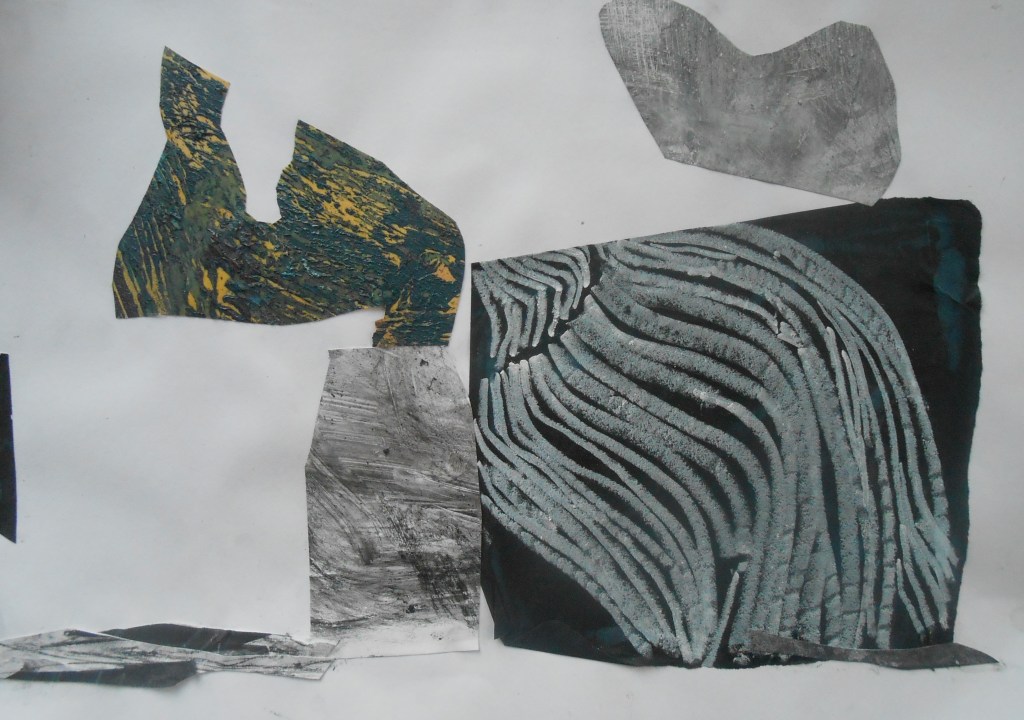
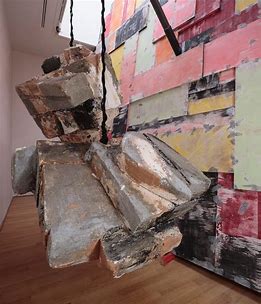
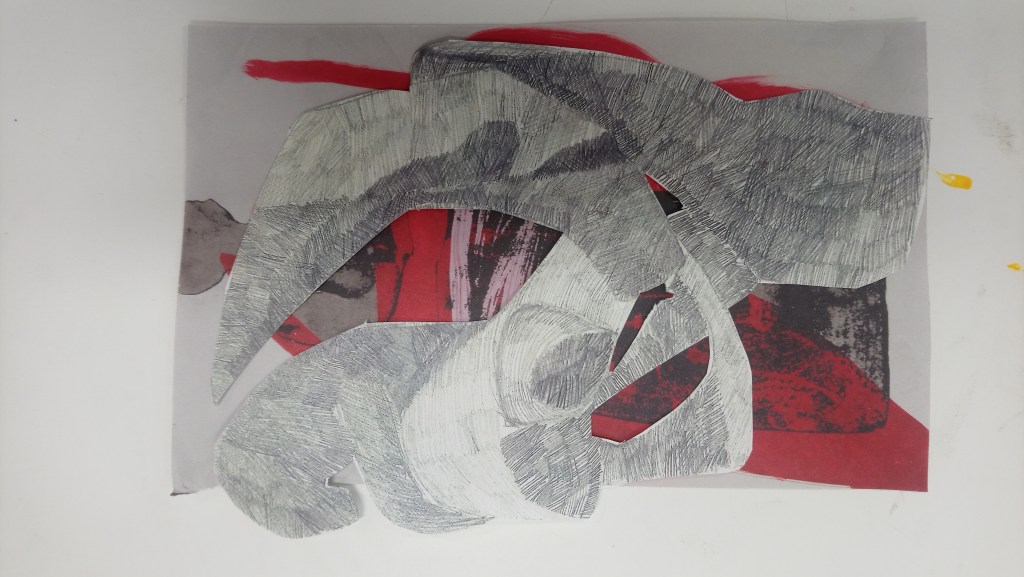
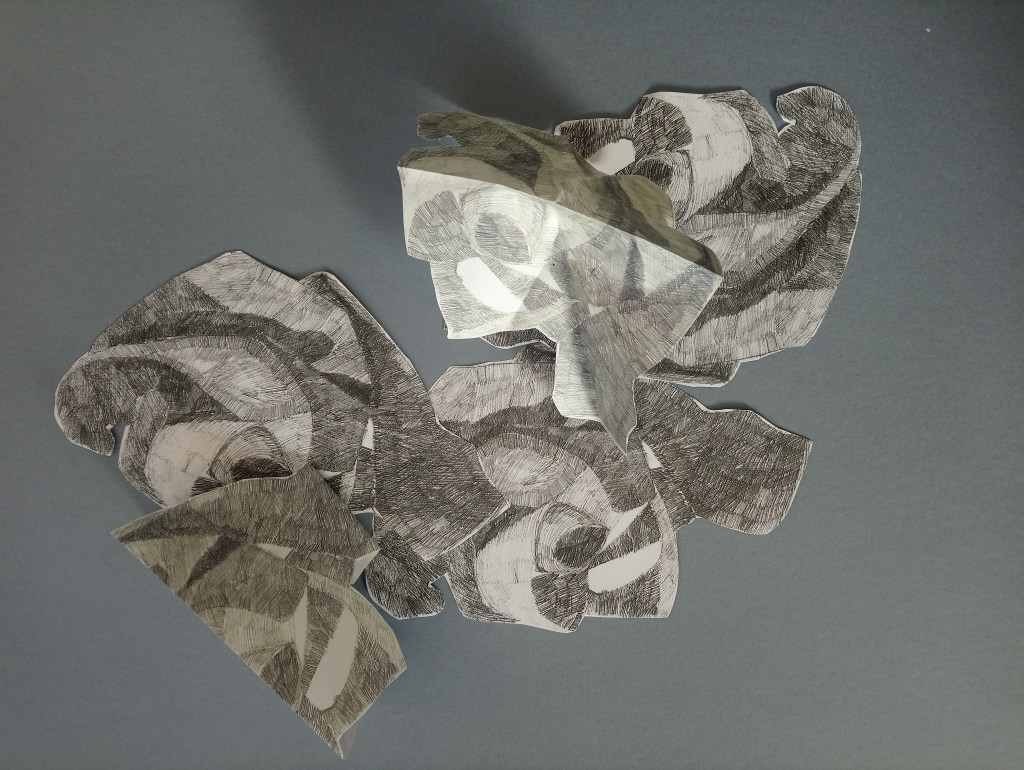
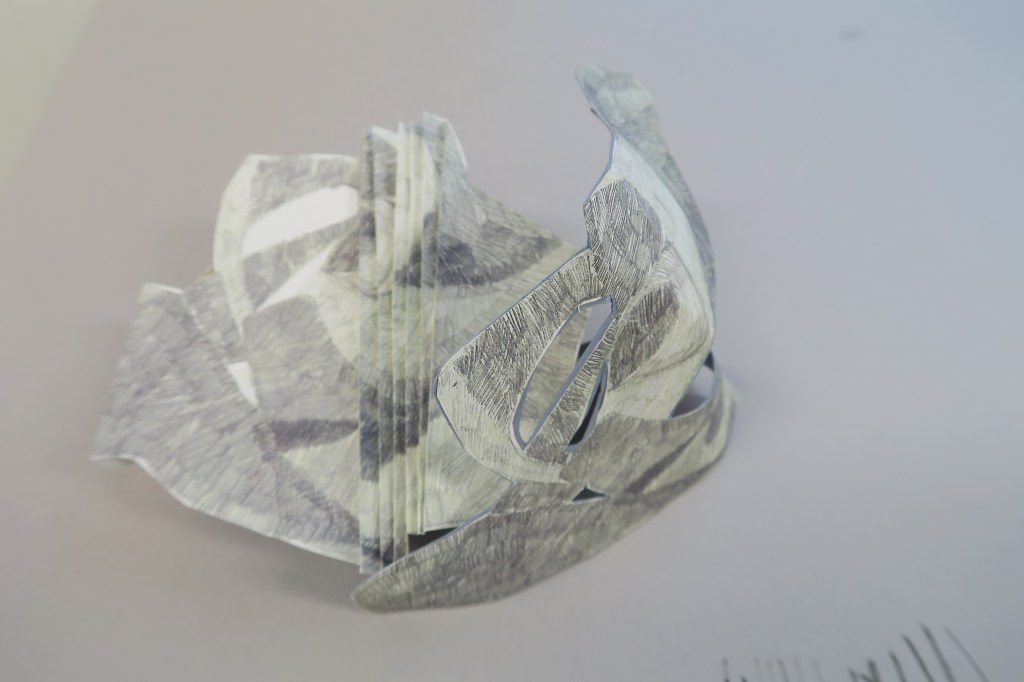
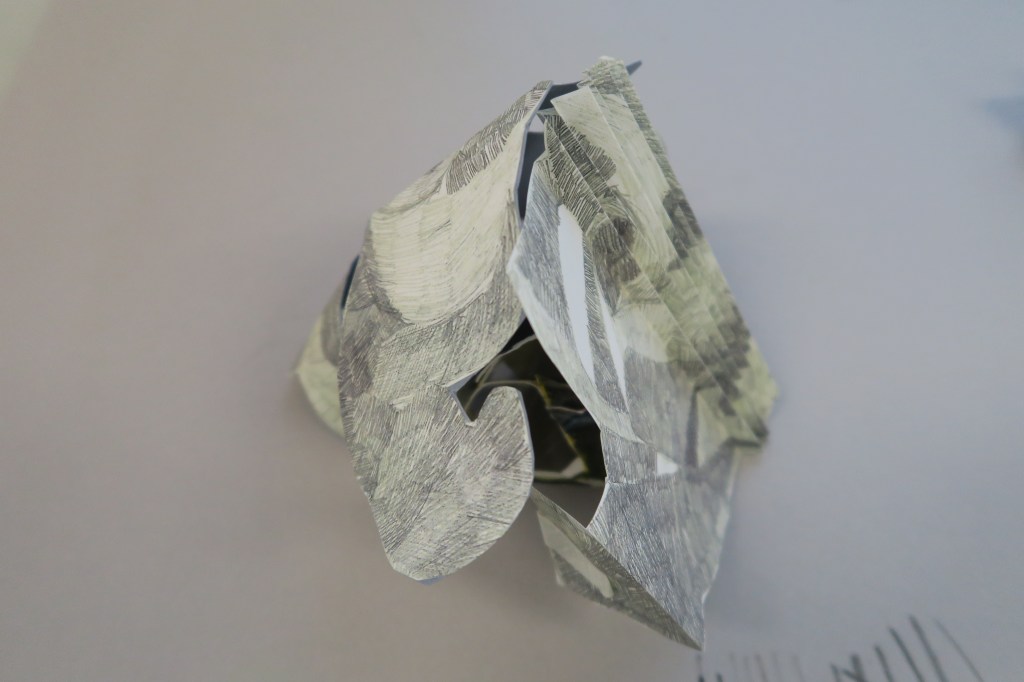
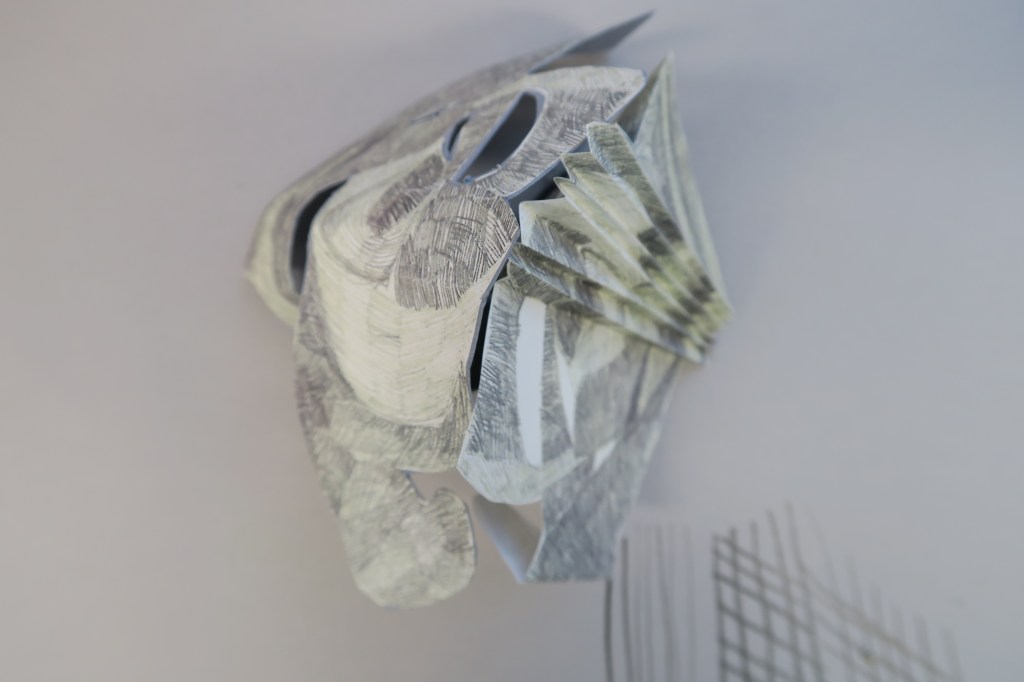
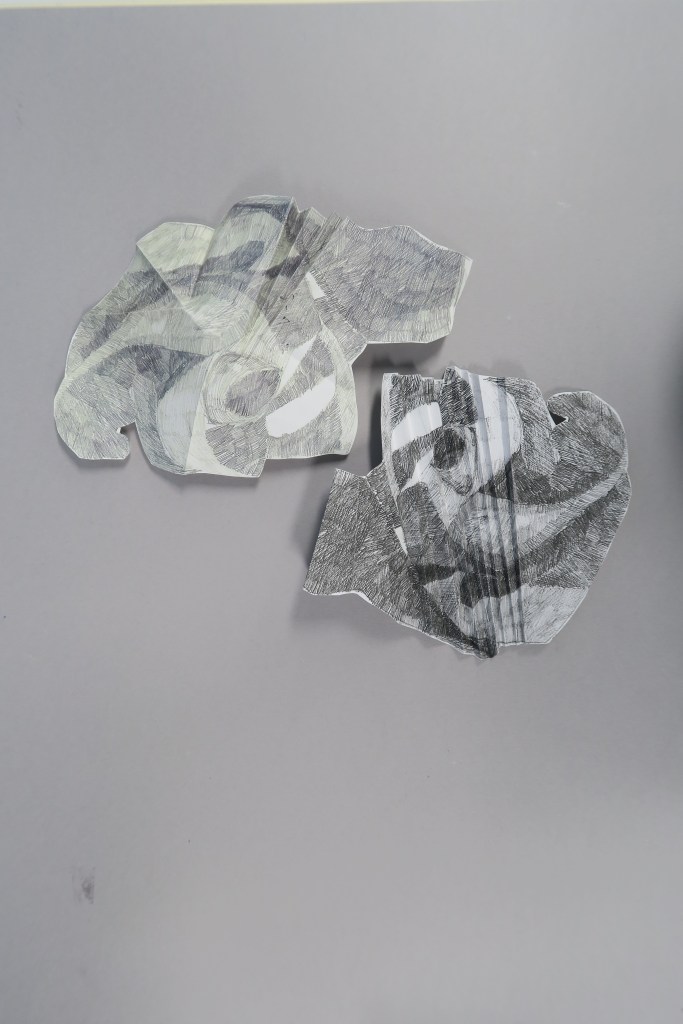
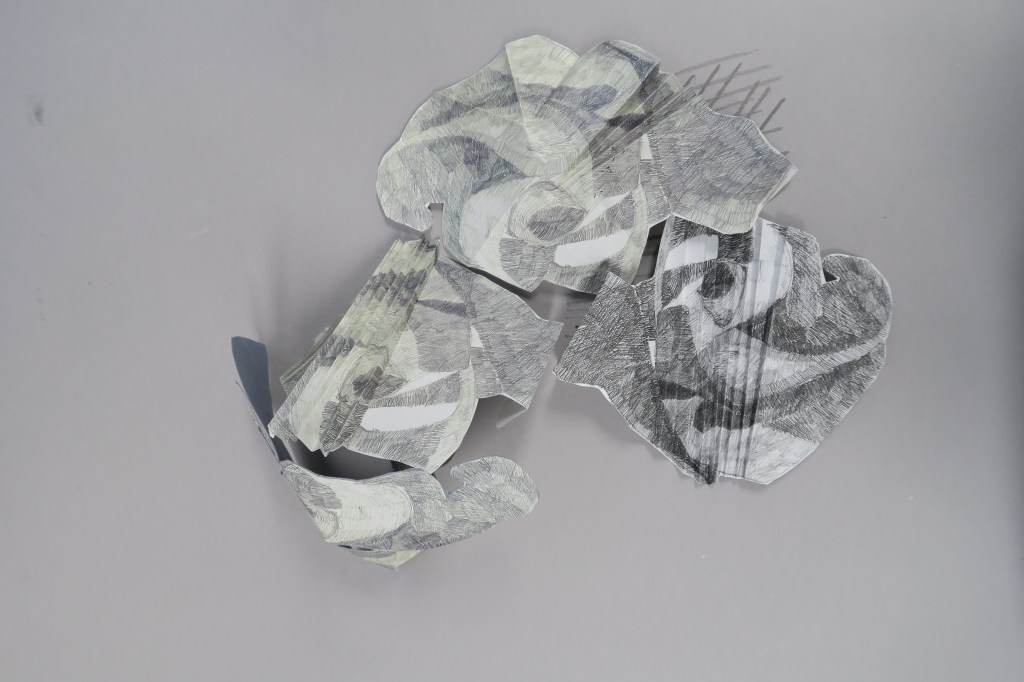
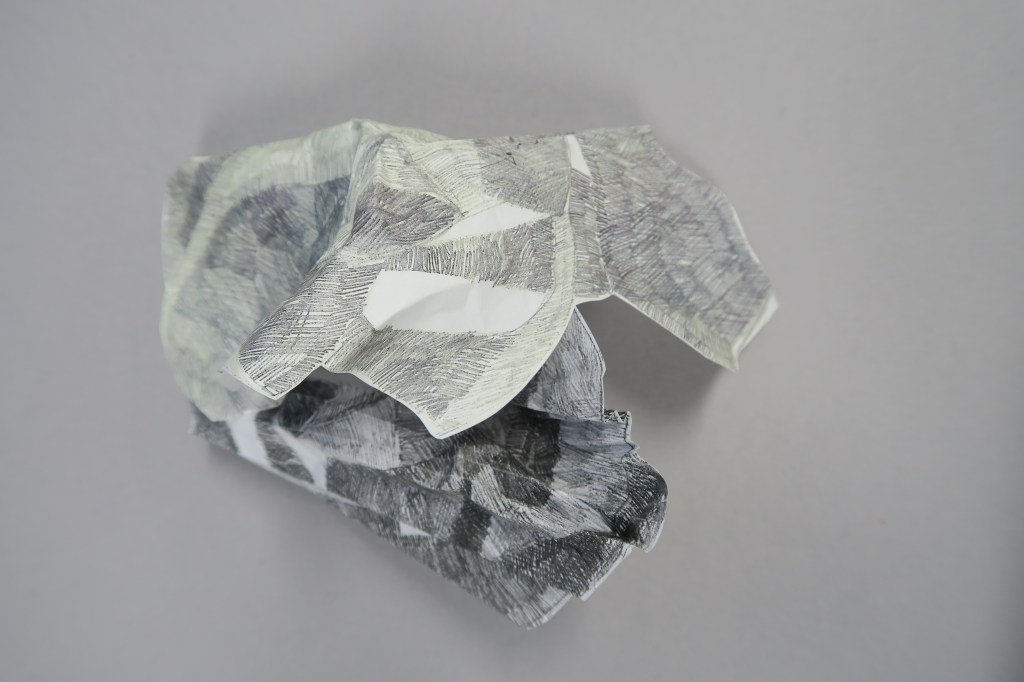
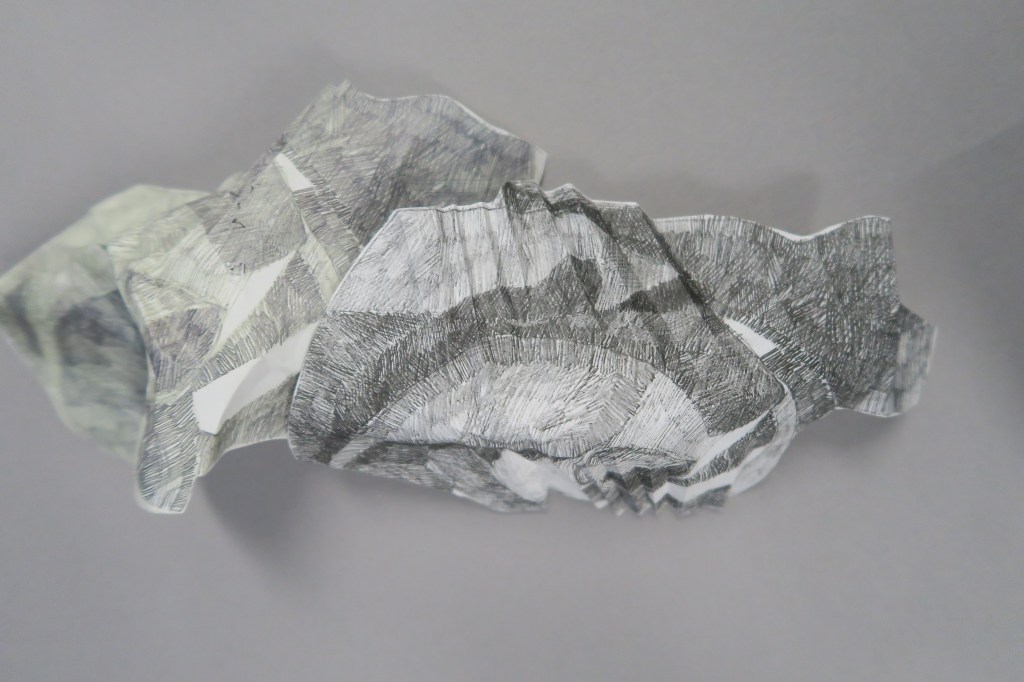
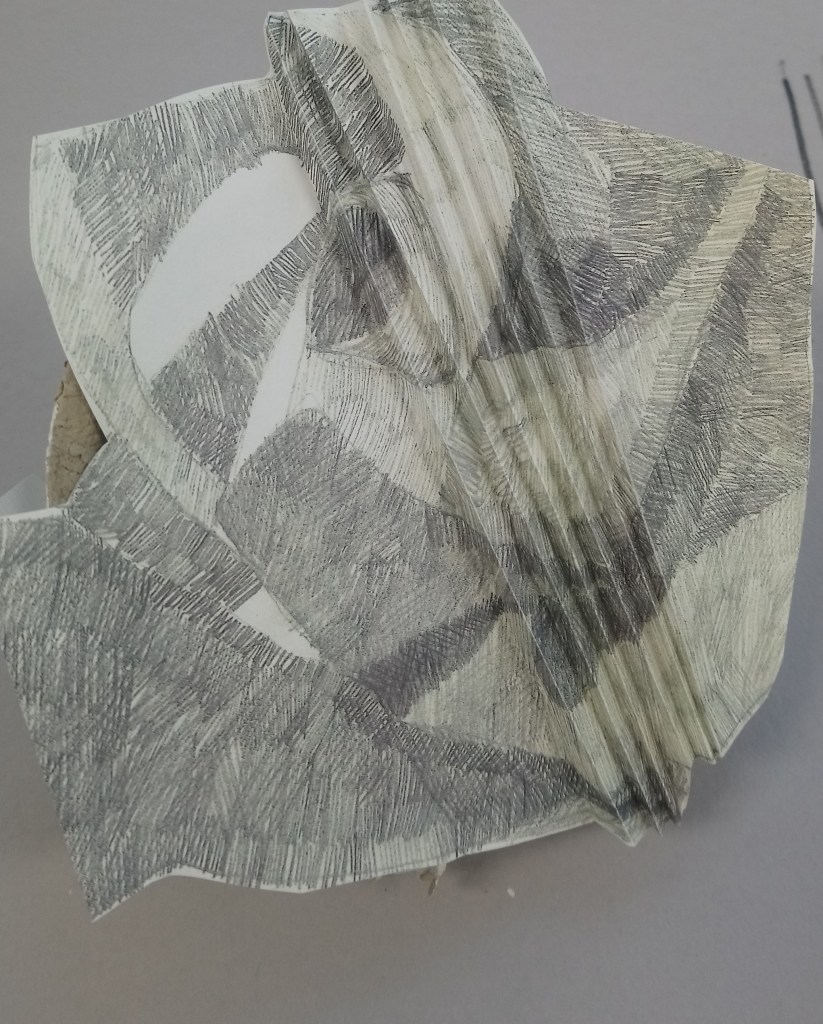
I had some papers at the studio from the navigator Project, this papers are full of rubbing and texture made with White charcoal. I cut some shapes influenced by the installation of Phyllida Barlow, I was looking the shapes in between the objects.
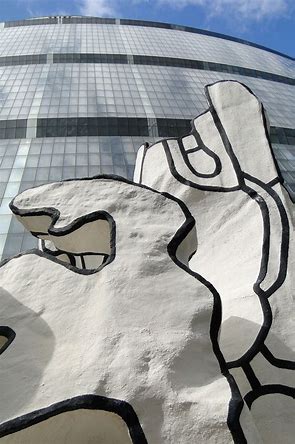
DUBUFFET ARTIST.
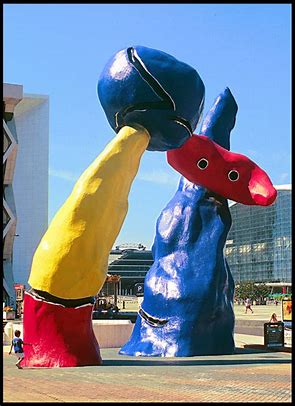
jOAN MIRO.
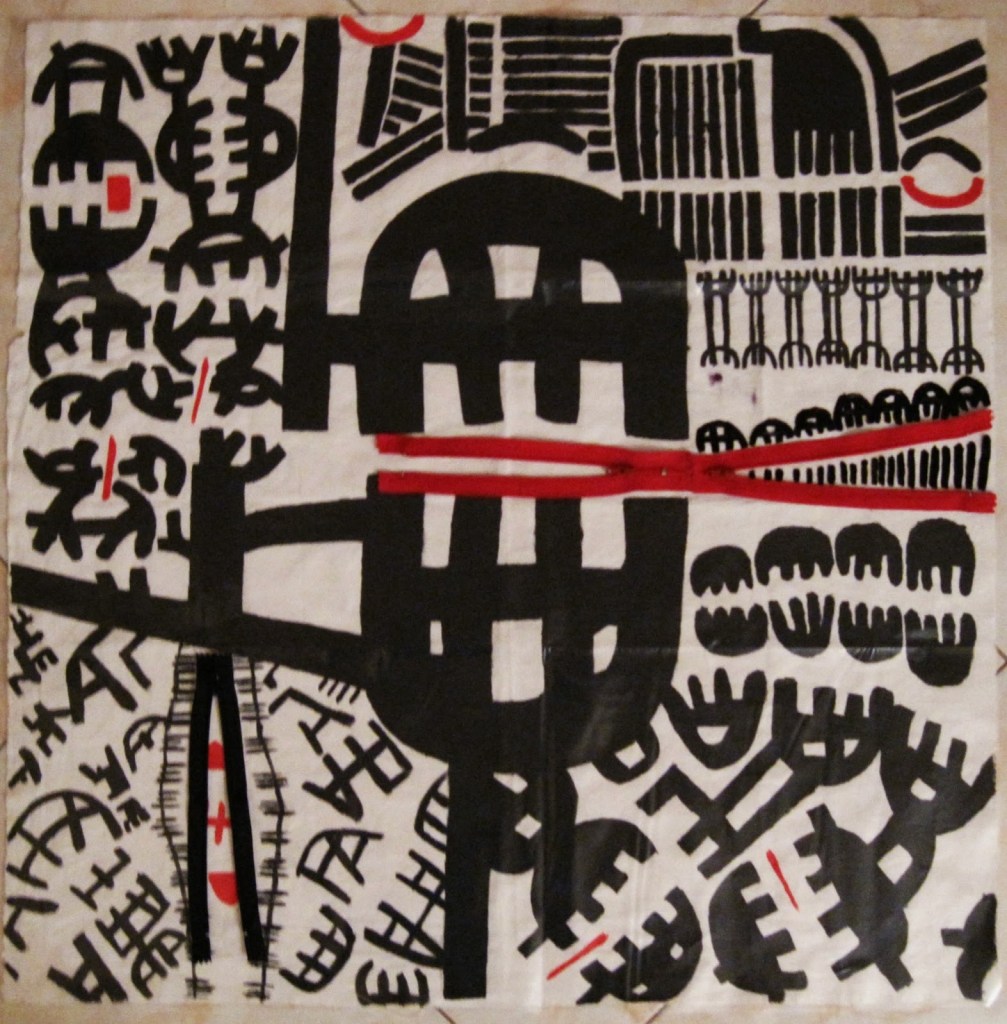
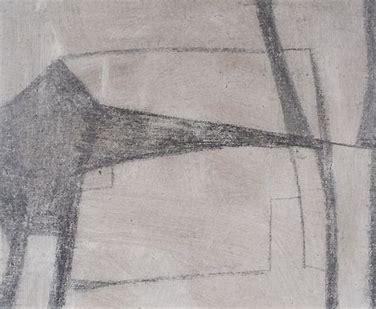
I AM INTERESTED WITH THE MATERIALS OF THIS TWO ARTIST FOR THE DRAWING ABOVE.Giussepe Capogrossi, repetition of the same shape.
Capogrossi subsequently became one of the main exponents of Italian informal art, together with Lucio Fontana and Alberto Burri.
Francis Davison.
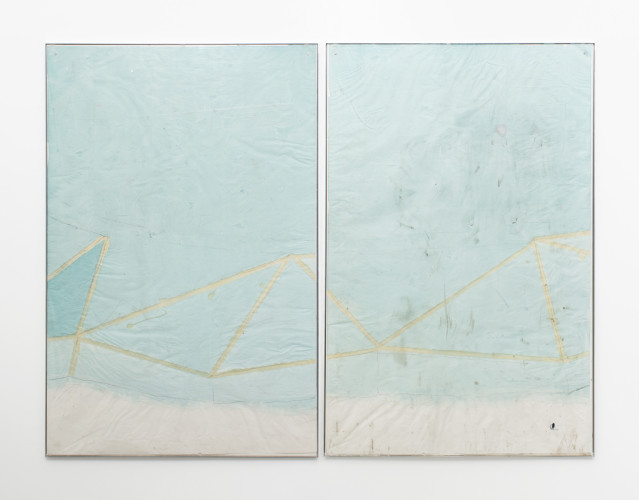
the shapes in between is what I see in this drawing of Francis Davison.
Francis Davison (1919–1984) was a British visual artist and painter.His work is characterised by the use of collage: coloured printed paper layered and mounted on board.
Phyllida Barlow art work have a lot influences of the informalism, some of the principals of informalis as well of Phyllida are non geometric abstraction, but keeping the materiallity of painting away from the non figurative and figurative form, emphasizing the color as its subject and subject in the works, Phyllida subject are materials and color.abstract materials is its fundamental principle. Informalism in art is regarded as complex becouse that integrates other trends such as the gestural material, thus the infromalism differs from other pictorial streams by the strong presence of the personality of the artist through the techniques an materials used, highlighting the chance and improvisation, without a deliberate construction, the process of the artist i have chosen has the same process of working thats why there is a lot of similituds .atraction to different types of material, is also reflected as it can be seen in the works of Dubuffet. what most determines this art, so it is the sign, the matter, being an art that emerges from the darkness of the post-war period. so the expression which is evident in the paintings is at the basis of dripped oil, large fillings and breaks as well as the use of other materials like wire ,burlap and sand. I could speak a bit about arte povera and how phyllida use materials which could be related with arte povera.RESEARCH OF ARTE POVERA.
On the other hand, in Spain, this art of informalism takes much boom in the 1950s with a generation of artists that in their forms of expression are discussed between European informalism and American abstract expressionism. Among them are painters such as: Tàpies, Guinovart, Puig, Saura, thousands and Canogar, among others. In this sense, the informalism in Spain, has two aspects of Barcelona and Madrid, with the raised bottom of the existential crisis of the post-war period. In Barcelona, is the Group of Dau al Set in 1948, very strongly rooted to surrealism, which then influence in the 1950s to the informalist, such is the case of Lourdes Cirlot, establishing four trends of the catalan informalism, applied to the mater, painting signo-gesto, the tachista and the specialist. We must remember that after the war the cities and population was devastated and aimlessly, this is strongly reflected in the art especially in painting, and it is a kind of healing for the mind and soul of the artists , by what are summarized a number of features as they were:THE work spontaneous and random, not premeditated, making the paintings without a pre-established composition.They give great importance to forms, textures, stains, trying this way to express inner world.Are not guided by traditional means of art, therefore, the oil painting is little expressive for needs and make a combination with accumulation of materials, including waste materials, running spills, drips, cuts or damage on the canvas.They disclaim conventional artistic patterns, both in regards to the plastic treatment and in the composition of the work.
Informalism is based on the Existentialism of postwar Europe, artists on multiple occasions not even use the brush but what they do is to scratch the thick surface, material, previously created with the new materials. Also, use the spatula to make spontaneous and disorderly lines denoting chaos, also making scratches, burns and grattage on canvases. Therefore, what most characterizes this art is the large number of different materials and techniques that might be that they were taken on an occasion of Surrealism (operator), in others of Dadaism (detrital materials, collage), but which in others could be product of the investigation (dripping, grattage). Thus, also within the informalism was used the tachisme, gestural painting, informalism materialistic, in short, a positioning so heterogeneous that it has come to qualify, just as other art. Is therefore required before moving forward with approaches clarify some concepts such as:The striking Art: named to the technique of the studs that account for amorphous surfaces without structure. Scratch that also come to form part and which are given as response to a spontaneous, intuitive action, informal product of vital or creative impulse of the artist, such is the case of the works of Hartung which has a lyrical approach, achieved with the application on the grattage, but always in an intuitive manner, so that, with these tools the artist achieves a very dynamic pace in the compositions.
Taking own matter, manipulated, transformed, are added to the pigments as an expressive medium, emphasizing how alien to these pigments materials. Thus, it is in the works of Alberto Burri where this technique is evident because it performs compositions by way of collage, where combines painting with metal sheets, Burlap, fabrics burned, plywood, plastic, some of them with a dramatic value going to extremes. it is in the works of Alberto Burri where this technique is evident because it performs compositions by way of collage, where combines painting with metal sheets, Burlap, burned fabrics, plywood, plastic, some of them with a dramatic value going to extremes.Phyllida Barlow is using a lot of this materials………………………. research of the materials and maybe here write also THE ARTE POVERA. IT WAS subjective, irrational, and immediate position in a truth that is not negotiable and as a form of relationship with himself and with the environment of postwar, in which are interested in everything from the most humble and so far negligible, making is to emerge from the depths. Therefore, if there is a legacy that can highlight informalism apart from the diversity of techniques and materials used in eclectic way are the currents that are subsequently consolidated from the way how it was built. They are: the gestural informalism, which derives more than everything in the way of painting. Informalism material, due to the textures, holes and other details. However all these currents are unified in common characteristics, they are: the removal of abstraction in painting, as is rather an amorphous abstraction, since it uses less geometric shapes such as squares triangles in these informal works, nor shown a willingness to structure elements. So, while a few small sketches were made, thought not previously which would make to balance the composition, while everything was improvised, randomly.
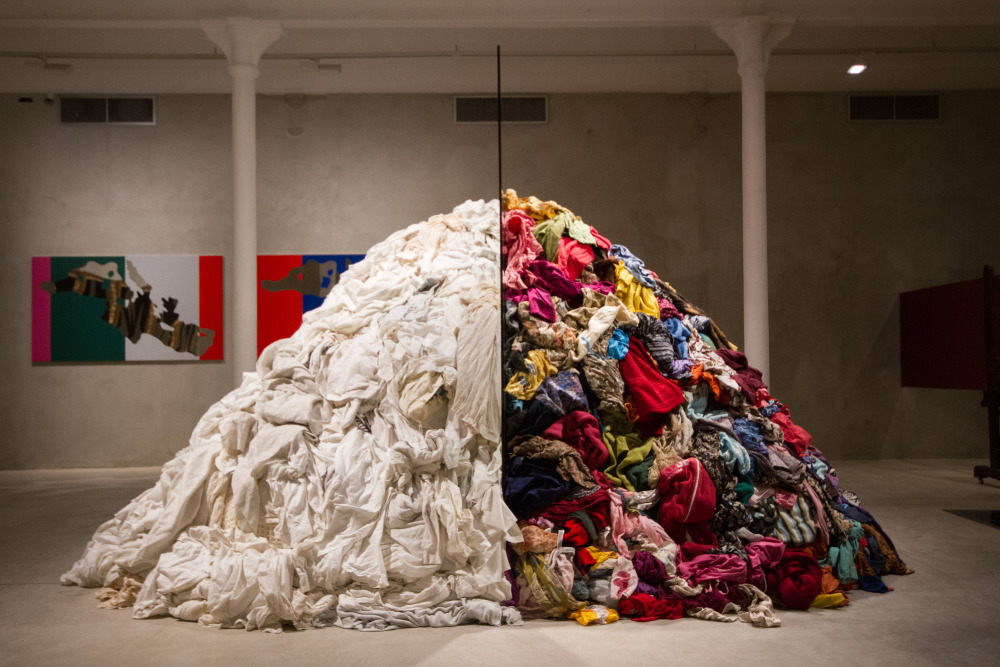
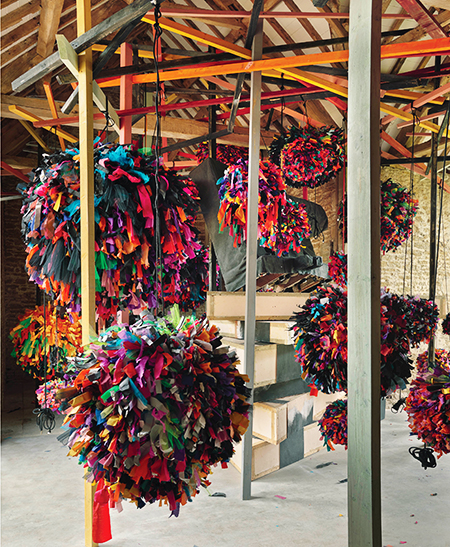
This two images is telling everything about the influence with Phyllida and Arte Povera, I will explain the key ideas of Arte Povera, and Phyllida Barlow.
One of the ideas of Arte Povera and it seems also in Phyllida Barlow was to bring everything back to the essential, to everyday materials, taking out any idea that was superficial.
The Arte Povera movement was born in Italyin 1967. Why do we have such a precise date? Because one of the most important art critics of the time, Germano Celant,invented the term in a critique he wrote. Of course some important works were created before this date, and everyone of them falls under the umbrella-term of Arte Povera.
In Italy at the time the Minimal Art and the American Abstract Expressionism were very popular, but some artits were tired of those trends. As a reaction, they created something totally different, with the approval of the critique, since Germano Celant was holding their hands.
The name of the movement is Arte Povera, they didn’t use “poor” materials, not only at least. They wanted to make a statement against the high-qualified art that uses only marble, oil paint and canvases, choosing to recycle materials, or using natural items to build their “assemblages”. This doesn’t mean that they avoided precious materials! They just included other ones in the process.
Mario Merz, Tavola a spirale (Spiral table), 1982The artists belonging to this movement wanted also to act against the art market (although everyone of them sold pieces to the art market eventually…). They thought that by using natural, and therefore perishable objects, their work could not be bought and sold. Obviously that was not true, otherwise we would not speak about them now! The idea is to be appreciated though. The idea of challenging the art market was already present in the Conceptual Art, the Performance Art, the Minimal Art and many others (but at the end they always found way of selling something).
Ian Kaier’s installations conject illusionary atmospheres with spartan theatricality. Often researching specific subjects relating to art, architecture, philosophy, and social theory as departure points, Kaier’s work transcends literal reading to create suggestions of invented narratives. In Russian Project, Kaier’s arrangement of paintings and objects is both traditional gallery exhibition and plausible stage set. The portable cupboard and colourful canvases trigger images of domestic space, and act as individual formal elements referencing Supremacist compositions. Though his work, Kaier explores social interaction with the constructed environment, alluding to both utopian ideals and their failure.Suprematism is fundamentally opposed to the postrevolutionary positions of Constructivism and materialism. Constructivism, with its cult of the object, is concerned with utilitarian strategies of adapting art to the principles of functional organization. Under Constructivism, the traditional easel painter is transformed into the artist-as-engineer in charge of organizing life in all of its aspects.
Malevich´s suprematism, in sharp contrast to Constructivism, embodies a profoundly anti-materialist, anti-utilitarian philosophy. In “Suprematism” (Part II of The Non-Objective World), Malevich writes:
Art no longer cares to serve the state and religion, it no longer wishes to illustrate the history of manners, it wants to have nothing further to do with the object, as such, and believes that it can exist, in and for itself, without “things” (that is, the “time-tested well-spring of life”).
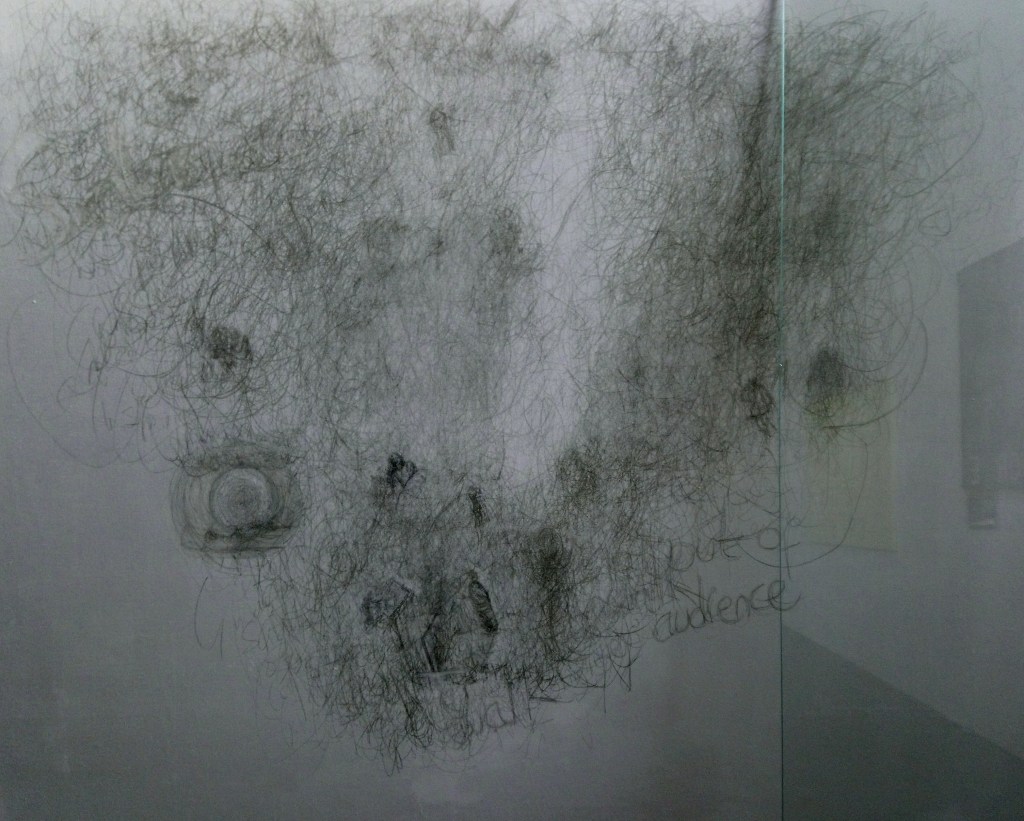
Erika Winstone an Artist and my ex tutor of Kensington and Chelsea College of Art. Today I have just seen the exhibition . the Duration.
I am very interested in her material process . How she manipulate the materials , the layers of colours and the relationship binding her personal life with art practice and other cultural references.
The Beaconsfield installation exhibits the methodology that winstone engages in her exploration of the relationships binding her personal life with art practice and other cultural references. Winstone’s unique approaxh starts with a studio-based painting and drawing practice where different grounds( Wood,canvas,glass or paper) are vuilt up and then pared away, often with a metal instrument to expose layers of color and texture beneath.
Winstone regards the text in her paintings as signage, pointing to her original drawing sources in moving image. Film titles souble as signifiers of deeper content: letters on Wood have been drilled and scored in a manner that refers both to an uncanny phenomenon the artista witnessed as a teenager and also to previous Wall drawings in plaster.
The cental video work of the installation. La Duree, twins two mother/daughter relationships separeted by three decades. Winstone and her daughter re-enact from memory, on original location, scenes from the French new wave film Le Pont du Nord (1981) by Jacques Rivette, starring mother and daughter actresses, Bulle and Pascale Ogier. The video explores intergenerational and intercontinental relationships: who we are and who we would like to be. These themes are extended through interrelated drawings on glass and canvas. The intertwened life of Winstone´s paintings, drawings and videoworks becomes the self-reflexive subject of subsequent moving image sequences, which are then staged in the gallery in relation to static Works.
Sometimes is not about the subject matter is about the approach, you can repeat the same subject matter unlimited times but if the aproche is different the result is not repetitive. Capogrossi is a perfect exempla of repetition.
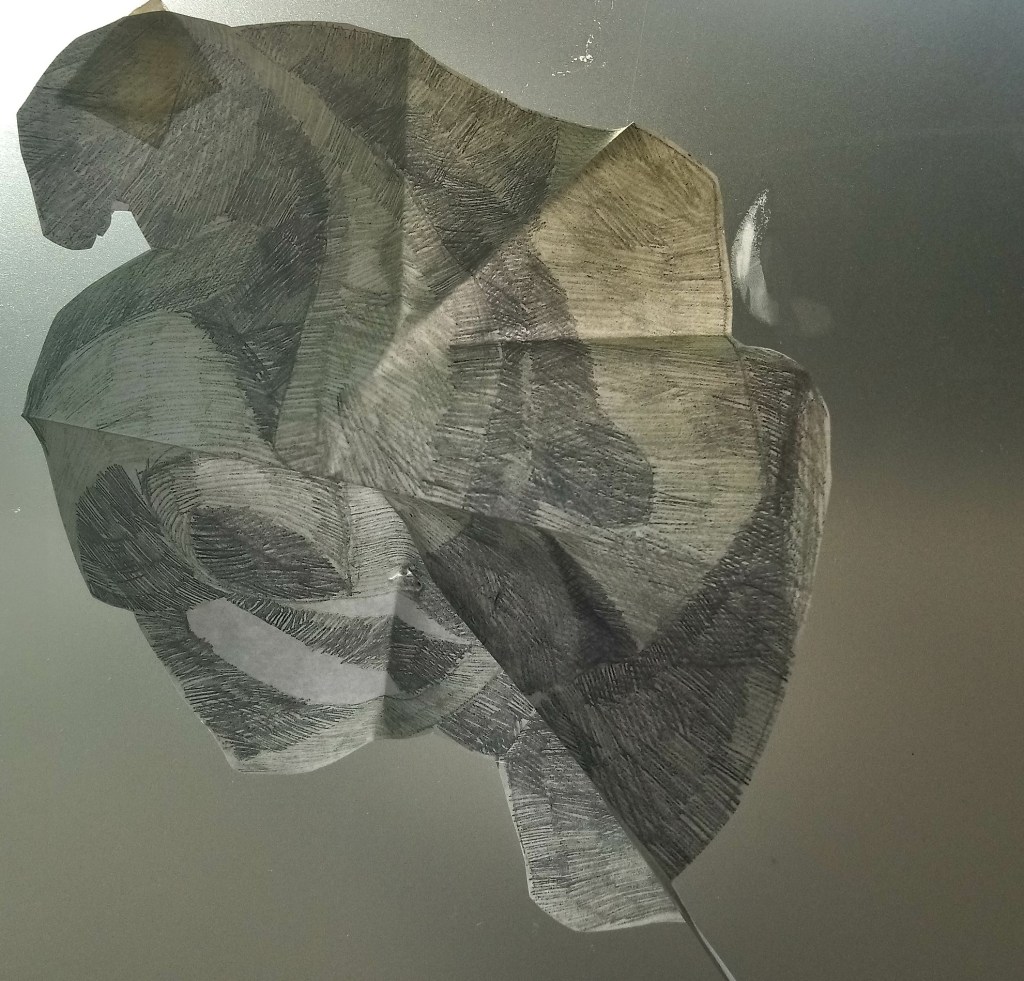
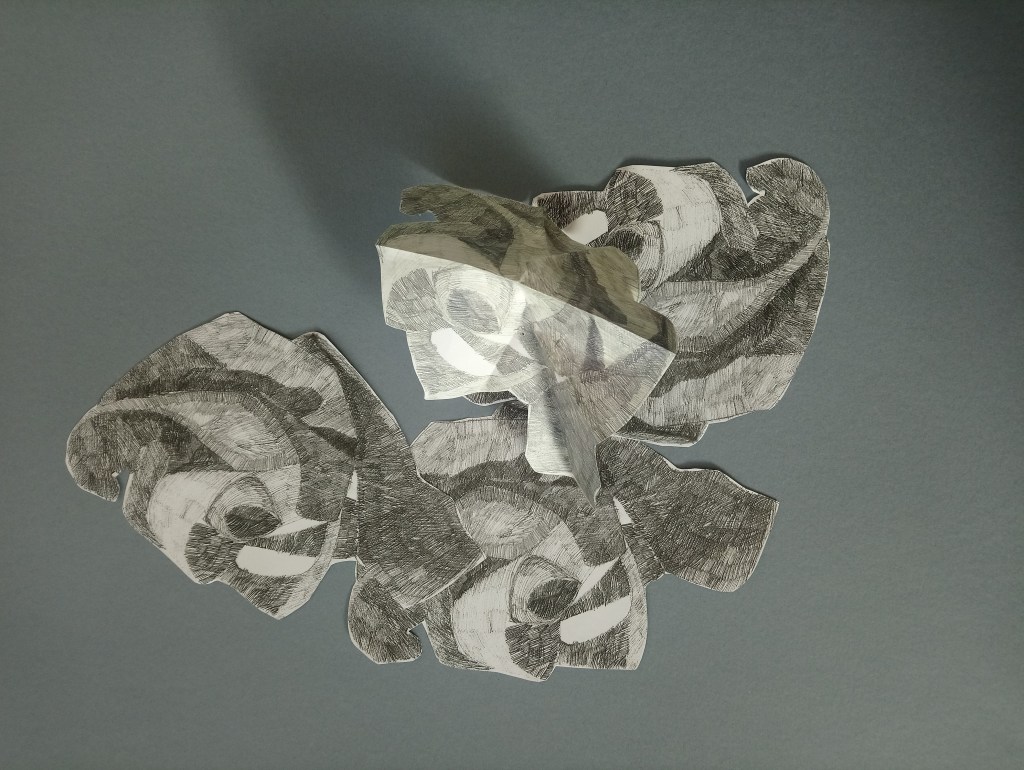
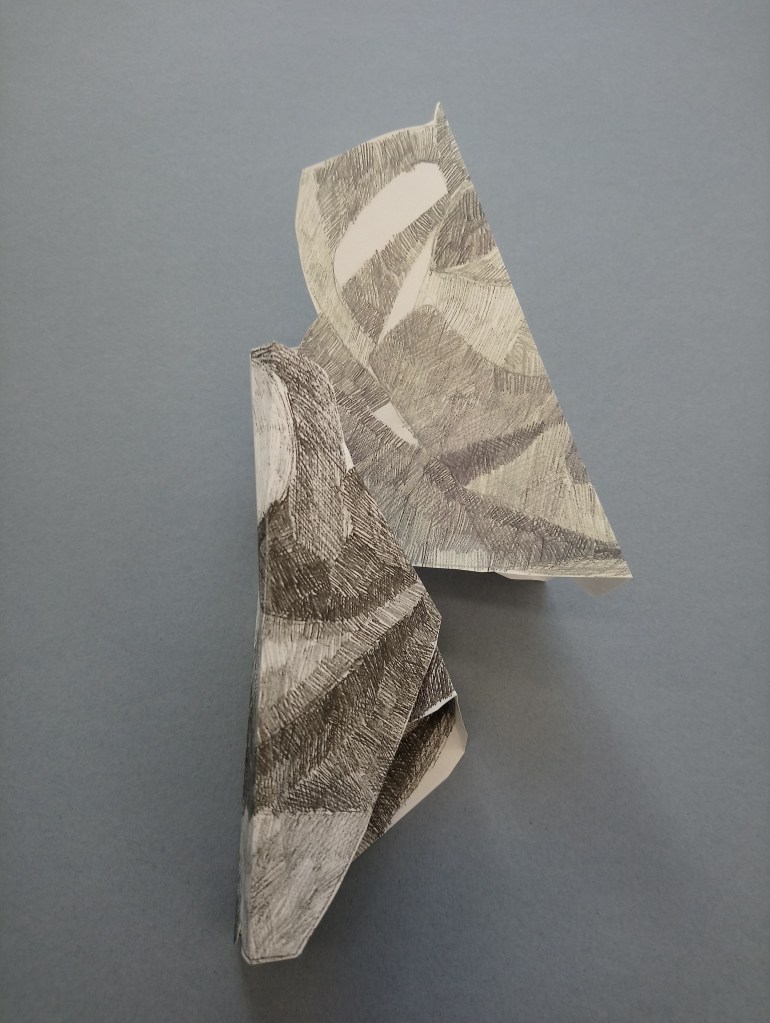
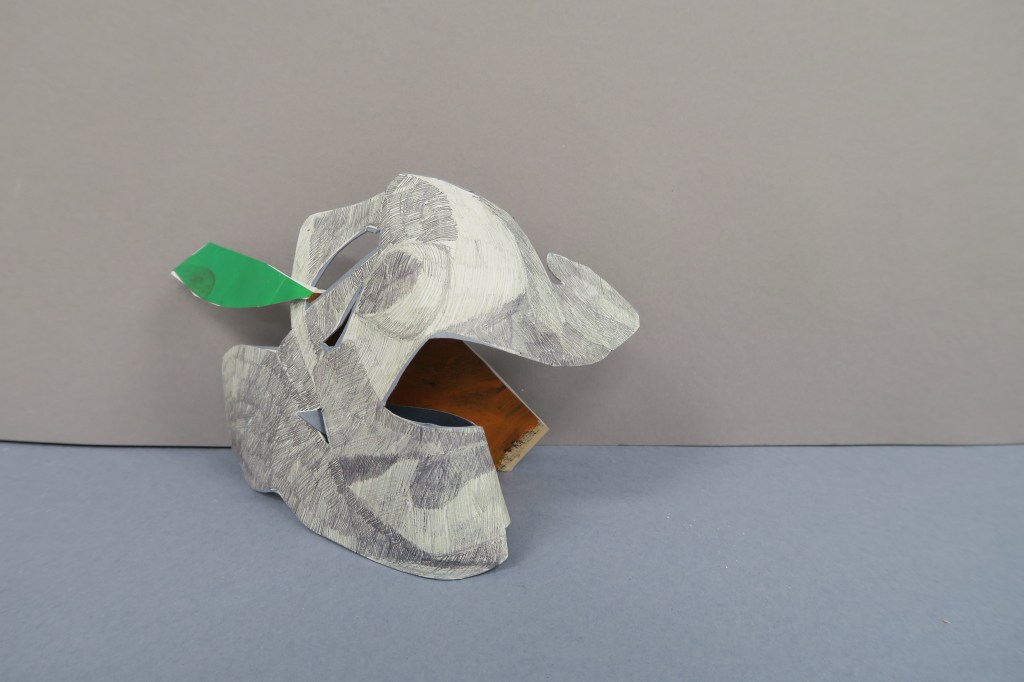
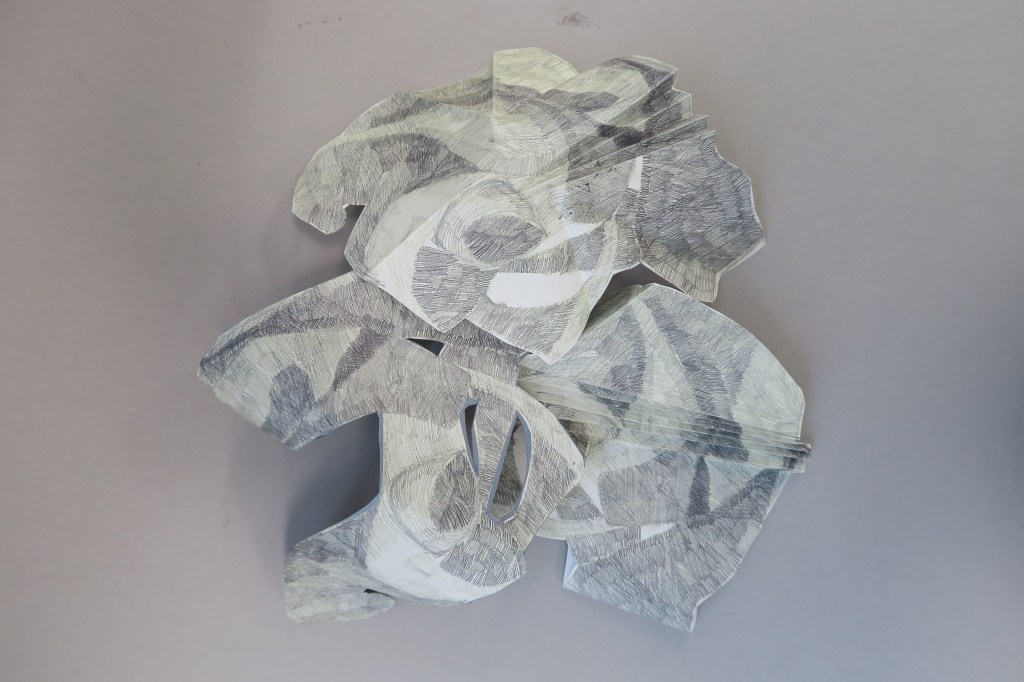
this is paper, I photocopy a drawing varios times and cut them. I am exploring the various possibilities of the same shape but with a different result.
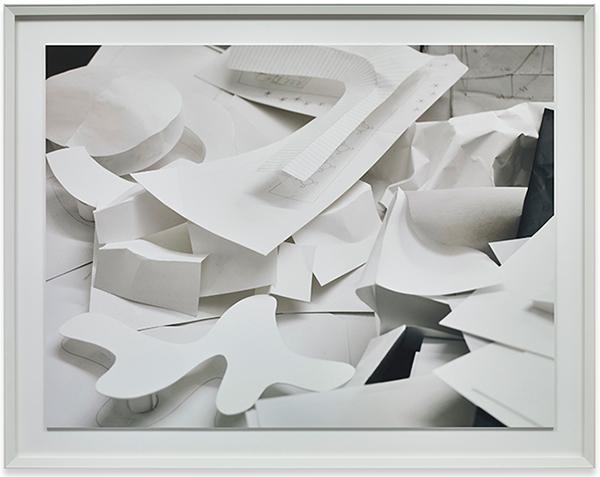
Thomas Demand.
Thomas Demand, the final art work are his photos of his maquets.

.jpg)





 Luisa
Luisa 