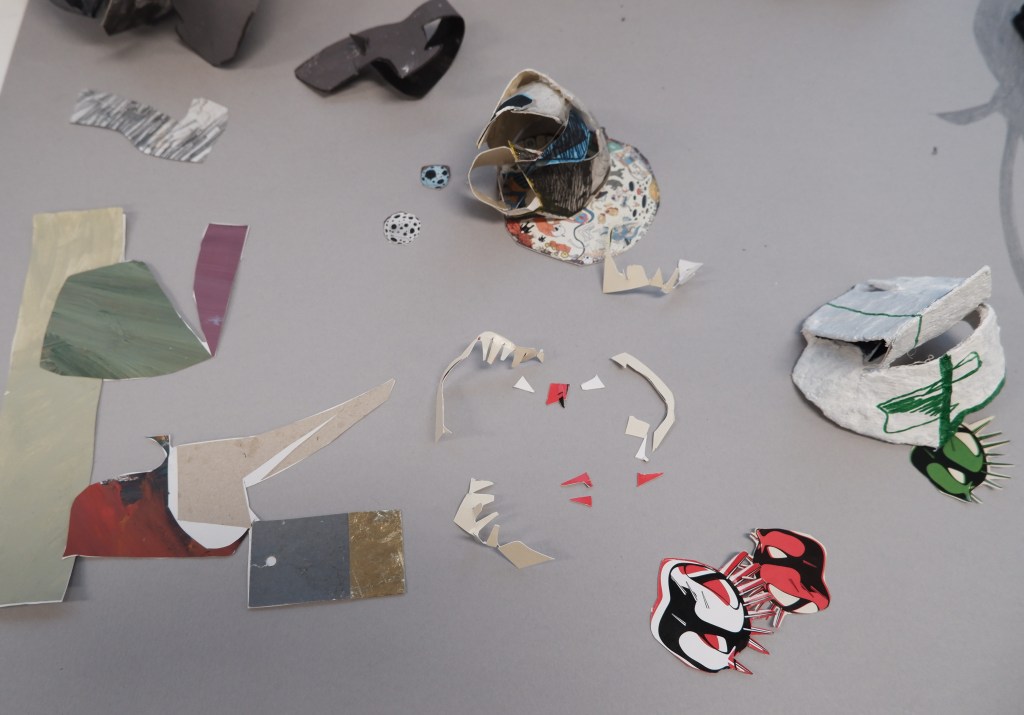
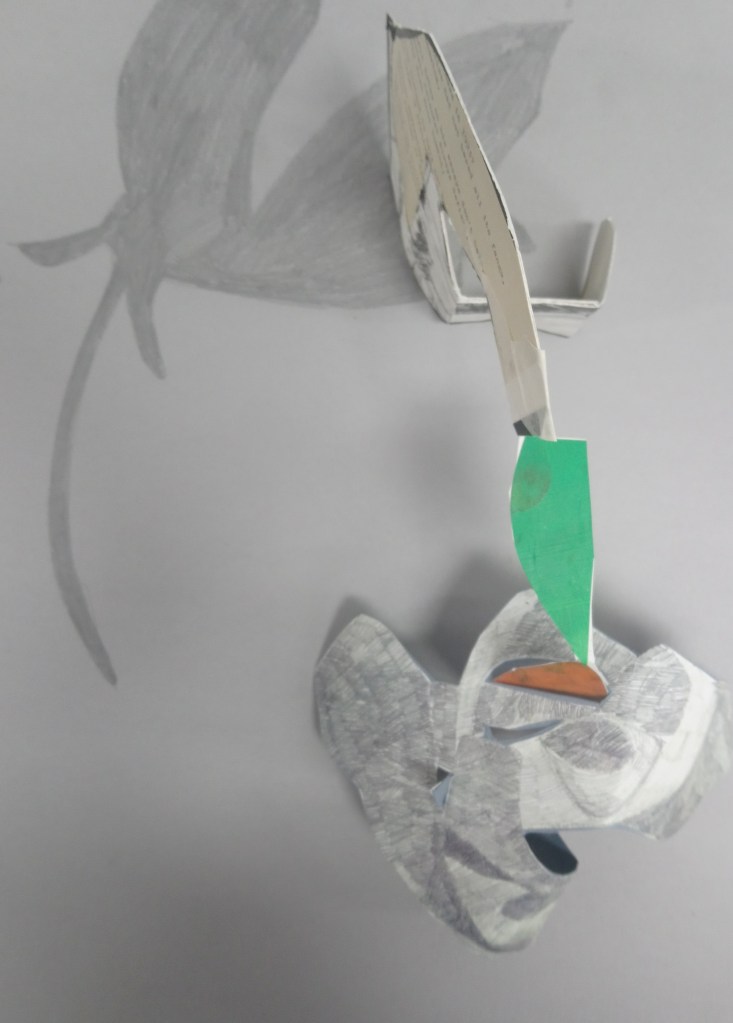
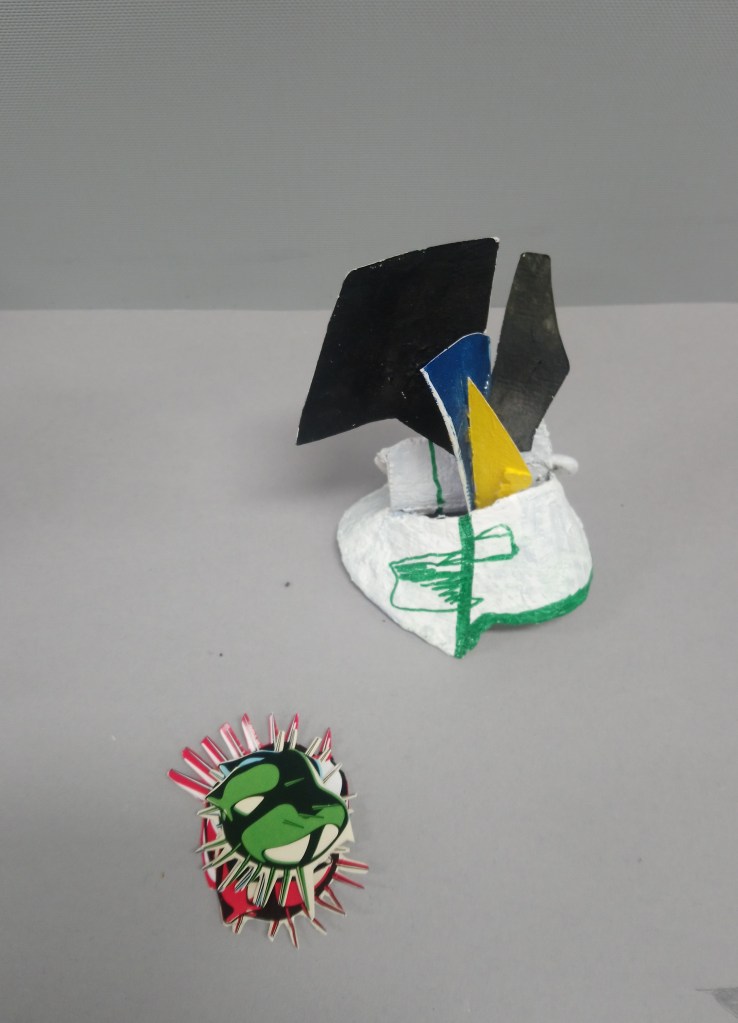
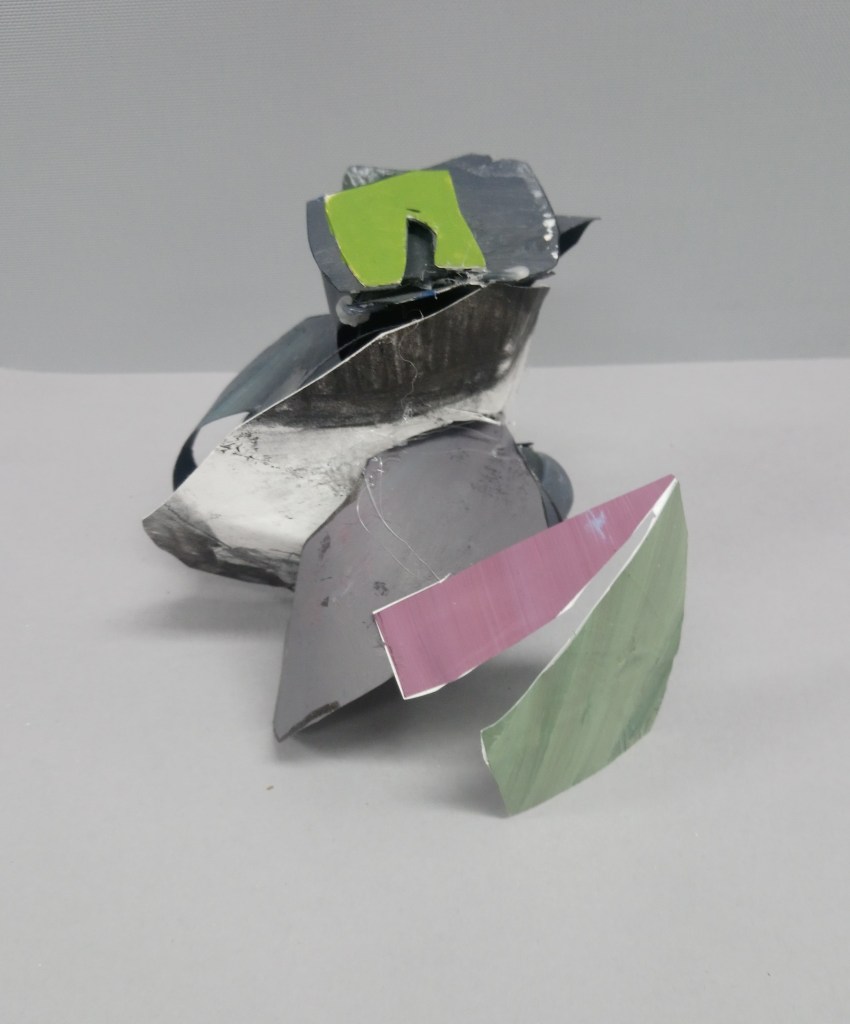
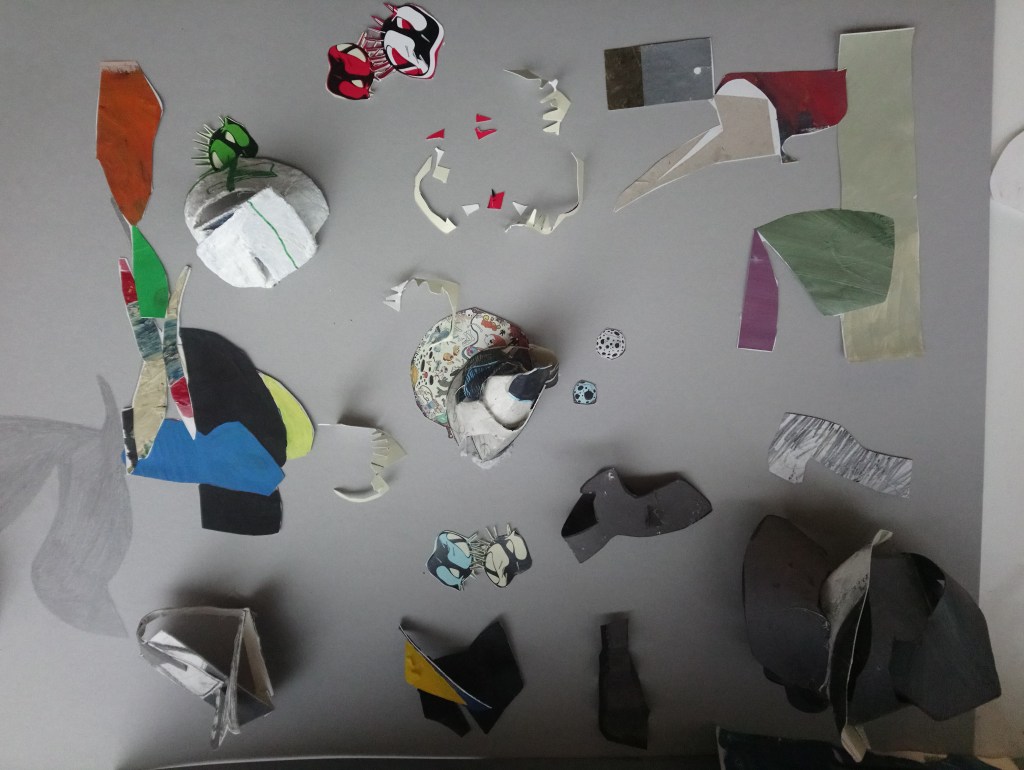
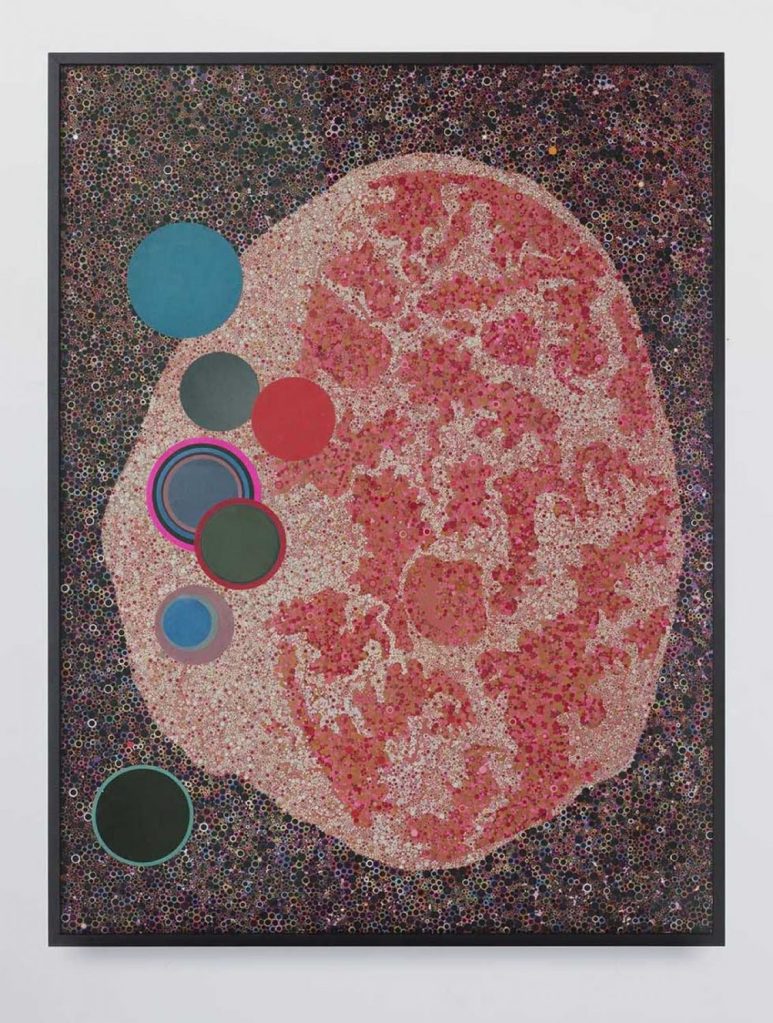
I am looking for various ways of doing compositions, using cheap materials like paper, plaster and plastic. In the research of Phyllida Barlow I read about the informalism, some of the principals of informalism as well of Phyllida are non geometric abstraction, keeping the materiality of painting away from the non figurative and figurative form, emphasizing the color and material as its subject .
prototypes.
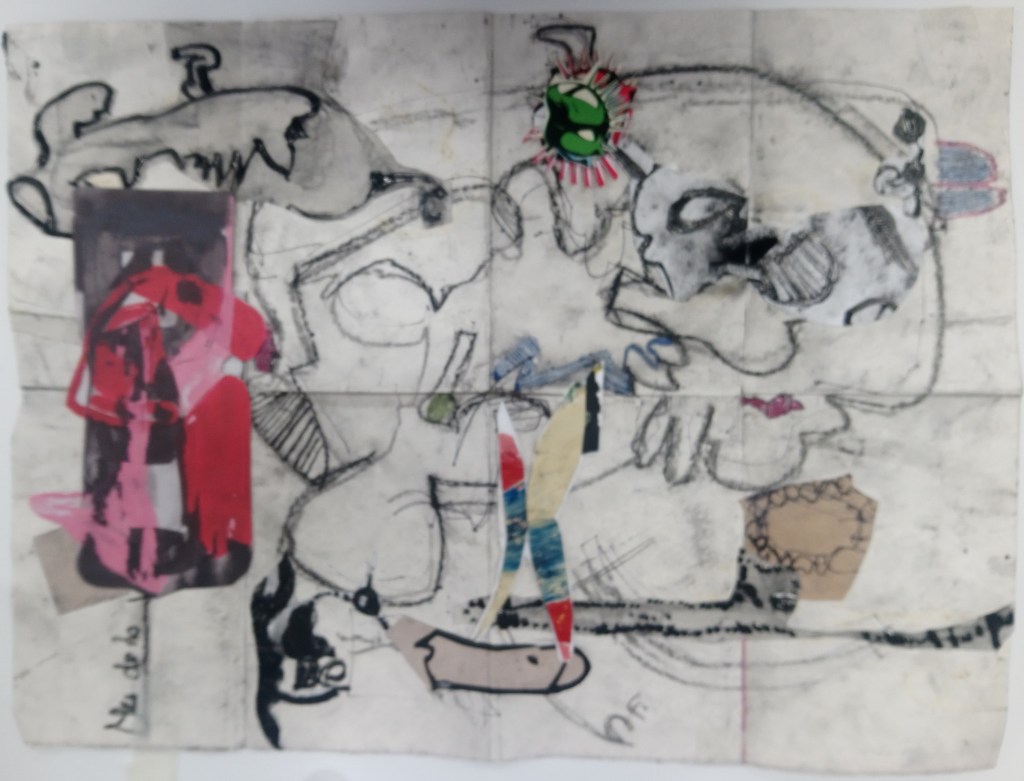
Going back and foward with some drawings.
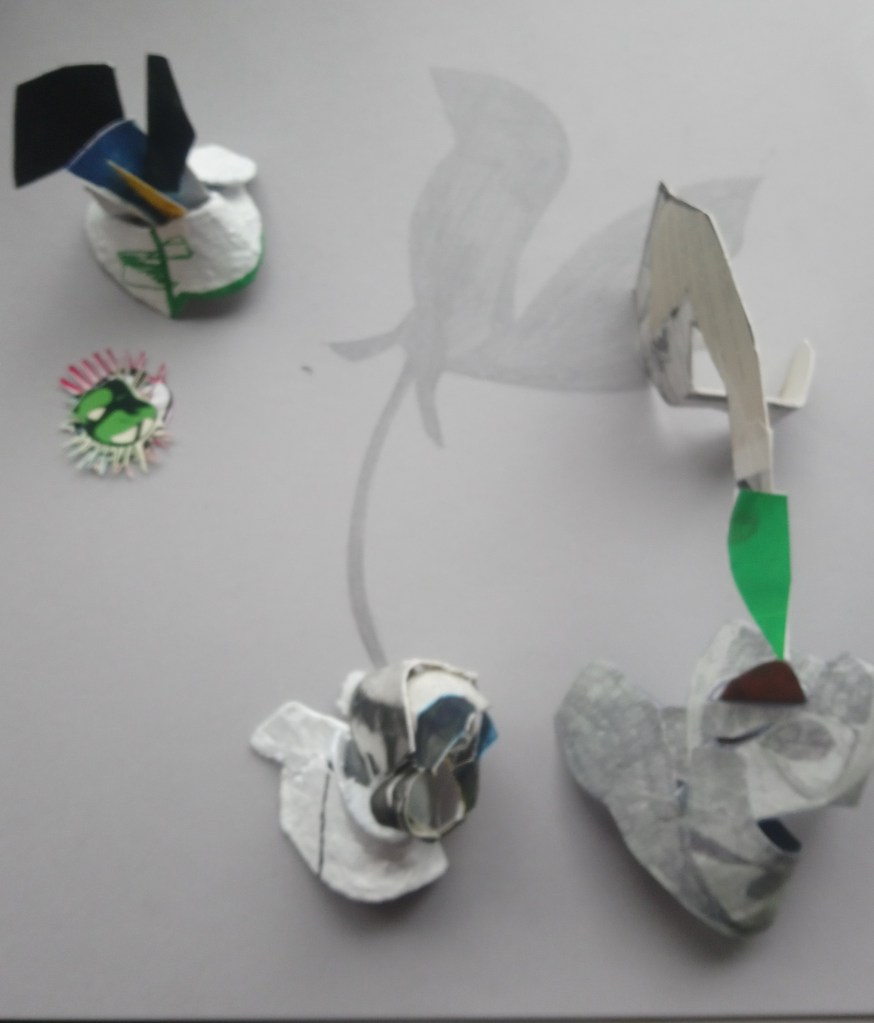
prototype for investigator Project.
SHAPES AND SHADOWS.
prototype for equilibrio and tensión.
This is Amy sillmans writing.
I’VE HARDLY FOUND ANY BOOKS TO READ ABOUT SHAPE. There are centuries of ideas about color, but really barely any literature on shape. My actual starting point for this show was research I did on a painter who works a lot with shape, named Prunella Clough, an English postwar abstract painter. Her work and her context were really interesting, but she was part of a whole group of artists who were swept aside with the ascendency of Pop, and artists who worked more with language and media, work that is conventionally taken to be more “radical.” Prunella was a fierce, freethinking, uncooperatively personal sort of poet-inventor, and she worked intimately with composition and shape, but those things just got labeled as really OUT, fusty stuff, so after she died, she seemed to just disappear. That made me mad. So I started looking at shape as I looked at Clough, as a structural problem. And realized there was nothing much good to read about it.
I needed the shapes to propose something: I needed tension, and skin, and subjectivity, anxiety, discomfort, crisis.
I am an interdisciplinary practitioner, a printmaker and painter whose work also extends into ceramics and sculpture. I experiment with different techniques and express myself using a wide range of materials. I am challenging myself by exploring the materiality in printmaking and painting, the core of my practice.
Through the intuitive nature of my work the element of discover is of most significance, allowing accident and mistake occur, sometimes I deliberately provoke them, my interest is to develop flexible thinking and to improve my visual language.
Sometimes my interest is simplifying abstract forms that arise from the interpretation of the figurative image, which allows the viewer to make their own reading of the piece of art. I hope to create a space where the public can interact with their imagination and to realise the fiction of the perception created by our unconscious.
My work emerges as a developing process, it can start with collage made up of discarded defective prints, or it could emerge from Exhibition ephemera. I manipulate them by adding more cut out etchings. I choose one print and work in various ways, I destroy, push, pull, deconstruct, construct and collapse the image resolving in a process of constant abstraction and figuration, this is the thing which appears, not the thing in itself. I don’t have a preconceived idea it’s a call and response.
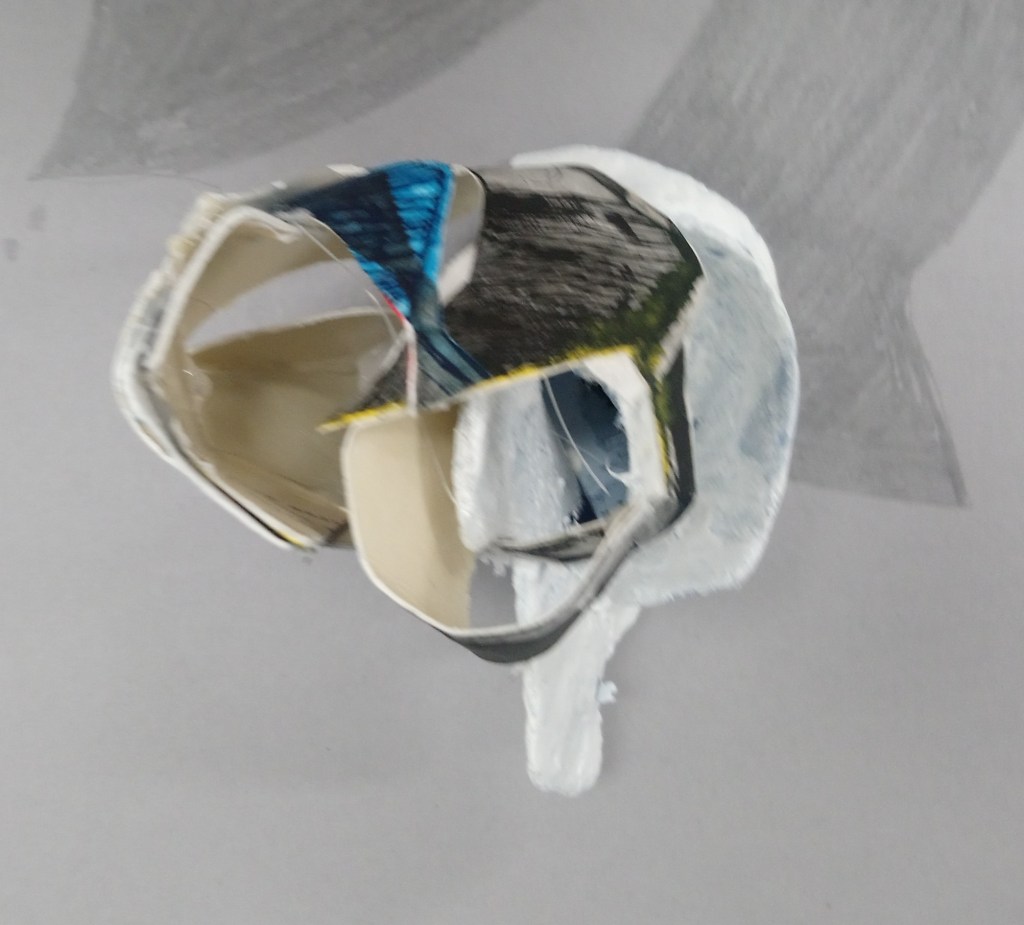
The 2D collages reach out in relief, they feel sculptural in themselves, I take the opportunity from this 2D collages to go into 3D sculpture and them back to the 2D painting, is a back and forward process mirroring the work of Michael Lady With his 3D collages .
My practice drawn from a range of sometimes contradictory sources, on one hand, I am attracted to the simple and minimalistic of the pieces Miles Davis music "Siesta" and "Human nature" the empty spaces in between the solos attracts me. The same occurs with the painters Agnes Martin and Elsworth Kelly, parts of the painting are resting from shapes and colours, it is an empty breathing space next to the simplicity of the form.
On the other hand I am drawn to the materiality of Amy Sillmans and Gillian Ayres. Their work infuses the complexity of the layers of paint and paper showing the history of the process and the interaction between the shapes, colours and mark making.
I perceive that my work is spontaneous and playful, intuitively mixing elements from observation and imagination. I am planning in the future to start to work with the prints on a much larger scale. I would like to incorporate stronger paper and wood as a support, to extend and make combinations of the etchings into 3D installations with them adding sound.
View all posts by lumascaro6


 Luisa
Luisa 